
Logo

Log In Sign Up |  An official publication of: American College of Emergency Physicians
Navigation
  • Home
  • Multimedia
    • Podcasts
    • Videos
  • Clinical
    • Airway Managment
    • Case Reports
    • Critical Care
    • Guidelines
    • Imaging & Ultrasound
    • Pain & Palliative Care
    • Pediatrics
    • Resuscitation
    • Trauma & Injury
  • Resource Centers
    • mTBI Resource Center
  • Career
    • Practice Management
      • Benchmarking
      • Reimbursement & Coding
      • Care Team
      • Legal
      • Operations
      • Quality & Safety
    • Awards
    • Certification
    • Compensation
    • Early Career
    • Education
    • Leadership
    • Profiles
    • Retirement
    • Work-Life Balance
  • Columns
    • ACEP4U
    • Airway
    • Benchmarking
    • Brief19
    • By the Numbers
    • Coding Wizard
    • EM Cases
    • End of the Rainbow
    • Equity Equation
    • FACEPs in the Crowd
    • Forensic Facts
    • From the College
    • Images in EM
    • Kids Korner
    • Medicolegal Mind
    • Opinion
      • Break Room
      • New Spin
      • Pro-Con
    • Pearls From EM Literature
    • Policy Rx
    • Practice Changers
    • Problem Solvers
    • Residency Spotlight
    • Resident Voice
    • Skeptics’ Guide to Emergency Medicine
    • Sound Advice
    • Special OPs
    • Toxicology Q&A
    • WorldTravelERs
  • Resources
    • ACEP.org
    • ACEP Knowledge Quiz
    • Issue Archives
    • CME Now
    • Annual Scientific Assembly
      • ACEP14
      • ACEP15
      • ACEP16
      • ACEP17
      • ACEP18
      • ACEP19
    • Annals of Emergency Medicine
    • JACEP Open
    • Emergency Medicine Foundation
  • About
    • Our Mission
    • Medical Editor in Chief
    • Editorial Advisory Board
    • Awards
    • Authors
    • Article Submission
    • Contact Us
    • Advertise
    • Subscribe
    • Privacy Policy
    • Copyright Information

When to Use Intranasal Medications in Children

By Annalise Sorrentino, MD, FAAP, FACEP | on October 13, 2015 | 0 Comment
CME CME Now Kids korner
  • Tweet
  • Click to email a link to a friend (Opens in new window) Email
Print-Friendly Version
When to Use Intranasal Medications in Children
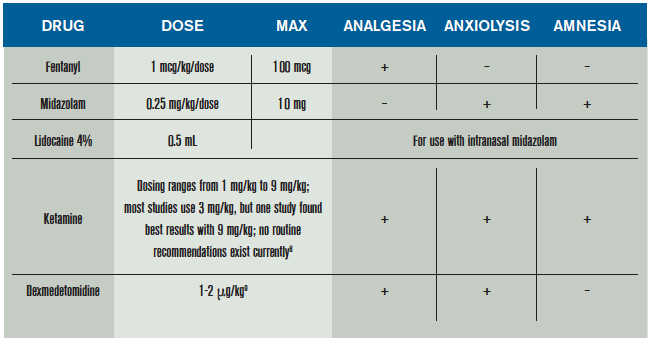
Table 1. Dr. Sorrentino's Cheat Sheet for Intranasal Drug Dosing

You Might Also Like
  • Fentanyl Versus Ketamine for Intranasal Pain Relief
  • Non-Opioid Pain Medications to Consider for Emergency Department Patients
  • Get the Latest Research in the May Annals
Explore This Issue
ACEP Now: Vol 34 – No 10 – October 2015

(Click for larger image)
Table 1. Dr. Sorrentino’s Cheat Sheet for Intranasal Drug Dosing

Medications to Use

Midazolam is a useful drug in pediatrics for situations where you need anxiolysis and amnesia. It can be given in a variety of ways, and intranasal use has been widely studied. Doses ranging from 0.2 mg/kg to 0.5 mg/kg have been evaluated. Overall, it has been shown to have a rapid onset of action and achieve adequate sedation, and it is associated with high parent satisfaction. One consistently found drawback is that intranasal was more irritating than other routes of administration.3 One study evaluated using intranasal lidocaine as a premedication and found that its use helped prevent the burning that is often associated with the use of intranasal midazolam.5 Further prospective studies have been done, and preliminary data (ahead of publication) show similar results. Intranasal midazolam is a great choice when you need something to take the edge off but analgesia is not your main focus. I find that it works best in situations where my analgesia is managed by other means, typically topical anesthetics and/or regional blocks. Its mild amnestic properties are also helpful when it comes to potential follow-up.

Fentanyl is the ideal intranasal medication, highly lipophilic and low molecular weight. It has been shown to be more effective than intravenous morphine for pain reduction in long bone fractures.3 It is very well tolerated overall and produces adequate analgesia. It has recently been compared with intranasal ketamine and found to be equally analgesic but have fewer side effects (mainly dizziness), although they were mild overall.6 This is a great choice when you need analgesia quickly and you don’t know if you’ll need an IV or if they need to be NPO. I use this routinely before getting imaging in my orthopedic patients.
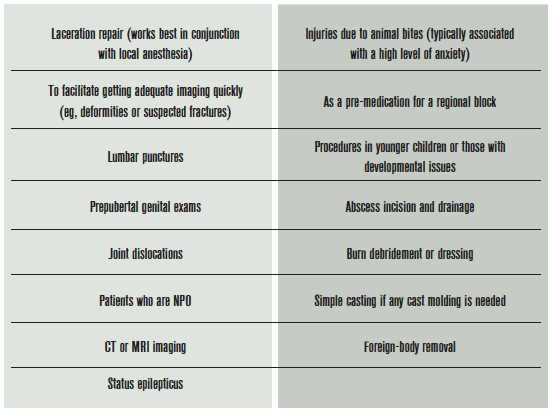
Table 2. When to Consider Using Intranasal Analgesia and Sedation

(Click for larger image)
Table 2. When to Consider Using Intranasal Analgesia and Sedation

Other agents for sedation and analgesia have also been assessed. Intranasal ketamine has been evaluated in the emergency department as well as in the pre-hospital setting. Doses ranging from 0.5 mg/kg to 9 mg/kg have been used with adequate sedation.3 Further studies need to be done to establish the ideal dose in the pediatric patient. Intranasal dexmedetomidine was evaluated in an observational study and showed good sedation and image quality when it was used for sedation for computed tomography scans in children.7

Delivery

Delivering intranasal medications can be done in a few different ways. The most basic is

Pages: 1 2 3 | Single Page

Topics: AnalgesiaClinical GuidelinesEmergency DepartmentEmergency MedicineEmergency PhysicianIntranasal MedicationMedicationPainPediatricsQualitySedationTreatment

Related

  • FACEPs in the Crowd: Dr. John Ludlow

    November 5, 2025 - 0 Comment
  • Nail Bed Injuries: What to Do—or Not to Do

    August 18, 2025 - 0 Comment
  • Differential Diagnosis of an Infant with Easy Bleeding, Bruising

    August 14, 2025 - 0 Comment

Current Issue

ACEP Now: November 2025

Download PDF

Read More

No Responses to “When to Use Intranasal Medications in Children”

Leave a Reply Cancel Reply

Your email address will not be published. Required fields are marked *


*
*


Wiley
  • Home
  • About Us
  • Contact Us
  • Privacy
  • Terms of Use
  • Advertise
  • Cookie Preferences
Copyright © 2025 by John Wiley & Sons, Inc. All rights reserved, including rights for text and data mining and training of artificial technologies or similar technologies. ISSN 2333-2603
