
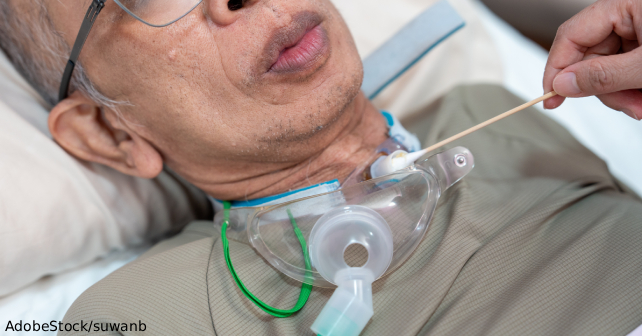
Tracheostomies are surgical airway procedures that offer an alternative airway for patients who require prolonged mechanical ventilation or those with upper airway obstruction. Emergency physicians are often responsible for the initial intubation and stabilization of critically ill patients, yet patients often do not witness the complications that arise during prolonged intubation and subsequent airway management in the intensive care unit (ICU).
Explore This Issue
ACEP Now: February 2026 (Digital)Indications for tracheostomy in the ICU setting have generally included: prolonged mechanical ventilation (greater than or equal to seven days), need for pulmonary hygiene, laryngotracheal stenosis, reduction of dead space to facilitate ventilatory weaning, or previous failed trials of extubation. Tracheostomy placement allows patients to remain more comfortable and mobile, as well as to communicate more effectively.
Tracheostomies can improve quality of life; however, they are also associated with a wide range of potential complications. One of the most common complications includes aspiration pneumonia, with an occurrence rate of approximately 30 to 50 percent.1 Complication rates vary widely in the literature: a single-center study of 100 patients from a tertiary care facility reported that 15 percent developed a tracheostomy-related complication, whereas multiple single-center studies estimate rates as high as 40 to 60 percent.2-3
Although emergency physicians are less likely to encounter immediate postoperative issues, they frequently encounter patients with newly placed and long-standing tracheostomies who present with acute tracheostomy dysfunction. This variability underscores both the complexity of tracheostomy care and the importance of recognizing and managing complications in the emergency department.
Tracheostomy complications encountered in the emergency setting can be broadly categorized into early and late complications. Early complications typically include bleeding, infection, subcutaneous emphysema, accidental decannulation, and posterior tracheal wall injury. Late complications more commonly involve accidental decannulation, cannula obstruction, tracheal stenosis, granuloma formation, and, less frequently, tracheoesophageal fistula, among others.
Given that tracheostomy-related emergencies can be life-threatening, emergency medicine providers must be familiar with the unique anatomy, physiology, and failure modes of these airways. Early identification and timely intervention can prevent severe morbidity and mortality. Tracheo-innominate artery fistula has been discussed in a previous article.
Acute, Early Decannulation
Dislodgement of the tracheostomy tube can occur early (i.e. within seven days of initial procedure) or late in patients and accounts for approximately one percent of tracheostomy complications.2-3 Tracheostomy dislodgement within the first week of placement is a high-risk airway emergency.
During the initial seven to 10 days after surgery, the tract between the skin and trachea has not fully epithelialized, making inadvertent decannulation or partial displacement more likely. The populations at biggest risk for accidental decannulation include patients with obesity, agitation, excessive neck movement, short or thicker necks, or high ventilatory requirements.4 Early dislodgement can result in loss of definitive airway, hypoxia, subcutaneous emphysema, pneumomediastinum, or the creation of a false passage if reinsertion is attempted blindly, especially if the stoma has not matured.
When early dislodgement occurs, immediate assessment of airway patency, oxygenation, and ventilation is the first priority. If the patient is in distress, it is important to reestablish oxygen delivery by either applying supplemental oxygen via a non-rebreather over the stoma or performing bag-mask ventilation over the nose and mouth while simultaneously occluding the stoma.
If a fiberoptic scope is available, replacement of the tracheostomy tube can be attempted. However, if it is not possible to pass a fiberoptic scope, oral endotracheal intubation should be performed with the cuff placed below the stoma. Reinsertion into an immature stoma carries an increased risk of creating a false tract. Following resuscitation, otolaryngology (ENT) or surgical consultation should be obtained for definitive management.
Cannula Obstruction
Obstruction of a tracheostomy tube may occur in both the early and late periods following placement and can lead to an abrupt decline in respiratory status with progression to respiratory failure or death if not rapidly addressed. This complication requires immediate recognition and intervention. In one report, the estimated incidence of tracheostomy tube obstruction was 0–3.5 percent,3 with another single-center study of 175 patients who underwent tracheostomy having this complication rate of 6.29 percent.6
Obstruction commonly results from thick or dried secretions, mucus plugging, blood clots, or granulation tissue at the tube orifice or along the tracheal wall. Less frequent causes include malposition against the posterior tracheal wall or the presence of foreign material. Clinical manifestations include increased work of breathing, tachypnea, hypoxia, diminished or absent airflow through the tracheostomy tube, and inability to pass a suction catheter.
As with the management of accidental decannulation, the management of suspected tracheostomy tube obstruction in the emergency department should prioritize airway assessment and restoration of adequate ventilation. When obstruction is caused by mucus plugging or blood clots, suctioning the tracheostomy tube often resolves the problem.3 Suction pressure should not exceed 120 mmHg, and suction time should not exceed 15 seconds to avoid hypoxia.7
If the patient does not improve after suctioning, obstruction due to either complete occlusion or tube malposition should be suspected, and removal or exchange of the inner cannula or the entire tube may be necessary. Deflating the cuff first will allow for oxygenation and ventilation around the tracheostomy tube. Selection of an appropriate tracheostomy tube for exchange depends on airway anatomy and the maturity of the tracheostomy tract. In patients with a mature tract, tube size, length, and curvature should be tailored to tracheal diameter and neck anatomy, with cuffed or uncuffed tubes selected based on the need for positive-pressure ventilation or airway protection. Whenever possible, the same size or one size smaller tube should be available during exchange, along with backup airway equipment to ensure safe placement.1
Tracheoesophageal Fistula
Tracheoesophageal fistula (TEF) is a rare but life-threatening complication commonly associated with a posteriorly positioned tracheostomy tube or cuff-related pressure necrosis to the posterior wall of the trachea, creating a communication between the posterior wall of the trachea and the anterior wall of the esophagus. In the emergency department, TEF should be suspected in patients who present with recurrent aspiration, coughing or choking during oral intake, unexplained respiratory distress, or abdominal distention from air leak into the esophagus. In mechanically ventilated patients, signs include difficulty maintaining tidal volumes, persistent air leaks despite cuff inflation, and aspiration of enteral feeds through the tracheostomy tube.
Acute management in the emergency department focuses on airway protection, prevention of further aspiration, and stabilization while arranging definitive care. Oral intake should be immediately discontinued and any nasogastric or orogastric tubes should be removed to prevent worsening necrosis.2 The head of the bed should be elevated to reduce the risk of aspiration. The tube cuff should be positioned distal to the suspected fistula when possible. Supplemental oxygen and ventilatory support should be provided, with caution to avoid excessive airway pressures. Ultimately, these patients will require surgical repair by ENT or thoracic surgery. Prompt recognition and stabilization in the ED can significantly reduce morbidity and mortality associated with tracheoesophageal fistula.
Conclusions
The number of tracheostomies performed annually in developed countries has been estimated to be approximately 250,000.8 Therefore, it is not unusual for an emergency physician to see patients with one.
Tracheostomy-related complications remain a significant source of morbidity and mortality across care settings. While not an exhaustive list, complications such as obstruction, dislodgement, bleeding, infection, and tracheoesophageal fistula can lead to rapid clinical deterioration, and early identification, as well as a structured, systematic approach to management is essential for preventing poor outcomes. Emergency physicians must be proficient in tracheostomy anatomy, equipment, and troubleshooting techniques to ensure timely and effective management. Although rare, the rate of acute, emergent complications from tracheostomies is not insignificant. Ongoing education, standardized institutional protocols, and interdisciplinary collaboration5 among emergency medicine, surgery, respiratory therapy, and nursing are critical to improving patient outcomes.
Dr. Weis is a second-year resident in Emergency Medicine at MetroHealth/Cleveland Clinic Residency Program in Emergency Medicine.
Dr. Glauser is professor, Emergency Medicine Case Western Reserve University, and attending faculty at MetroHealth Medical Center Residency Program in Emergency Medicine.
References
- Liu Y, et al. Tracheostomy tube changes in patients with tracheostomy: A quality improvement project. Nurs Crit Care. 2023;29(6). doi:10.1111/nicc.13008
- Kumar S, Biradar K, Patra A. Tracheostomy complications: Insights from a two-year, 15-case analysis at a tertiary care facility. Indian J Otolaryngol Head Neck Surg. 2023;76(1):1470-1475. doi:10.1007/s12070-023-04272-5
- Swain SK. Complications of tracheostomy: A scoping review. Airway. 2025;8(1):1-8. doi:10.4103/arwy.arwy_32_24
- Halum SL, et al. A multi-institutional analysis of tracheotomy complications. Laryngoscope. 2012;122(1):38-45. doi:10.1002/lary.22364
- Devlin CJ, O’Bryan RS, Williams H, Capes KM, McCants T, Schoolcraft E. Improving outcomes for patients with tracheostomy through implementation of AARC clinical practice guidelines. Respir Care. 2025;70(3):243-248. doi:10.4187/respcare.12080
- Kumar VAK, Kiran NAS, Kumar VA, Ghosh A, Pal R, Reddy VV, Agrawal A. The outcome analysis and complication rates of tracheostomy tube insertion in critically ill neurosurgical patients: A data mining study. Bull Emerg Trauma. 2019;7(4):355-360. doi:10.29252/beat-070403
- Bittencourt V, Graube S, Benetti E, Fontana R, Rodrigues F, Fonseca C. Care, challenges, and difficulties of the surgical nursing team in caring for patients undergoing tracheostomy. ESTIMA Braz J Enterostomal Ther. 2024;22. doi:10.30886/estima.v22.1617_IN
- Brenner MJ, Pandian CE, Milliren E, et al. Global tracheostomy collaborative. Br J Anesthesia. 2020;125 doi.org/10.1016/j.bja.2020.04.054



No Responses to “Tracheostomy Complications and the Emergency Setting”