
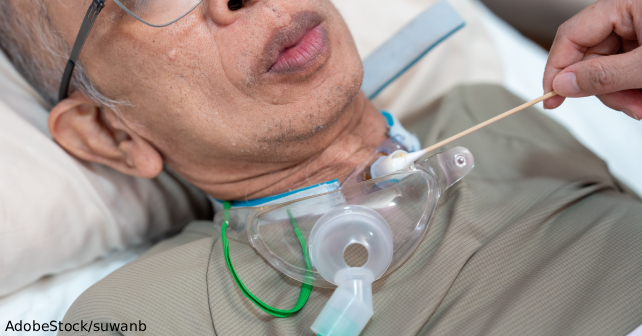
Tracheostomies are surgical airway procedures that offer an alternative airway for patients who require prolonged mechanical ventilation or those with upper airway obstruction. Emergency physicians are often responsible for the initial intubation and stabilization of critically ill patients, yet patients often do not witness the complications that arise during prolonged intubation and subsequent airway management in the intensive care unit (ICU).
Explore This Issue
ACEP Now: February 2026 (Digital)Indications for tracheostomy in the ICU setting have generally included: prolonged mechanical ventilation (greater than or equal to seven days), need for pulmonary hygiene, laryngotracheal stenosis, reduction of dead space to facilitate ventilatory weaning, or previous failed trials of extubation. Tracheostomy placement allows patients to remain more comfortable and mobile, as well as to communicate more effectively.
Tracheostomies can improve quality of life; however, they are also associated with a wide range of potential complications. One of the most common complications includes aspiration pneumonia, with an occurrence rate of approximately 30 to 50 percent.1 Complication rates vary widely in the literature: a single-center study of 100 patients from a tertiary care facility reported that 15 percent developed a tracheostomy-related complication, whereas multiple single-center studies estimate rates as high as 40 to 60 percent.2-3
Although emergency physicians are less likely to encounter immediate postoperative issues, they frequently encounter patients with newly placed and long-standing tracheostomies who present with acute tracheostomy dysfunction. This variability underscores both the complexity of tracheostomy care and the importance of recognizing and managing complications in the emergency department.
Tracheostomy complications encountered in the emergency setting can be broadly categorized into early and late complications. Early complications typically include bleeding, infection, subcutaneous emphysema, accidental decannulation, and posterior tracheal wall injury. Late complications more commonly involve accidental decannulation, cannula obstruction, tracheal stenosis, granuloma formation, and, less frequently, tracheoesophageal fistula, among others.
Given that tracheostomy-related emergencies can be life-threatening, emergency medicine providers must be familiar with the unique anatomy, physiology, and failure modes of these airways. Early identification and timely intervention can prevent severe morbidity and mortality. Tracheo-innominate artery fistula has been discussed in a previous article.
Acute, Early Decannulation
Dislodgement of the tracheostomy tube can occur early (i.e. within seven days of initial procedure) or late in patients and accounts for approximately one percent of tracheostomy complications.2-3 Tracheostomy dislodgement within the first week of placement is a high-risk airway emergency.
During the initial seven to 10 days after surgery, the tract between the skin and trachea has not fully epithelialized, making inadvertent decannulation or partial displacement more likely. The populations at biggest risk for accidental decannulation include patients with obesity, agitation, excessive neck movement, short or thicker necks, or high ventilatory requirements.4 Early dislodgement can result in loss of definitive airway, hypoxia, subcutaneous emphysema, pneumomediastinum, or the creation of a false passage if reinsertion is attempted blindly, especially if the stoma has not matured.
Pages: 1 2 3 4 | Single Page


One Response to “Tracheostomy Complications and the Emergency Setting”
February 23, 2026
Darren HuffmanIt is important to note that if a patient had a laryngectomy, then they cannot be intubated orally.