Logo

Log In Sign Up |  An official publication of: American College of Emergency Physicians
Navigation
  • Home
  • Multimedia
    • Podcasts
    • Videos
  • Clinical
    • Airway Managment
    • Case Reports
    • Critical Care
    • Guidelines
    • Imaging & Ultrasound
    • Pain & Palliative Care
    • Pediatrics
    • Resuscitation
    • Trauma & Injury
  • Resource Centers
    • mTBI Resource Center
  • Career
    • Practice Management
      • Benchmarking
      • Reimbursement & Coding
      • Care Team
      • Legal
      • Operations
      • Quality & Safety
    • Awards
    • Certification
    • Compensation
    • Early Career
    • Education
    • Leadership
    • Profiles
    • Retirement
    • Work-Life Balance
  • Columns
    • ACEP4U
    • Airway
    • Benchmarking
    • Brief19
    • By the Numbers
    • Coding Wizard
    • EM Cases
    • End of the Rainbow
    • Equity Equation
    • FACEPs in the Crowd
    • Forensic Facts
    • From the College
    • Images in EM
    • Kids Korner
    • Medicolegal Mind
    • Opinion
      • Break Room
      • New Spin
      • Pro-Con
    • Pearls From EM Literature
    • Policy Rx
    • Practice Changers
    • Problem Solvers
    • Residency Spotlight
    • Resident Voice
    • Skeptics’ Guide to Emergency Medicine
    • Sound Advice
    • Special OPs
    • Toxicology Q&A
    • WorldTravelERs
  • Resources
    • ACEP.org
    • ACEP Knowledge Quiz
    • Issue Archives
    • CME Now
    • Annual Scientific Assembly
      • ACEP14
      • ACEP15
      • ACEP16
      • ACEP17
      • ACEP18
      • ACEP19
    • Annals of Emergency Medicine
    • JACEP Open
    • Emergency Medicine Foundation
  • About
    • Our Mission
    • Medical Editor in Chief
    • Editorial Advisory Board
    • Awards
    • Authors
    • Article Submission
    • Contact Us
    • Advertise
    • Subscribe
    • Privacy Policy
    • Copyright Information

Tips to Improve Airway Management

By Richard M. Levitan, MD, FACEP | on April 13, 2018 | 0 Comment
Airway
  • Tweet
  • Click to email a link to a friend (Opens in new window) Email
Print-Friendly Version
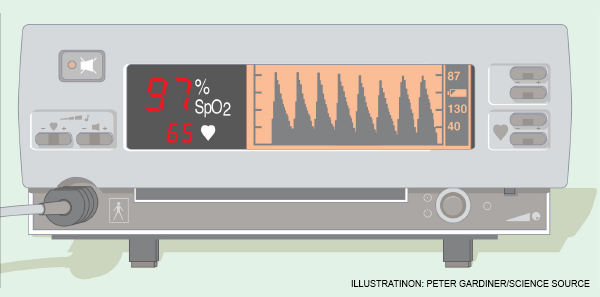
ILLUSTRATINON: Peter Gardiner/Science Source

Plan to maximize oxygenation in every instance of procedural sedation. Use gravity to reduce the risk of aspiration, and always ask, “Do you need the patient flat?” We rarely do, and head elevation adds tremendously to patient safety.

You Might Also Like
  • Oxygen Insufflated Into Lungs Can Prevent Desaturation, Aid in Emergency Airway Management
  • 10 Tips for Safety in Airway Management
  • Avoid Airway Catastrophes on the Extremes of Minute Ventilation
Explore This Issue
ACEP Now: Vol 37 – No 04 – April 2018

The highest-risk patients may be those sedated for hip reduction because they need to be lying flat. Even a slight amount of head elevation (ie, 10 degrees) tilts the pannus down and improves lung function tremendously. Once the hip reduction is complete, bring the head higher and pull on the mandible with the nasal cannula on. Often the most dangerous part of sedation occurs after the reduction because pain input drops but the drugs haven’t worn off.

If positioning, pulling on the mandible, and nasal oxygen at high flow does not resolve hypoxia, add PEEP by using a BVM with a PEEP valve. Install PEEP valves on every BVM in your department so when PEEP is needed, you don’t need to locate one.

Be mindful of patients at high risk of desaturation due to alveolar disease (ie, heart failure, acute respiratory distress syndrome, multi-lobar pneumonia, aspiration, etc.). The sickest of the sick may require combining both upright positioning and PEEP for pre-oxygenation, and also during the onset phase of muscle relaxation when performing rapid sequence intubation. Even after successful intubation, these patients can prove difficult to oxygenate. Increase the fraction of inspired O2, increase PEEP, lower tidal volumes, and increase the ventilator rate in these challenging cases.

Finally, consider prone positioning if upright positioning doesn’t allow for sufficient oxygenation.

Pages: 1 2 3 | Single Page

Topics: Airway ManagementEmergency DepartmentEmergency MedicineLungsOxygenPractice TrendsRespiratory

Related

  • Why the Nonrebreather Should be Abandoned

    December 3, 2025 - 0 Comment
  • Non-Invasive Positive Pressure Ventilation in the Emergency Department

    October 1, 2025 - 0 Comment
  • September 2025 News from the College

    August 29, 2025 - 0 Comment

Current Issue

ACEP Now: November 2025

Download PDF

Read More

About the Author

Richard M. Levitan, MD, FACEP

Richard M. Levitan, MD, FACEP, is an adjunct professor of emergency medicine at Dartmouth’s Geisel School of Medicine in Hanover, N.H., and a visiting professor of emergency medicine at the University of Maryland in Baltimore. He works clinically at a critical care access hospital in rural New Hampshire and teaches cadaveric and fiber-optic airway courses.

View this author's posts »

No Responses to “Tips to Improve Airway Management”

Leave a Reply Cancel Reply

Your email address will not be published. Required fields are marked *


*
*


Wiley
  • Home
  • About Us
  • Contact Us
  • Privacy
  • Terms of Use
  • Advertise
  • Cookie Preferences
Copyright © 2025 by John Wiley & Sons, Inc. All rights reserved, including rights for text and data mining and training of artificial technologies or similar technologies. ISSN 2333-2603
