
What does all this mean? While extremely limited data exist, they suggest that giving ondansetron in the PED to a child with a head injury without head CT imaging is potentially safe and probably does not mask any significant intracranial injuries.
Explore This Issue
ACEP Now: Vol 36 – No 10 – October 2017Summary
A single, large retrospective study suggests that giving ondansetron in the PED for a child with a head injury, even when you’re not imaging the brain, probably does not mask a significant intracranial injury. With regard to giving a home prescription for ondansetron and masking significant intracranial injuries, we found no current literature on that topic.
Antibiotics for Parotitis
Question 2: For parotitis in children, should antibiotic therapy be considered, and if so, what bacterial coverage should be provided?
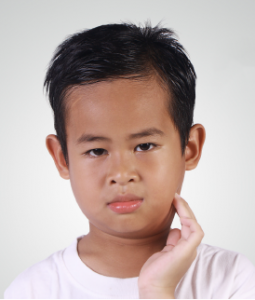
PHOTO: shutterstock.com
Most studies addressing this topic include both adult and pediatric patients. We could not identify any prospective studies. We are only addressing what’s considered suppurative parotitis and not mumps, a common cause of viral parotitis.
The first study is a six-year retrospective study by Cohen et al from 1984 to 1989 (n=11) that looked at cases of recurrent parotitis in children.3 Please note we’re talking about recurrent parotitis, meaning patients who have had parotitis previously. The ages ranged from 1 to 7 years, and they mention that “most” (no specific number or percentage was provided) had either viridans streptococci or Haemophilus influenzae.
The second article is a 25-year retrospective study that only looked at bacterial suppurative sialadenitis (n=47) and included both children and adults (n=7 children).4 The author didn’t differentiate between primary and recurrent parotitis and evaluated all salivary gland infections. The predominance (32 of 47; 68 percent) were from the parotid gland. In those 32 cases, the author found anaerobes (94 percent), Staphylococcus aureus (31 percent), H. influenzae (12 percent), and viridans streptococci (12 percent) to be the biggest culprits. It appears a majority of these were polymicrobial, meaning we should consider covering anaerobes, S. aureus, viridans streptococci, and H. influenzae. A separate 35-year retrospective study by Laskawi et al included 21 pediatric patients with parotitis and found both S. aureus (50 percent) and group A strep (50 percent) as the infectious bacterial agent.5
Conclusion
Although the majority of parotitis cases are viral, suspected bacterial causes (ie, S. aureus, Strep species, H. influenzae, and anaerobes) warrant antibiotic coverage.
 Dr. Jones is assistant professor of pediatric emergency medicine at the University of Kentucky in Lexington.
 Dr. Cantor is professor of emergency medicine and pediatrics, director of the pediatric emergency department, and medical director of the Central New York Poison Control Center at Upstate Medical University in Syracuse, New York.
References
- Kinnaman KA, Mannix RC, Comstock RD, et al. Management of pediatric patients with concussion by emergency medicine physicians. Pediatr Emerg Care. 2014;30(7):458-461.
- Sturm JJ, Simon HK, Khan NS, et al. The use of ondansetron for nausea and vomiting after head injury and its effect on return rates from the pediatric ED. Am J Emerg Med. 2013;31(1):166-172.
- Cohen HA, Gross S, Nussinovitch M, et al. Recurrent parotitis. Arch Dis Child.1992;67(8):1036-1037.
- Brook I. Aerobic and anaerobic microbiology of suppurative sialadenitis. J Med Microbiol. 2002;51(6):526-529.
- Laskawi R, Schaffranietz F, Arglebe C, et al. Inflammatory diseases of the salivary glands in infants and adolescents. Int J Pediatr Otorhinolaryngol. 2006;70(1):129-136.
Pages: 1 2 3 | Single Page



No Responses to “Pediatric Emergency Medicine Tips for Treating Closed Head Injuries and Using Antibiotics for Parotitis”