Logo

Log In Sign Up |  An official publication of: American College of Emergency Physicians
Navigation
  • Home
  • Multimedia
    • Podcasts
    • Videos
  • Clinical
    • Airway Managment
    • Case Reports
    • Critical Care
    • Guidelines
    • Imaging & Ultrasound
    • Pain & Palliative Care
    • Pediatrics
    • Resuscitation
    • Trauma & Injury
  • Resource Centers
    • mTBI Resource Center
  • Career
    • Practice Management
      • Benchmarking
      • Reimbursement & Coding
      • Care Team
      • Legal
      • Operations
      • Quality & Safety
    • Awards
    • Certification
    • Compensation
    • Early Career
    • Education
    • Leadership
    • Profiles
    • Retirement
    • Work-Life Balance
  • Columns
    • ACEP4U
    • Airway
    • Benchmarking
    • Brief19
    • By the Numbers
    • Coding Wizard
    • EM Cases
    • End of the Rainbow
    • Equity Equation
    • FACEPs in the Crowd
    • Forensic Facts
    • From the College
    • Images in EM
    • Kids Korner
    • Medicolegal Mind
    • Opinion
      • Break Room
      • New Spin
      • Pro-Con
    • Pearls From EM Literature
    • Policy Rx
    • Practice Changers
    • Problem Solvers
    • Residency Spotlight
    • Resident Voice
    • Skeptics’ Guide to Emergency Medicine
    • Sound Advice
    • Special OPs
    • Toxicology Q&A
    • WorldTravelERs
  • Resources
    • ACEP.org
    • ACEP Knowledge Quiz
    • Issue Archives
    • CME Now
    • Annual Scientific Assembly
      • ACEP14
      • ACEP15
      • ACEP16
      • ACEP17
      • ACEP18
      • ACEP19
    • Annals of Emergency Medicine
    • JACEP Open
    • Emergency Medicine Foundation
  • About
    • Our Mission
    • Medical Editor in Chief
    • Editorial Advisory Board
    • Awards
    • Authors
    • Article Submission
    • Contact Us
    • Advertise
    • Subscribe
    • Privacy Policy
    • Copyright Information

Naloxone Distribution to Patients in Emergency Department Raises Controversy

By Catherine A. Marco, MD, FACEP; John E. Jesus, MD, FACEP; Joel M. Geiderman, MD, FACEP; and Eileen F. Baker, MD, FACEP | on June 15, 2016 | 1 Comment
ED Critical Care New Spin Opinion
  • Tweet
  • Click to email a link to a friend (Opens in new window) Email
Print-Friendly Version
Naloxone Distribution to Patients in Emergency Department Raises Controversy
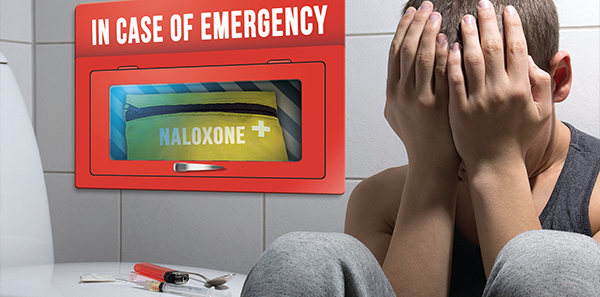
ILLUSTRATION/PAUL JUESTRICH; PHOTOs shutterstock.com

The article “Naloxone Distribution Strategies Needed in Emergency Departments” by Samuels et al (ACEP Now, March 2016) addresses the important and controversial topic of direct naloxone distribution to patients who may have an addiction to opioids. The authors recommend naloxone for patients who use heroin, exceed 100 mg of morphine equivalents daily, have opioid abuse/dependency, or have had an opioid overdose. They recommend that staff training, program monitoring, and feedback should be data driven and provided on a regular basis.

You Might Also Like
  • Naloxone Distribution Strategies Needed in Emergency Departments
  • Naloxone to Reduce Opiate Overdose Deaths Raises Cost, Liability, and Safety Concerns
  • Overdose Antidote Naloxone Hydrochloride Available in California Pharmacies
Explore This Issue
ACEP Now: Vol 35 – No 06 – June 2016

The problem of opioid addiction and related morbidity and mortality is one of increasing significance in the United States. Particularly in the ED environment, we frequently treat patients for opioid addiction and complications, including drug-seeking behavior, accidental or intentional overdose, and trauma attributable to opioid use, which may include significant morbidity and mortality.

The administration of naloxone by first responders has undoubtedly reduced deaths from opioid overdose for many years. Some also advocate for availability of naloxone to patients, family, and friends who may witness an overdose and its immediate effects. Immediate administration of naloxone can be lifesaving in such circumstances.

The effects of widespread naloxone availability to laypersons are unknown. Some question whether widespread availability might enable substance abuse by creating a false sense of security and by diverting attention and resources from addiction treatment. While naloxone clearly can be a lifesaving intervention for an opioid overdose, it is possible that its availability, in fact, increases opioid use and addiction.

While naloxone clearly can be a lifesaving intervention for an opioid overdose, it is possible that its availability, in fact, increases opioid use and addiction.

We concur that a lifesaving medication such as naloxone should be made available to patients at risk of opioid overdose. It should, however, be recognized by prescribers that naloxone is only a treatment for acute overdose and does not address the larger problem of addiction and high-risk behavior.

We recommend scientific research to study the consequences of naloxone distribution. Widespread use of a therapeutic agent should be embraced based on sound scientific evidence of its efficacy to patients. We also recommend societal resources to offer treatment for opioid addiction, including making inpatient and outpatient treatment available to all patients who are in need of treatment, regardless of gender, age, income, education level or ability to pay.


Dr. Marco is professor of emergency medicine at Wright State University Boonshoft School of Medicine in Dayton, Ohio.
Dr. Jesus is an attending physician at Augusta Health in Fishersville, Virginia.
Dr. Geiderman is a professor of emergency medicine and emergency department co-chairman at Cedars-Sinai in Los Angeles.
Dr. Baker
is assistant professor of emergency medicine at the University of Toledo College of Medicine and Life Sciences in Ohio.

Pages: 1 2 | Multi-Page

Topics: AddictionCritical CareDrug AbuseEmergency DepartmentEmergency PhysicianHeroinMorbidityMortalityNaloxoneOpioidPatient CarePractice Management

Related

  • Why the Nonrebreather Should be Abandoned

    December 3, 2025 - 0 Comment
  • Florida Emergency Department Adds Medication-Dispensing Kiosk

    November 7, 2025 - 1 Comment
  • Q&A with ACEP President L. Anthony Cirillo

    November 5, 2025 - 0 Comment

Current Issue

ACEP Now: November 2025

Download PDF

Read More

One Response to “Naloxone Distribution to Patients in Emergency Department Raises Controversy”

  1. February 2, 2017

    Stuart Etengoff DO FACEP Reply

    The reference for the quote
    “While naloxone…”

    Agree with rest of article, however to raise the “possibility” of A=B, is the same as saying the availability of aspirin/AED decrease pts eating healthy.
    This is time dependant POC life saving treatment.

Leave a Reply Cancel Reply

Your email address will not be published. Required fields are marked *


*
*


Wiley
  • Home
  • About Us
  • Contact Us
  • Privacy
  • Terms of Use
  • Advertise
  • Cookie Preferences
Copyright © 2025 by John Wiley & Sons, Inc. All rights reserved, including rights for text and data mining and training of artificial technologies or similar technologies. ISSN 2333-2603
