
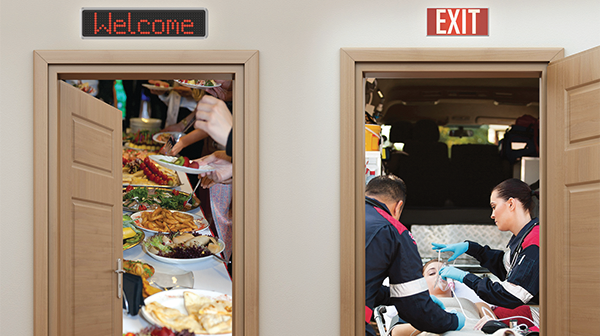
On a busy Monday evening in April at Fairfield Medical Center in Lancaster, Ohio, a 50ish-year-old male presented with a chief complaint of dizziness, “difficulty getting his words out,” and a tongue that was not working properly. His family noticed a change in his voice. The evaluation by the emergency physician found no respiratory distress and a nonfocal neurological exam. The patient underwent a neurological workup focused on evaluating him for stroke, but brain imaging and other diagnostic testing uncovered no remarkable results. He was placed in the hospital for a possible transient ischemic attack.
Explore This Issue
ACEP Now: Vol 34 – No 08 – August 2015Overnight, his ability to swallow and phonate deteriorated significantly, and he was moved to the intensive care unit (ICU). The consultant found new bilateral ptosis, sixth nerve palsy, and a diminished gag reflex. As neurologist Elizabeth Walz, MD, was completing her evaluation and considering this unusual set of deficits, two more patients arrived in the ED with similar deficits. Dr. Walz was consulted for those patients and worked with the emergency physician to make a connection, and the clinical diagnosis of botulism set the health system wheels in motion. The local and state public health departments were notified.
The Problem Grows, and the ED Shifts to Disaster Mode
As more patients with these symptoms arrived, some of the patients’ families recognized one another from their attendance at a Sunday potluck lunch at a church. The attendees consumed homemade dishes prepared by church members, and the leftovers were shared with a local senior citizens’ center. One of the dishes was a potato salad made from home-canned potatoes.
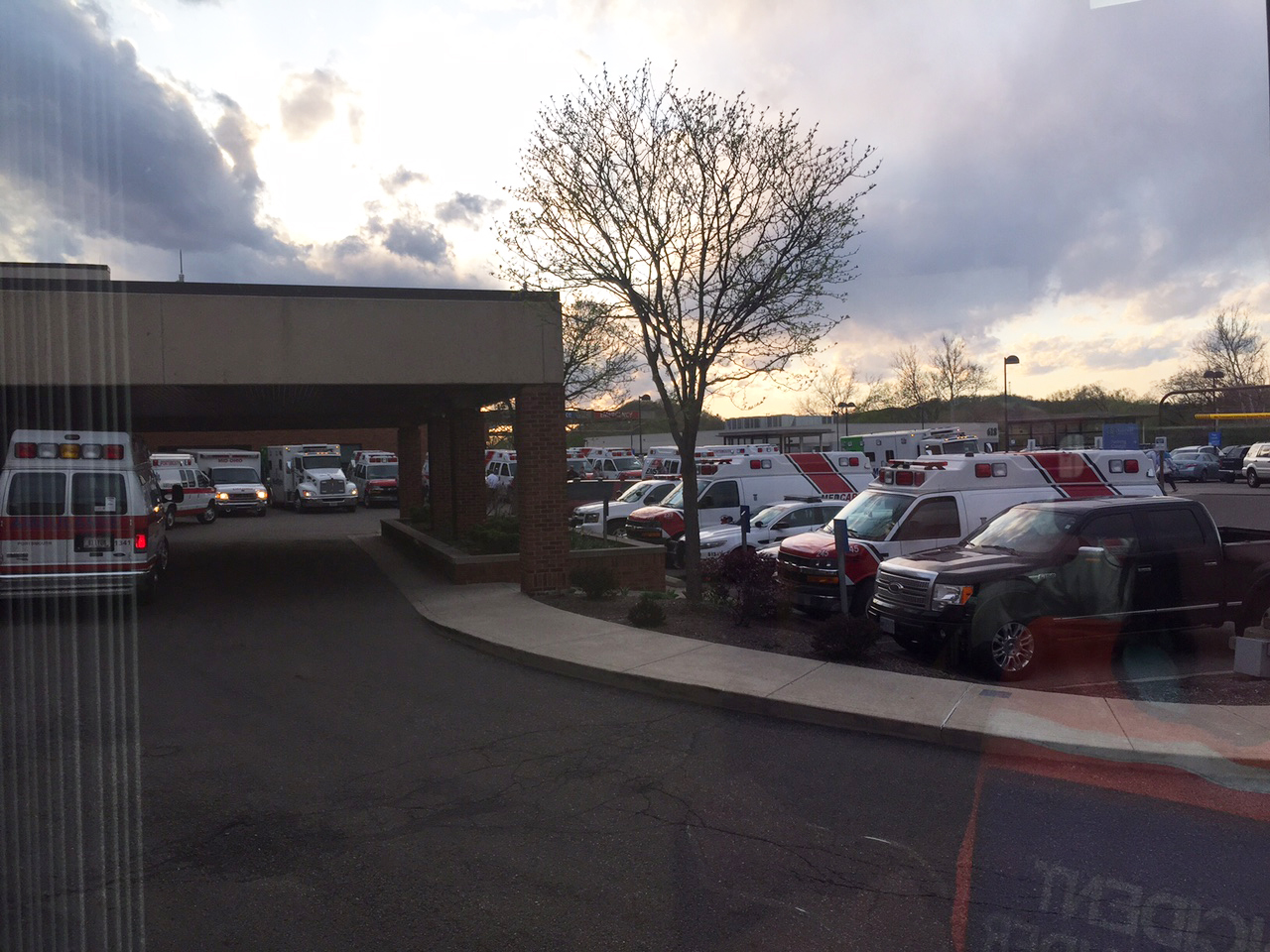
EMS resources at Fairfield Medical Center during the botulism outbreak.
As the second day progressed, many more persons arrived in the ED with rapid onset of symptoms, including the first patient who would die. The accelerated pace of symptom onset was a great concern to the ED staff. It was feared that more victims could be in their homes, unable to recognize the unusual symptoms and not able to seek help. Therefore, management of this incident would need to include an active process of identifying all potential victims and locating and notifying them. This required an extensive interchange of information with church leadership, family members of the victims, and hospital staff. There were ultimately more than 50 adults and children considered at risk.
The subsequent 48 hours were consumed by a coordinated internal and external disaster response, with the ED serving as ground zero. The hospital incident command system (HICS) was activated, and the center of operations was located in the ED conference room. The operations and planning sectors included the frontline ED staff, local and state public health authorities, and the medical staff leadership of the medical center. Additional resources were placed in service, with regional fire and emergency medical services (EMS) leaders working with church leaders to systematically locate every individual who attended the potluck.
The ED evaluated a total of 53 patients with possible exposure, with John Scott, DO, personally evaluating almost all of those individuals. Having a single physician evaluate and oversee the patients presenting with an unusual disease is a very effective way to achieve consistency and manage patient and family concerns. Most with symptoms were complaining of blurred or double vision and difficulty swallowing. Several only complained of nausea. Almost all had normal initial neurologic exams. Those who were symptomatic had ptosis and difficulty swallowing and phonating. This progressed rapidly to respiratory failure and the need for mechanical ventilation.
The medical staff leadership organized a coordinated approach to patient care. The first patients who arrived utilized all of the ICU resources, so regional coordination was organized with all adult and pediatric hospitals in the Columbus, Ohio, area. Subsequent ill patients were stabilized and transferred to those hospitals. A large number of ambulances were staged in the ED parking lot to provide expedited transport. As of the last report from the state department of health, 21 patients were confirmed to have botulism, and 10 additional cases were suspected.
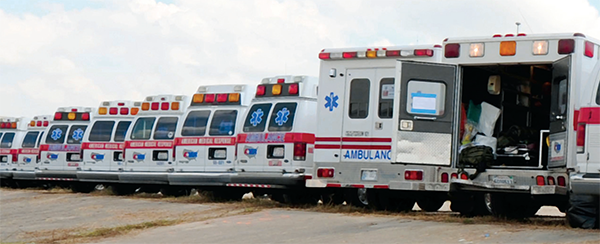
If your department’s resources are overwhelmed by an outbreak, have ambulances standing by to take stable patients to nearby emergency departments.
Working in conjunction, infectious disease consultants, neurology, the hospitalist group, public health officials, and Centers for Disease Control and Prevention (CDC) experts mapped a uniform patient approach. The local hospitalist staff was expanded, and the plan called for all exposed but asymptomatic patients to be admitted for careful observation. Those who refused admission received phone calls every six to eight hours to check on their status. Two patients left the ED against medical advice, and one was found collapsed after a status phone call went unanswered. He was found in extremis and was resuscitated and intubated after his home was entered.
Diagnostic evaluation and treatment also required an extensive and coordinated approach. No local diagnostic testing was available to establish a diagnosis; clinical criteria were used. The Ohio Department of Health, working with experts from the CDC, coordinated to acquire and utilize the antitoxin. An event with this many patients requires the use of antitoxin from storage sites in various places, all coordinated through the CDC. Because supplies were limited, treating physicians had to allocate the antitoxin to those most in need.
Lessons Learned
The exemplary response to this event began with the teamwork of the ED staff at Fairfield Medical Center. The emergency response required all clinical and support staff of the ED to work with patients and families to establish the risk and degree of exposure, coordinate the need for aggressive care for those who required immediate support, and arrange for admission and transfer. ED leaders worked with regional fire and EMS personnel to locate victims and provide lifesaving care. As with other public health emergency events, there were a number of “worried well” who had to be reassured and released.
Here are some practical pearls for identification, diagnosis, and management of multiple casualty incidents related to toxins:
- Identification of patients suffering from atypical toxidromes involves a high degree of clinical suspicion.
- Neurotoxins can produce varying degrees of impairment, with a few having recognizable patterns of spread. Clostridium botulinum intoxication in adults affects central systems.
- Early establishment of the HICS and an incident action plan, crafted by emergency physicians and others, is critical.
- In an event that involves an unusual disease and a critical clinical evaluation, a small number of clinicians should manage as many patients as possible.
- Medical care plans should be coordinated with the local specialists by having a face-to-face discussion supplemented by disease experts using video and audio links, if needed. In this case, CDC expertise was needed to coordinate the use and release of the antitoxin, and this could be provided efficiently using phone conferences.
- Certain events require an active process of victim identification and notification, and those events must have timely alerting of regional law enforcement, fire, EMS, and public health resources.
Dr. Augustine is director of clinical operations at EMP in Canton, Ohio; clinical associate professor of emergency medicine at Wright State University in Dayton, Ohio; vice president of the Emergency Department Benchmarking Alliance; on the ACEP Board of Directors; and an ACEP Now editorial advisory board member. Dr. Scott is the emergency department assistant director at Fairfield Medical Center in Lancaster, Ohio.
Pages: 1 2 3 | Multi-Page



No Responses to “Mass Casualty Incident Provides Pearls for Toxin-Related Illness”