
Logo

Log In Sign Up |  An official publication of: American College of Emergency Physicians
Navigation
  • Home
  • Multimedia
    • Podcasts
    • Videos
  • Clinical
    • Airway Managment
    • Case Reports
    • Critical Care
    • Guidelines
    • Imaging & Ultrasound
    • Pain & Palliative Care
    • Pediatrics
    • Resuscitation
    • Trauma & Injury
  • Resource Centers
    • mTBI Resource Center
  • Career
    • Practice Management
      • Benchmarking
      • Reimbursement & Coding
      • Care Team
      • Legal
      • Operations
      • Quality & Safety
    • Awards
    • Certification
    • Compensation
    • Early Career
    • Education
    • Leadership
    • Profiles
    • Retirement
    • Work-Life Balance
  • Columns
    • ACEP4U
    • Airway
    • Benchmarking
    • Brief19
    • By the Numbers
    • Coding Wizard
    • EM Cases
    • End of the Rainbow
    • Equity Equation
    • FACEPs in the Crowd
    • Forensic Facts
    • From the College
    • Images in EM
    • Kids Korner
    • Medicolegal Mind
    • Opinion
      • Break Room
      • New Spin
      • Pro-Con
    • Pearls From EM Literature
    • Policy Rx
    • Practice Changers
    • Problem Solvers
    • Residency Spotlight
    • Resident Voice
    • Skeptics’ Guide to Emergency Medicine
    • Sound Advice
    • Special OPs
    • Toxicology Q&A
    • WorldTravelERs
  • Resources
    • ACEP.org
    • ACEP Knowledge Quiz
    • Issue Archives
    • CME Now
    • Annual Scientific Assembly
      • ACEP14
      • ACEP15
      • ACEP16
      • ACEP17
      • ACEP18
      • ACEP19
    • Annals of Emergency Medicine
    • JACEP Open
    • Emergency Medicine Foundation
  • About
    • Our Mission
    • Medical Editor in Chief
    • Editorial Advisory Board
    • Awards
    • Authors
    • Article Submission
    • Contact Us
    • Advertise
    • Subscribe
    • Privacy Policy
    • Copyright Information

Mass Casualty Incident Provides Pearls for Toxin-Related Illness

By James Augustine, MD, FACEP, and John Scott, DO, FACEP | on August 13, 2015 | 0 Comment
Features
  • Tweet
  • Click to email a link to a friend (Opens in new window) Email
Print-Friendly Version
Mass Casualty Incident Provides Pearls for Toxin-Related Illness
Image Credit: ILLUSTRATION/PAUL JUESTRICH; PHOTOs shutterstock.com

On a busy Monday evening in April at Fairfield Medical Center in Lancaster, Ohio, a 50ish-year-old male presented with a chief complaint of dizziness, “difficulty getting his words out,” and a tongue that was not working properly. His family noticed a change in his voice. The evaluation by the emergency physician found no respiratory distress and a nonfocal neurological exam. The patient underwent a neurological workup focused on evaluating him for stroke, but brain imaging and other diagnostic testing uncovered no remarkable results. He was placed in the hospital for a possible transient ischemic attack.

You Might Also Like
  • Tips for Diagnosing,Treating Toxin-Induced Hyperthermic Disorders
  • Coding Wizard: Vaping-Related Illness
  • Documentation Pearls for Critical Care Services’ Time Requirement
Explore This Issue
ACEP Now: Vol 34 – No 08 – August 2015

Overnight, his ability to swallow and phonate deteriorated significantly, and he was moved to the intensive care unit (ICU). The consultant found new bilateral ptosis, sixth nerve palsy, and a diminished gag reflex. As neurologist Elizabeth Walz, MD, was completing her evaluation and considering this unusual set of deficits, two more patients arrived in the ED with similar deficits. Dr. Walz was consulted for those patients and worked with the emergency physician to make a connection, and the clinical diagnosis of botulism set the health system wheels in motion. The local and state public health departments were notified.

The Problem Grows, and the ED Shifts to Disaster Mode

As more patients with these symptoms arrived, some of the patients’ families recognized one another from their attendance at a Sunday potluck lunch at a church. The attendees consumed homemade dishes prepared by church members, and the leftovers were shared with a local senior citizens’ center. One of the dishes was a potato salad made from home-canned potatoes.
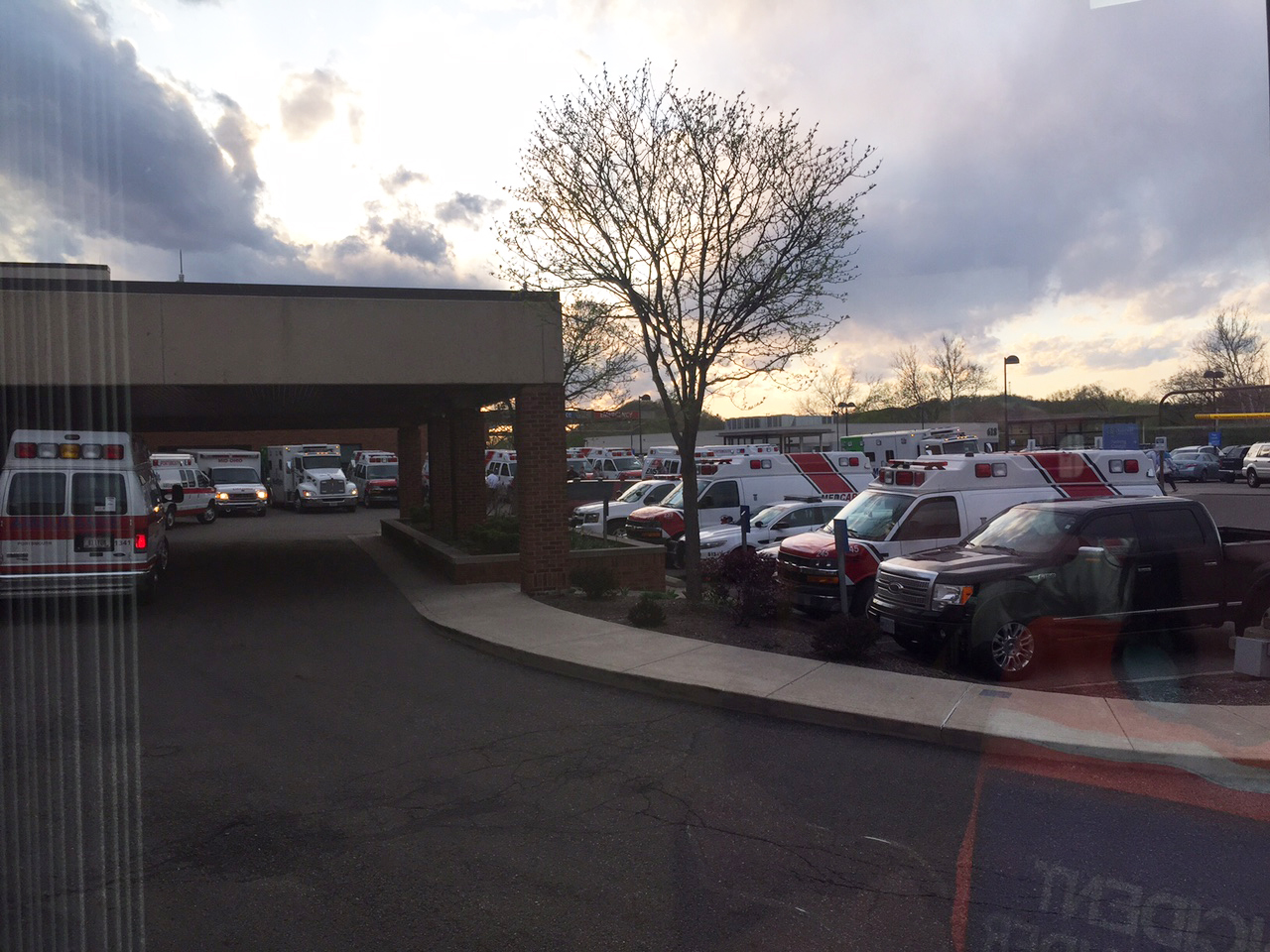
EMS resources at Fairfield Medical Center during the botulism outbreak.

EMS resources at Fairfield Medical Center during the botulism outbreak.

As the second day progressed, many more persons arrived in the ED with rapid onset of symptoms, including the first patient who would die. The accelerated pace of symptom onset was a great concern to the ED staff. It was feared that more victims could be in their homes, unable to recognize the unusual symptoms and not able to seek help. Therefore, management of this incident would need to include an active process of identifying all potential victims and locating and notifying them. This required an extensive interchange of information with church leadership, family members of the victims, and hospital staff. There were ultimately more than 50 adults and children considered at risk.

The subsequent 48 hours were consumed by a coordinated internal and external disaster response, with the ED serving as ground zero. The hospital incident command system (HICS) was activated, and the center of operations was located in the ED conference room. The operations and planning sectors included the frontline ED staff, local and state public health authorities, and the medical staff leadership of the medical center. Additional resources were placed in service, with regional fire and emergency medical services (EMS) leaders working with church leaders to systematically locate every individual who attended the potluck.

Pages: 1 2 3 | Single Page

Topics: BotulismCase PresentationCase ReportsClinical CriteriaCritical CareDiagnosisEmergency DepartmentEmergency MedicineEmergency PhysicianOperationsPublic HealthToxicology

Related

  • Opinion: Physicians Must Reduce Plastic Waste

    December 4, 2025 - 0 Comment
  • Why the Nonrebreather Should be Abandoned

    December 3, 2025 - 0 Comment
  • Case Report: Massive Amitriptyline and Bupropion Ingestion

    October 29, 2025 - 0 Comment

Current Issue

ACEP Now: November 2025

Download PDF

Read More

No Responses to “Mass Casualty Incident Provides Pearls for Toxin-Related Illness”

Leave a Reply Cancel Reply

Your email address will not be published. Required fields are marked *


*
*


Wiley
  • Home
  • About Us
  • Contact Us
  • Privacy
  • Terms of Use
  • Advertise
  • Cookie Preferences
Copyright © 2025 by John Wiley & Sons, Inc. All rights reserved, including rights for text and data mining and training of artificial technologies or similar technologies. ISSN 2333-2603
