
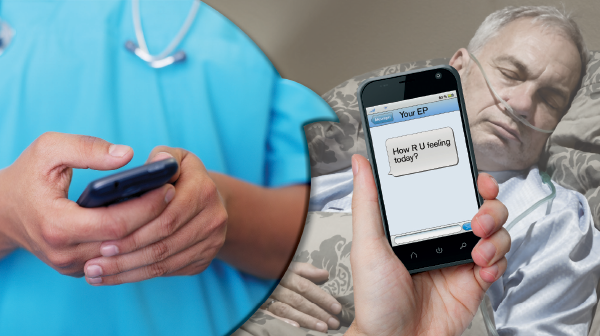
Medication reminders, motivational and healthy-living tips sent by physicians through TExT-MED mobile health messaging program helped diabetics improve medication adherence, blood glucose monitoring, and quality of life
Explore This Issue
ACEP Now: Vol 33 – No 03 – March 2014Diabetes has grown into a public-health epidemic affecting just more than 11 percent of adults in the United States. Healthy eating, regular exercise, and medication adherence can improve glycemic control and health outcomes in patients with diabetes. Traditionally, diabetes teaching and support occurs in an outpatient setting; however, in systems where barriers to establishing a regular medical home exist, patients utilize emergency departments for both acute and chronic diabetes management. But emergency physicians do not have the time or training to provide these patients with the preventive care they so desperately need. Innovative approaches are needed to reach, engage, and activate at-risk populations to bridge the gap between urgent visits to the ED and follow-up care.
A Tech Solution
At the Los Angeles County Hospital (LAC) + USC Medical Center, we recently conducted a randomized controlled trial using mobile health (mHealth) via a text message–based program. It demonstrated the potential for medical professionals to extend their support in a very personal, engaging, and cost-efficient way to patients exiting the ED, reducing their likelihood of returning. A multidisciplinary team at USC involving emergency physicians, endocrinologists, and certified diabetes educators developed a program called TExT-MED (Trial to Examine Text Message–based mHealth in ED Patients with Diabetes) in Spanish and English. TExT-MED was specifically designed to empower patients with diabetes by helping them successfully adapt to the changes in lifestyle and self-care behaviors required to establish a true personal foundation for glycemic control.
The program was developed in response to the mounting community-health issue created by insufficient diabetes care. Emergency physicians see many patients with diabetes cycling through the ED who are clearly challenged by their condition—both physically and emotionally—but just haven’t been able to acquire the knowledge and skills to deal with the complex medical regimens, use of testing devices, frequent data assessment, and clinician interaction required to effectively care for themselves.
The TExT-MED curriculum was based on National Diabetes Education Program (NDEP) content areas, including blood glucose control, blood pressure, cholesterol, controlling diabetes, foot care, healthy eating, heart disease, physical activity, recipes, and social support. Message types included education, motivations, medication reminders, healthy-living challenges, and diabetes trivia.
In our study, we conducted a six-month randomized controlled trial in the ED at LAC+USC, the flagship safety-net hospital of the public-care system in Los Angeles County, which serves more than 170,000 lower-income, resource-poor, and ethnically diverse patients annually.1 We enrolled 128 adult patients with poorly controlled diabetes who knew how to send and receive text messages in either English or Spanish. The average age of those in the intervention group was 50.3, and the average length of time diagnosed with diabetes was 10.5 years. The primary objective of the study was to produce a difference ≥1.0 in HbA1C reduction between the intervention and control group at six months. Other secondary measures included improvement in medication adherence and other relevant diabetes behaviors, including blood glucose monitoring, diet, and exercise, as well as overall quality of life as perceived by each study participant.
The Results
While the study failed to produce the targeted HbA1C outcome with statistical significance, it did demonstrate a significant improvement in medication adherence as measured by the Morisky Medication Adherence Scale, increasing from 4.5 to 5.4 in the intervention group compared with a net decrease of -0.1 in the control group (a difference [D] of 1.1 [95 percent confidence interval (CI) 0.1 to 2.1], [p=.032]). Also, the outcomes at six months for HbA1C reduction (-1.05 percent in the intervention group) and for improving blood glucose monitoring, diet, exercise, and quality of life were very promising in terms of magnitude, direction, and differential when compared to the control group, as well as their trend toward statistical significance.
The study did produce a statistically significant reduction in HbA1C in the Spanish-speaking cohort (-1.2 percent in the intervention group compared with -0.4 percent in the control group, D of 0.8 percent, [p=.025]). The Spanish cohort also maintained the significant differences in medication adherence and improvements to other secondary outcomes observed in the overall population. Additionally, the participants in the intervention group were 30.3 percent less likely to return to the ED than those in the control group (35.9 percent versus 51.6 percent, D of 15.7 percent [95 percent CI 9.4 percent to 22 percent], [p=0.073]).
Overall, 93.6 percent of the participants interviewed in follow-up enjoyed the TExT-MED program, and 100 percent would recommend it to family and friends. Notable quotes from patients include:
- “I am living well with this program. It has helped me enormously, enormously I come because it’s worked for me. It has worked for me. A lot.” (translated from Spanish)
- “They remind us not to forget to take the medicine and talk to the doctor. Be on time with your medicines. Do not wait to the last minute until we run out. We see all of this in those in the messages.”
- “It has been a very good program for all the people with diabetes, and with this program we are better controlling our lives, our way of living.” (translated from Spanish)
The next generation of the program is now available from Agile Health, which acquired commercial rights for TExT-MED from USC. The enhanced program, called MyAgileLife, has been expanded to include three messages per day. With a larger library of motivational and behavioral mastery messages, quizzes, and challenges, the messaging helps encourage and empower individuals to establish and maintain a productive primary-care relationship and to rationally utilize the broader health-care system to avoid the debilitating and costly complications that accompany poor glycemic control. New in this version is interactive, keyword-driven functionality, allowing participants to request and receive additional support 24-7 to help with mood or motivation, deal with slipups, or provide healthy tips when dining out or shopping for groceries. Program participants can specify the times of day they want to receive the messages and add personal daily reminders to take specific medications, check blood glucose, eat, and/or exercise at certain times of the day—or just walk the dog.
TExT-MED adds to the growing body of literature supporting mHealth as an innovative public-health solution for EDs that is effective, pragmatic, highly scalable, low cost, and widely accessible as well as may reduce ED visits while improving community health.
Dr. Arora is associate professor of clinical emergency medicine at the Keck School of Medicine at the University of Southern California in Los Angeles.
Reference
Pages: 1 2 3 | Multi-Page



No Responses to “Follow-up Health Advice Delivered By Text May Help Improve Care for Patients with Diabetes”