Logo

Log In Sign Up |  An official publication of: American College of Emergency Physicians
Navigation
  • Home
  • Multimedia
    • Podcasts
    • Videos
  • Clinical
    • Airway Managment
    • Case Reports
    • Critical Care
    • Guidelines
    • Imaging & Ultrasound
    • Pain & Palliative Care
    • Pediatrics
    • Resuscitation
    • Trauma & Injury
  • Resource Centers
    • mTBI Resource Center
  • Career
    • Practice Management
      • Benchmarking
      • Reimbursement & Coding
      • Care Team
      • Legal
      • Operations
      • Quality & Safety
    • Awards
    • Certification
    • Compensation
    • Early Career
    • Education
    • Leadership
    • Profiles
    • Retirement
    • Work-Life Balance
  • Columns
    • ACEP4U
    • Airway
    • Benchmarking
    • Brief19
    • By the Numbers
    • Coding Wizard
    • EM Cases
    • End of the Rainbow
    • Equity Equation
    • FACEPs in the Crowd
    • Forensic Facts
    • From the College
    • Images in EM
    • Kids Korner
    • Medicolegal Mind
    • Opinion
      • Break Room
      • New Spin
      • Pro-Con
    • Pearls From EM Literature
    • Policy Rx
    • Practice Changers
    • Problem Solvers
    • Residency Spotlight
    • Resident Voice
    • Skeptics’ Guide to Emergency Medicine
    • Sound Advice
    • Special OPs
    • Toxicology Q&A
    • WorldTravelERs
  • Resources
    • ACEP.org
    • ACEP Knowledge Quiz
    • Issue Archives
    • CME Now
    • Annual Scientific Assembly
      • ACEP14
      • ACEP15
      • ACEP16
      • ACEP17
      • ACEP18
      • ACEP19
    • Annals of Emergency Medicine
    • JACEP Open
    • Emergency Medicine Foundation
  • About
    • Our Mission
    • Medical Editor in Chief
    • Editorial Advisory Board
    • Awards
    • Authors
    • Article Submission
    • Contact Us
    • Advertise
    • Subscribe
    • Privacy Policy
    • Copyright Information

Follow-up Health Advice Delivered By Text May Help Improve Care for Patients with Diabetes

By Sanjay Arora, MD | on March 7, 2014 | 0 Comment
Features
  • Tweet
  • Click to email a link to a friend (Opens in new window) Email
Print-Friendly Version
Health Advice Delivered By Text May Help Reduce ED Visits by Patients with Diabetes

The study did produce a statistically significant reduction in HbA1C in the Spanish-speaking cohort (-1.2 percent in the intervention group compared with -0.4 percent in the control group, D of 0.8 percent, [p=.025]). The Spanish cohort also maintained the significant differences in medication adherence and improvements to other secondary outcomes observed in the overall population. Additionally, the participants in the intervention group were 30.3 percent less likely to return to the ED than those in the control group (35.9 percent versus 51.6 percent, D of 15.7 percent [95 percent CI 9.4 percent to 22 percent], [p=0.073]).

You Might Also Like
  • Praise for Article “Text Rx” on Electronic Patient Communications
  • Vermont to Launch All-Payer Accountable Care Organization Model for Financing Health Care
  • How Emergency Physicians Should Treat Chronic Pain Patients Without Adequate Follow Up
Explore This Issue
ACEP Now: Vol 33 – No 03 – March 2014

Overall, 93.6 percent of the participants interviewed in follow-up enjoyed the TExT-MED program, and 100 percent would recommend it to family and friends. Notable quotes from patients include:

  • “I am living well with this program. It has helped me enormously, enormously I come because it’s worked for me. It has worked for me. A lot.” (translated from Spanish)
  • “They remind us not to forget to take the medicine and talk to the doctor. Be on time with your medicines. Do not wait to the last minute until we run out. We see all of this in those in the messages.”
  • “It has been a very good program for all the people with diabetes, and with this program we are better controlling our lives, our way of living.” (translated from Spanish)

The next generation of the program is now available from Agile Health, which acquired commercial rights for TExT-MED from USC. The enhanced program, called MyAgileLife, has been expanded to include three messages per day. With a larger library of motivational and behavioral mastery messages, quizzes, and challenges, the messaging helps encourage and empower individuals to establish and maintain a productive primary-care relationship and to rationally utilize the broader health-care system to avoid the debilitating and costly complications that accompany poor glycemic control. New in this version is interactive, keyword-driven functionality, allowing participants to request and receive additional support 24-7 to help with mood or motivation, deal with slipups, or provide healthy tips when dining out or shopping for groceries. Program participants can specify the times of day they want to receive the messages and add personal daily reminders to take specific medications, check blood glucose, eat, and/or exercise at certain times of the day—or just walk the dog.

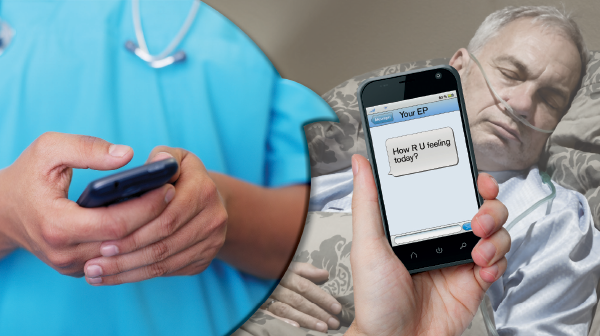
TExT-MED adds to the growing body of literature supporting mHealth as an innovative public-health solution for EDs that is effective, pragmatic, highly scalable, low cost, and widely accessible as well as may reduce ED visits while improving community health.

Pages: 1 2 3 | Single Page

Topics: Emergency DepartmentEmergency MedicineEmergency PhysicianNutritionalPatient CommunicationPatient SafetyPractice ManagementTechnologyTelemedicineWorkforce

Related

  • Florida Emergency Department Adds Medication-Dispensing Kiosk

    November 7, 2025 - 1 Comment
  • Q&A with ACEP President L. Anthony Cirillo

    November 5, 2025 - 0 Comment
  • How Does Emergency Medicine Navigate Consolidation Trends in Health Care?

    October 29, 2025 - 0 Comment

Current Issue

ACEP Now: November 2025

Download PDF

Read More

No Responses to “Follow-up Health Advice Delivered By Text May Help Improve Care for Patients with Diabetes”

Leave a Reply Cancel Reply

Your email address will not be published. Required fields are marked *


*
*


Wiley
  • Home
  • About Us
  • Contact Us
  • Privacy
  • Terms of Use
  • Advertise
  • Cookie Preferences
Copyright © 2025 by John Wiley & Sons, Inc. All rights reserved, including rights for text and data mining and training of artificial technologies or similar technologies. ISSN 2333-2603
