Logo

Log In Sign Up |  An official publication of: American College of Emergency Physicians
Navigation
  • Home
  • Multimedia
    • Podcasts
    • Videos
  • Clinical
    • Airway Managment
    • Case Reports
    • Critical Care
    • Guidelines
    • Imaging & Ultrasound
    • Pain & Palliative Care
    • Pediatrics
    • Resuscitation
    • Trauma & Injury
  • Resource Centers
    • mTBI Resource Center
  • Career
    • Practice Management
      • Benchmarking
      • Reimbursement & Coding
      • Care Team
      • Legal
      • Operations
      • Quality & Safety
    • Awards
    • Certification
    • Compensation
    • Early Career
    • Education
    • Leadership
    • Profiles
    • Retirement
    • Work-Life Balance
  • Columns
    • ACEP4U
    • Airway
    • Benchmarking
    • Brief19
    • By the Numbers
    • Coding Wizard
    • EM Cases
    • End of the Rainbow
    • Equity Equation
    • FACEPs in the Crowd
    • Forensic Facts
    • From the College
    • Images in EM
    • Kids Korner
    • Medicolegal Mind
    • Opinion
      • Break Room
      • New Spin
      • Pro-Con
    • Pearls From EM Literature
    • Policy Rx
    • Practice Changers
    • Problem Solvers
    • Residency Spotlight
    • Resident Voice
    • Skeptics’ Guide to Emergency Medicine
    • Sound Advice
    • Special OPs
    • Toxicology Q&A
    • WorldTravelERs
  • Resources
    • ACEP.org
    • ACEP Knowledge Quiz
    • Issue Archives
    • CME Now
    • Annual Scientific Assembly
      • ACEP14
      • ACEP15
      • ACEP16
      • ACEP17
      • ACEP18
      • ACEP19
    • Annals of Emergency Medicine
    • JACEP Open
    • Emergency Medicine Foundation
  • About
    • Our Mission
    • Medical Editor in Chief
    • Editorial Advisory Board
    • Awards
    • Authors
    • Article Submission
    • Contact Us
    • Advertise
    • Subscribe
    • Privacy Policy
    • Copyright Information

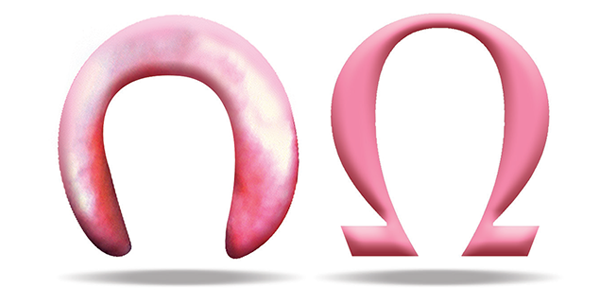
Four Techniques for Handling the Omega-Shaped Epiglottis

By Richard M. Levitan, MD, FACEP | on June 14, 2016 | 1 Comment
Airway
  • Tweet
  • Click to email a link to a friend (Opens in new window) Email
Print-Friendly Version
Four Techniques for Handling the Omega-Shaped Epiglottis

4 Using a straight blade direct laryngoscope. Find the epiglottis, then position the blade in the right side of the mouth, pivot the tip of the blade under the epiglottis, and advance slightly and then lift. Keep the proximal end of the blade in the extreme corner of the mouth (right paraglossal positioning). The small flange of the Miller design does not permit sweeping of the tongue. Moreover, the straight design does not allow pivoting back toward the center. Because of the shape of the dental arch, the straight blade (handle) can only pivot backwards if positioned all the way rightward (right on the right nostril).

You Might Also Like
  • Tips for Using a Hyperangulated Video Laryngoscope
  • How to Make the Incision, Insert the Tube in Cricothyrotomy
  • Tips for Handling the Bougie Airway Management Device
Explore This Issue
ACEP Now: Vol 35 – No 06 – June 2016
Figure 1. Omega-shaped epiglottis visualized with GlideScope Titanium Macintosh #4 blade. The intubation is accomplished using a styletted tube (straight-to-cuff shape, 35 degrees) and “threading the needle” by carefully passing it through the omega-shaped epiglottis into the glottis. In bottom left image, the cuff is obscuring visualization of the target. In bottom right image, the tube can be seen passing over the posterior cartilages. 

(click for larger image)
Figure 1. Omega-shaped epiglottis visualized with GlideScope Titanium Macintosh #4 blade. The intubation is accomplished using a styletted tube (straight-to-cuff shape, 35 degrees) and “threading the needle” by carefully passing it through the omega-shaped epiglottis into the glottis. In bottom left image, the cuff is obscuring visualization of the target. In bottom right image, the tube can be seen passing over the posterior cartilages.

Figure 2. Omega-shaped epiglottis lifted directly by tip of Storz C-Mac blade. An advantage of the Storz C-Mac, GlideScope Titanium Mac, or McGrath Mac blades is that they can be used to lift the epiglottis directly if necessary (ie, using a curved blade like a straight blade). Size #4 Mac blades of these products work best and are recommended for all adult patients. The flange heights of all three of these products are the same in Mac #3 and Mac #4 sizes, and sometimes the extra blade length is necessary. Using a Mac #4 blade on all patients prevents having to switch to a larger size. Always start laryngoscopy holding the blade very lightly (two-finger grip with thumb) and follow down the tongue until the epiglottis is identified. For many patients, you will not need full insertion of the Mac #4, but having it readily available is very helpful. 

(click for larger image)
Figure 2. Omega-shaped epiglottis lifted directly by tip of Storz C-Mac blade. An advantage of the Storz C-Mac, GlideScope Titanium Mac, or McGrath Mac blades is that they can be used to lift the epiglottis directly if necessary (ie, using a curved blade like a straight blade). Size #4 Mac blades of these products work best and are recommended for all adult patients. The flange heights of all three of these products are the same in Mac #3 and Mac #4 sizes, and sometimes the extra blade length is necessary. Using a Mac #4 blade on all patients prevents having to switch to a larger size. Always start laryngoscopy holding the blade very lightly (two-finger grip with thumb) and follow down the tongue until the epiglottis is identified. For many patients, you will not need full insertion of the Mac #4, but having it readily available is very helpful.

Pages: 1 2 | Single Page

Topics: Airway ManagementClinicalCritical CareEmergency DepartmentEmergency PhysicianEpiglottisIntubationObesityOmega-ShapedProcedures and SkillsTrauma & Injury

Related

  • Why the Nonrebreather Should be Abandoned

    December 3, 2025 - 0 Comment
  • Non-Invasive Positive Pressure Ventilation in the Emergency Department

    October 1, 2025 - 0 Comment
  • Emergency Department Management of Prehospital Tourniquets

    October 1, 2025 - 0 Comment

Current Issue

ACEP Now: November 2025

Download PDF

Read More

About the Author

Richard M. Levitan, MD, FACEP

Richard M. Levitan, MD, FACEP, is an adjunct professor of emergency medicine at Dartmouth’s Geisel School of Medicine in Hanover, N.H., and a visiting professor of emergency medicine at the University of Maryland in Baltimore. He works clinically at a critical care access hospital in rural New Hampshire and teaches cadaveric and fiber-optic airway courses.

View this author's posts »

One Response to “Four Techniques for Handling the Omega-Shaped Epiglottis”

  1. August 16, 2021

    Marcelo S Ramos Reply

    There are two epiglotiis variants that pose a challenge for intubation the omega shaped described in this issue and what I usually call “Elephant ear epiglottis”, a large floppy epiglottis that is exptremally soft and falls over the glottic openning when you perform DL/VL. For both I adopt the solution of using the blade as if it were a straight Miller blade.

Leave a Reply Cancel Reply

Your email address will not be published. Required fields are marked *


*
*


Wiley
  • Home
  • About Us
  • Contact Us
  • Privacy
  • Terms of Use
  • Advertise
  • Cookie Preferences
Copyright © 2025 by John Wiley & Sons, Inc. All rights reserved, including rights for text and data mining and training of artificial technologies or similar technologies. ISSN 2333-2603
