
FIX 2017 Conference Seeks to Improve Gender Equity in the Field of Emergency Medicine
KK: Were your goals to advance diversity and inclusion in general or just for women in medicine?
Explore This Issue
ACEP Now: Vol 37 – No 01 – January 2018DK: The conference was 100 percent inclusive. We had men, participants and speakers. We had women who were not in emergency medicine, even some who were not doctors. We included nurses, PAs, medical students, and EMTs. What was interesting to us was that the women in the room who were not emergency medicine doctors, who weren’t even doctors, felt as included in the conversation as those card-carrying emergency medicine providers. Some of the men said that this was the best development conference they’d ever been to. The journey of being a woman in medicine is actually more about being a person in medicine. When we’re talking about being a physician parent whose child is ill, that is not exclusive to women.

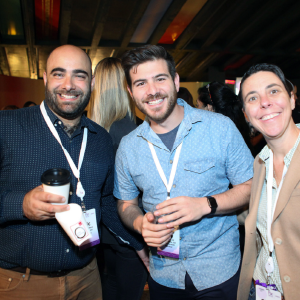
FIX 2017 attendees mingle at some of the conference’s many networking events. PHOTO: Marc Goldberg © FemInEM
We had the speakers wear a feminist shirt—it’s literally a shirt that said “Feminist.” We didn’t only give that shirt to women; we gave it to every single speaker. So, Scott Weingart, Adam Rosh, Michael Gisondi, and Rob Gore all stood on the stage and wore a shirt that said “Feminist.” There is nothing exclusive or divisive about that because we should all be feminists, caring about the needs, concerns, and interests of each other.
KK: I think there can be a misconception that a conference like this is structured for the sole purpose of women supporting women, but what we can learn from you, your organization, and from our specialty is this is about making sure that we’re supporting each other and making sure that people aren’t excluded. Sometimes that overarching principle may be overlooked. We all benefit from diversity and inclusion because we all work together, and when we don’t recognize each other for the great value that we individually and collectively bring, we all lose, and we all fail.

FIX 2017 attendees mingle at some of the conference’s many networking events. PHOTO: Marc Goldberg © FemInEM
DK: I agree, except that I honestly think we need to go beyond that. Studies have proven that women aren’t worse doctors and that there is a power discrepancy between women and men. It is time to accept that bias exists and that there are discrepancies between women and men in salary, promotion, tenure. The tradition of privilege is something I always talk about in my lectures. If you’re not on the receiving end of bias, then to even consider how it could affect those around you is a really difficult thing to do. Any group that is underrepresented, whether it’s in race, gender, or anything else, needs support. So, I don’t really just expect better from our community anymore, I demand better of our community right now. One of the best things that we had at the end of that conference was the fact that 100 percent of the people there, regardless of how they got there, felt that it gave them something. That was our biggest victory.
Pages: 1 2 3 4 | Single Page
Related


Current Issue


Assistant/Associate Professor of Emergency Medicine
We are seeking applicants for multiple tenure-eligible or tenure-ineligible positions - Assistant/Associate or Professor of Emergency Medicine
Charlottesville, Virginia
Salary, rank, and tenure are commensurate with education and experience
University of Virginia: UVA Provost's Office: School of Medicine: Emergency Medicine
Read MoreVice-Chair of Education, Department of Emergency Medicine
The Vice Chair of Education will provide strategic leadership, operational oversight, scholarly vision for all educational initiatives..
Charlottesville, Virginia
Salary, rank, and tenure are commensurate with education and experience
University of Virginia: UVA Provost's Office: School of Medicine: Emergency Medicine
Read MoreVice-Chair of Faculty Affairs, Department of Emergency Medicine
The Vice Chair of Faculty Affairs will provide strategic leadership and operational oversight...
Charlottesville, Virginia
Salary, rank, and tenure are commensurate with education and experience
University of Virginia: UVA Provost's Office: School of Medicine: Emergency Medicine
Read More
2 Responses to “FIX 2017 Conference Seeks to Improve Gender Equity in the Field of Emergency Medicine”
January 28, 2018
Larry CohenI find in general, women physicians do make less then men. However, I haven’t seen any gender bias causing it. What I have seen is that some women are not as “fast” as some men, which, decreases their salary. Where I work, and other than the USAF, my other position over the last 26 years in practice is the women have less overall productivity. I have only worked in private groups, and we have been, for the most part fee RVU based compensation. Now with that, there are some women that beat the heck out of a lot of men in this way. And actually, the only complaints about salary where I work (100,000+/yr) are from some of the men, that are very “slow” and feel productivity is wrong and everyone should get an equal share…and every participant should get a trophy
February 4, 2018
concerned male future EM physicianI am unsure if it is possible to “see bias” as most bias tends to be implicit and thus largely invisible. Secondly, are there any studies showing that women are “not as fast as men?” I would presume not. If anything, with the younger generation being naturally more adept at EMR, I would guess that the new generation of female physicians would be faster than the older men of the past generation. Additionally, without providing evidence to support your claims, I think your comment contradicts itself, as you appear to have implicit stereotypes about female physicians which leads to wage gaps between genders. I believe the purpose of such conferences is not to incite a gender or generational war, but rather to help us identify the biases that we have, and in turn create a more equitable workplace.