Logo

Log In Sign Up |  An official publication of: American College of Emergency Physicians
Navigation
  • Home
  • Multimedia
    • Podcasts
    • Videos
  • Clinical
    • Airway Managment
    • Case Reports
    • Critical Care
    • Guidelines
    • Imaging & Ultrasound
    • Pain & Palliative Care
    • Pediatrics
    • Resuscitation
    • Trauma & Injury
  • Resource Centers
    • mTBI Resource Center
  • Career
    • Practice Management
      • Benchmarking
      • Reimbursement & Coding
      • Care Team
      • Legal
      • Operations
      • Quality & Safety
    • Awards
    • Certification
    • Compensation
    • Early Career
    • Education
    • Leadership
    • Profiles
    • Retirement
    • Work-Life Balance
  • Columns
    • ACEP4U
    • Airway
    • Benchmarking
    • Brief19
    • By the Numbers
    • Coding Wizard
    • EM Cases
    • End of the Rainbow
    • Equity Equation
    • FACEPs in the Crowd
    • Forensic Facts
    • From the College
    • Images in EM
    • Kids Korner
    • Medicolegal Mind
    • Opinion
      • Break Room
      • New Spin
      • Pro-Con
    • Pearls From EM Literature
    • Policy Rx
    • Practice Changers
    • Problem Solvers
    • Residency Spotlight
    • Resident Voice
    • Skeptics’ Guide to Emergency Medicine
    • Sound Advice
    • Special OPs
    • Toxicology Q&A
    • WorldTravelERs
  • Resources
    • ACEP.org
    • ACEP Knowledge Quiz
    • Issue Archives
    • CME Now
    • Annual Scientific Assembly
      • ACEP14
      • ACEP15
      • ACEP16
      • ACEP17
      • ACEP18
      • ACEP19
    • Annals of Emergency Medicine
    • JACEP Open
    • Emergency Medicine Foundation
  • About
    • Our Mission
    • Medical Editor in Chief
    • Editorial Advisory Board
    • Awards
    • Authors
    • Article Submission
    • Contact Us
    • Advertise
    • Subscribe
    • Privacy Policy
    • Copyright Information

Design Emergency Departments to Boost Patient, Staff Satisfaction

By James J. Augustine, MD, FACEP | on December 11, 2016 | 0 Comment
Benchmarking
  • Tweet
  • Click to email a link to a friend (Opens in new window) Email
Print-Friendly Version
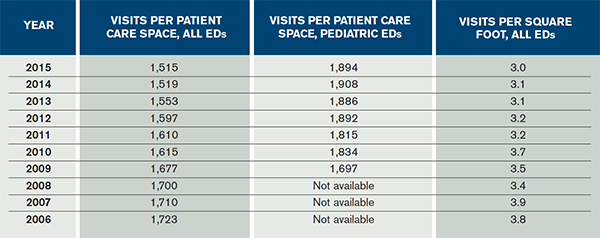
Table 1. EDBA Data Survey Volume Per Space and by Square Footage

You Might Also Like
  • Emergency Department Benchmarking Alliance Reports on Data Survey for Next-Generation ED Design
  • Patient Flow Improvements to Boost Efficiency in Small Emergency Departments
  • Emergency Department Patient Flow Change Brings Better Metrics, More Satisfaction
Explore This Issue
ACEP Now: Vol 35 – No 12 – December 2016

Table 1. EDBA Data Survey Volume Per Space and by Square Footage

We have noted that more boarding increases the need for both ED space and ED care spaces. An increasing number of emergency departments are building patient care areas for vertical patients. Emergency departments are providing care in chairs, recliners, and other upright spaces. It is not yet clear that patients benefit from vertical care.

Frank Zilm, director of the Institute for Health+Wellness Design at the University of Kansas in Lawrence, has suggested that, beyond the appropriate size and number of patient care spaces, the next-generation emergency department has to address the risk to staff and patients from pandemics.

For emergency departments using team triage models, spaces that can serve both for greeting and rapid care (some using recliners due to their flexibility) are a very effective use of square footage. Flow and patient throughput are enhanced by universal patient room design, and patient care rooms must be designed for infection control, noise reduction, and staff efficiency. At the department level, the design must facilitate ambulance reception, toileting availability, and cleanliness, and it must include space designed for the safe processing of mental health patients.

There is a tremendous emphasis on disaster preparedness. Frank Zilm, director of the Institute for Health+Wellness Design at the University of Kansas in Lawrence, has suggested that, beyond the appropriate size and number of patient care spaces, the next-generation emergency department has to address the risk to staff and patients from pandemics. This involves designing for early identification of at-risk patients, the ability to segregate flow through the emergency department, and the ability to create cohort quarantine zones within or adjacent to the emergency department. Another key element in emergency preparedness is the inclusion of a multipurpose utility dirty room (the MUD room) for patient decontamination and early care.

It is wise to plan for a clinical area that is sized around three visits per square foot and about 1,300 to 1,500 visits per care space. The projection of future demand and service requirements for emergency care is a daunting challenge. Designing for flexibility to accommodate new care models is critical.

Reference

  1. Augustine JJ. Emergency Department Benchmarking Alliance reports on data survey for next-generation ED design. ACEP NOW. 2014;33(8):22.

Pages: 1 2 | Single Page

Topics: DesignEmergency DepartmentEmergency MedicineEmergency PhysicianHospitalPatient CareQuality & SafetyStaffWorkforce

Related

  • Let Core Values Help Guide Patient Care

    November 5, 2025 - 0 Comment
  • The Emergency Physician Job Market 2025-26

    October 15, 2025 - 2 Comments
  • A Follow-Up Conversation with ACEP President Dr. Alison Haddock

    August 30, 2025 - 0 Comment

Current Issue

ACEP Now: November 2025

Download PDF

Read More

About the Author

James J. Augustine, MD, FACEP

James J. Augustine, MD, FACEP, is national director of prehospital strategy for US Acute Care Solutions in Canton, Ohio; clinical professor of emergency medicine at Wright State University in Dayton, Ohio; and vice president of the Emergency Department Benchmarking Alliance.

View this author's posts »

No Responses to “Design Emergency Departments to Boost Patient, Staff Satisfaction”

Leave a Reply Cancel Reply

Your email address will not be published. Required fields are marked *


*
*


Wiley
  • Home
  • About Us
  • Contact Us
  • Privacy
  • Terms of Use
  • Advertise
  • Cookie Preferences
Copyright © 2025 by John Wiley & Sons, Inc. All rights reserved, including rights for text and data mining and training of artificial technologies or similar technologies. ISSN 2333-2603
