Logo

Log In Sign Up |  An official publication of: American College of Emergency Physicians
Navigation
  • Home
  • Multimedia
    • Podcasts
    • Videos
  • Clinical
    • Airway Managment
    • Case Reports
    • Critical Care
    • Guidelines
    • Imaging & Ultrasound
    • Pain & Palliative Care
    • Pediatrics
    • Resuscitation
    • Trauma & Injury
  • Resource Centers
    • mTBI Resource Center
  • Career
    • Practice Management
      • Benchmarking
      • Reimbursement & Coding
      • Care Team
      • Legal
      • Operations
      • Quality & Safety
    • Awards
    • Certification
    • Compensation
    • Early Career
    • Education
    • Leadership
    • Profiles
    • Retirement
    • Work-Life Balance
  • Columns
    • ACEP4U
    • Airway
    • Benchmarking
    • Brief19
    • By the Numbers
    • Coding Wizard
    • EM Cases
    • End of the Rainbow
    • Equity Equation
    • FACEPs in the Crowd
    • Forensic Facts
    • From the College
    • Images in EM
    • Kids Korner
    • Medicolegal Mind
    • Opinion
      • Break Room
      • New Spin
      • Pro-Con
    • Pearls From EM Literature
    • Policy Rx
    • Practice Changers
    • Problem Solvers
    • Residency Spotlight
    • Resident Voice
    • Skeptics’ Guide to Emergency Medicine
    • Sound Advice
    • Special OPs
    • Toxicology Q&A
    • WorldTravelERs
  • Resources
    • ACEP.org
    • ACEP Knowledge Quiz
    • Issue Archives
    • CME Now
    • Annual Scientific Assembly
      • ACEP14
      • ACEP15
      • ACEP16
      • ACEP17
      • ACEP18
      • ACEP19
    • Annals of Emergency Medicine
    • JACEP Open
    • Emergency Medicine Foundation
  • About
    • Our Mission
    • Medical Editor in Chief
    • Editorial Advisory Board
    • Awards
    • Authors
    • Article Submission
    • Contact Us
    • Advertise
    • Subscribe
    • Privacy Policy
    • Copyright Information

Bias

  • Overcoming Unconscious Bias Takes Strategy and Collective Effort

    Clinicians are more likely to consider black patients less compliant and less cooperative in medical settings than...
  • Don’t Let Bias Affect How You Treat Your Patients

    “Don’t worry about them, doc—they’re a frequent flier.” “Doc, they’re just drug-seeking.” These phrases are much too...
  • When Unconscious Bias Hits Home (Again)

    It was surprising to receive an email advising me that I had appeared on the front page...

Overcoming Unconscious Bias Takes Strategy and Collective Effort

November 24, 2019 - Uché Blackstock, MD - 0 Comment

Clinicians are more likely to consider black patients less compliant and less cooperative in medical settings than…

Read More

Don’t Let Bias Affect How You Treat Your Patients

September 19, 2018 - Benjamin Thomas, MD - 1 Comment

“Don’t worry about them, doc—they’re a frequent flier.” “Doc, they’re just drug-seeking.” These phrases are much too…

Read More

When Unconscious Bias Hits Home (Again)

July 15, 2018 - Sheryl Heron, MD, MPH; with contributions from Michelle Lall, MD, MHS - 0 Comment

It was surprising to receive an email advising me that I had appeared on the front page…

Read More

We All Have Biases—It’s How You Manage Them That Matters

October 31, 2017 - Richard Quinn - 0 Comment

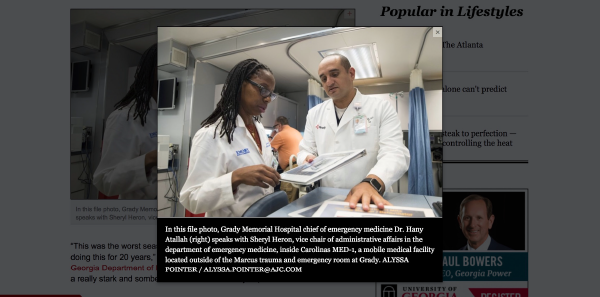
WASHINGTON, D.C.—Sheryl Heron, MD, MPH, FACEP, is vice chair of administrative affairs in the Emory University Department…

Read More

ACEP17 Mills Lecture to Address Cognitive Bias in Emergency Department Patient Care

October 4, 2017 - Richard Quinn - 0 Comment

Sheryl Heron, MD, MPH, FACEP, knows cognitive bias firsthand—and not just because she’s delivering this year’s James…

Read More

How Does Bias Affect Physicians, Patients?

April 10, 2017 - Bernard L. Lopez, MD, MS, CPE, FACEP, FAAEM - 3 Comments

Women have a higher rate of missed myocardial infarction. Black patients wait longer to receive care in…

Read More
  • 1
  • 2
  • 3

Wiley
  • Home
  • About Us
  • Contact Us
  • Privacy
  • Terms of Use
  • Advertise
  • Cookie Preferences
Copyright © 2025 by John Wiley & Sons, Inc. All rights reserved, including rights for text and data mining and training of artificial technologies or similar technologies. ISSN 2333-2603