
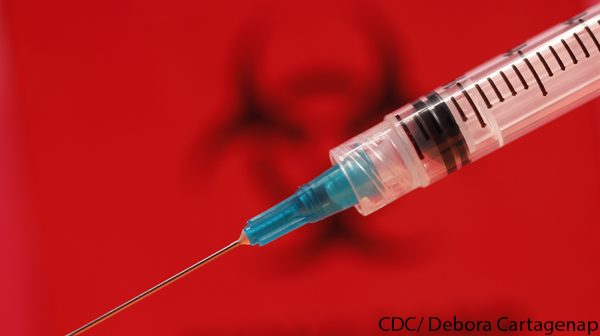
Such facilities are operating in Europe and Canada, with data demonstrating decreases in mortality, infectious disease, and possibly crime.11–13 Although there is rumor of an underground facility in California and discussion in states including Washington, Pennsylvania, and New York, safe injection facilities remain illegal in the United States, and of course, they remain controversial. Critics worry they condone drug use and that you never know what people are actually injecting. Keep in mind people will inject that same substance by themselves at home or elsewhere in a much less safe environment.
Explore This Issue
ACEP Now: Vol 37 – No 09 – September 2018Health care organizations are now beginning to discuss their role in harm-reduction strategies. The American Medical Association (AMA) voted to “support the development of private facilities where people who use intravenous drugs can inject self-provided drugs under medical supervision.” At the ACEP Council meeting last year, Resolution 31 was adopted: Development and Study of Supervised Injection Facilities. The resolution joins the AMA in supporting the development and study of pilot facilities in the United States.
If any of these facilities ever go operational in the United States, we’ll have to see if the results are similar to those in other countries.
References
- Syringe services programs. CDC website. Available at: www.cdc.gov/hiv/risk/ssps.html. Accessed Aug. 20, 2018.
- Access to clean syringes. CDC website. Available at: www.cdc.gov/policy/hst/hi5/cleansyringes/index.html. Accessed Aug. 20, 2018.
- Reducing harms from injection drug use & opioid use disorder with syringe services programs. CDC website. Available at: www.cdc.gov/hiv/pdf/risk/cdchiv-fs-syringe-services.pdf. Accessed Aug. 20, 2018.
- Syringe exchange programs: research shows they do not increase crime rates. Harm Reduction Coalition website. Available at: http://harmreduction.org/wp-content/uploads/2012/01/SEPandCrimeFactSheet2006.pdf. Accessed Aug. 20, 2018.
- Walley AY, Xuan Z, Hackman HH, et al. Opioid overdose rates and implementation of overdose education and nasal naloxone distribution in Massachusetts: interrupted time series analysis. BMJ. 2013;346:f174.
- Wheeler E, Jones TS, Gilbert MK, et al. Opioid overdose prevention programs providing naloxone to laypersons–United States, 2014. MMWR Morb Mortal Wkly Rep. 2015;64(23);631-635.
- Platt L, Minozzi S, Reed J, et al. Needle syringe programmes and opioid substitution therapy for preventing hepatitis C transmission in people who inject drugs. Cochrane Database Syst Rev. 2017;9:CD012021.
- Bixler D, Corby-Lee G, Proescholdbell S, et al. Access to syringe services programs – Kentucky, North Carolina, and West Virginia, 2013–2017. MMWR Morb Mortal Wkly Rep. 2018;67(18):529-532.
- Lopez, G. An Indiana county just halted a lifesaving needle exchange program, citing the Bible. Vox website. Available at: www.vox.com/policy-and-politics/2017/10/20/16507902. Accessed Aug. 20, 2018.
- Johnson SR. Surgeon general urges ER docs to advocate for evidence-based opioid treatment. Modern Healthcare website. Available at: www.modernhealthcare.com/article/20180523/NEWS/180529976. Accessed Aug. 16, 2018.
- Marshall BD, Milloy MJ, Wood E, et al. Reduction in overdose mortality after the opening of North America’s first medically supervised safer injecting facility: a retrospective population-based study. Lancet. 2011;377(9775):1429-1437.
- Dolan JK, Kimber J, Fry C, et al. Drug consumption facilities in Europe and the establishment of supervised injecting centres in Australia. Drug Alcohol Rev. 2000;19(3):337-346.
- Wood E, Tyndall MW, Lai C, et al. Impact of a medically supervised safer injecting facility on drug dealing and other drug-related crime. Subst Abuse Treat Prev Policy. 2006;1:13.
Pages: 1 2 3 4 | Single Page



One Response to “Your Overdose Patient Doesn’t Want to Quit—Now What?”
September 16, 2018
Gary Roberts, MD JDFifteen years ago I attended a (state mandated) CME program on pain. It was presented by UC Davis and entitled, “The War on Pain.” We were advised that UNDERTREATMENT of pain was a medical crisis and that we were ethically obliged to provide adequate quantities of narcotics. The message, better to over-treat than otherwise.
Two points:
1. the opioid crisis is iatrogenically mediated and legislatively induced. Physicians are taking the heat for the unintended (nonetheless foreseeable) consequences of “do-gooder” legislators whose attempts to control medical practice have backfired in a spectacular fashion.
2. how is dealing with an opioid addict different from dealing with a smoker or alcoholic?