Logo

Log In Sign Up |  An official publication of: American College of Emergency Physicians
Navigation
  • Home
  • Multimedia
    • Podcasts
    • Videos
  • Clinical
    • Airway Managment
    • Case Reports
    • Critical Care
    • Guidelines
    • Imaging & Ultrasound
    • Pain & Palliative Care
    • Pediatrics
    • Resuscitation
    • Trauma & Injury
  • Resource Centers
    • mTBI Resource Center
  • Career
    • Practice Management
      • Benchmarking
      • Reimbursement & Coding
      • Care Team
      • Legal
      • Operations
      • Quality & Safety
    • Awards
    • Certification
    • Compensation
    • Early Career
    • Education
    • Leadership
    • Profiles
    • Retirement
    • Work-Life Balance
  • Columns
    • ACEP4U
    • Airway
    • Benchmarking
    • Brief19
    • By the Numbers
    • Coding Wizard
    • EM Cases
    • End of the Rainbow
    • Equity Equation
    • FACEPs in the Crowd
    • Forensic Facts
    • From the College
    • Images in EM
    • Kids Korner
    • Medicolegal Mind
    • Opinion
      • Break Room
      • New Spin
      • Pro-Con
    • Pearls From EM Literature
    • Policy Rx
    • Practice Changers
    • Problem Solvers
    • Residency Spotlight
    • Resident Voice
    • Skeptics’ Guide to Emergency Medicine
    • Sound Advice
    • Special OPs
    • Toxicology Q&A
    • WorldTravelERs
  • Resources
    • ACEP.org
    • ACEP Knowledge Quiz
    • Issue Archives
    • CME Now
    • Annual Scientific Assembly
      • ACEP14
      • ACEP15
      • ACEP16
      • ACEP17
      • ACEP18
      • ACEP19
    • Annals of Emergency Medicine
    • JACEP Open
    • Emergency Medicine Foundation
  • About
    • Our Mission
    • Medical Editor in Chief
    • Editorial Advisory Board
    • Awards
    • Authors
    • Article Submission
    • Contact Us
    • Advertise
    • Subscribe
    • Privacy Policy
    • Copyright Information

When to Use Intranasal Medications in Children

By Annalise Sorrentino, MD, FAAP, FACEP | on October 13, 2015 | 0 Comment
CME CME Now Kids korner
  • Tweet
  • Click to email a link to a friend (Opens in new window) Email
Print-Friendly Version
When to Use Intranasal Medications in Children
Figure 2. Mucosal atomization device

You Might Also Like
  • Fentanyl Versus Ketamine for Intranasal Pain Relief
  • Non-Opioid Pain Medications to Consider for Emergency Department Patients
  • Get the Latest Research in the May Annals
Explore This Issue
ACEP Now: Vol 34 – No 10 – October 2015

Figure 2. Mucosal atomization device

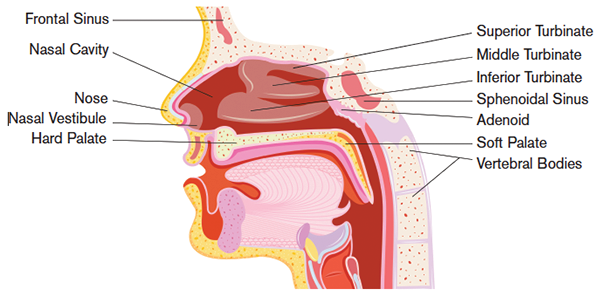
the drip method, but this does require a compliant child to achieve success. Probably the most widely used device is the mucosal atomizer. It screws on to the top of your medication syringe, and when you spray it into the nare, it rapidly distributes the particles after breaking them down into smaller ones that are more easily absorbed (see Figure 2).3

Intranasal medication delivery can be a useful tool when dealing with children (see Table 2 for suggestions on when to consider intranasal delivery). Some tips that will allow for greater success include:

  • Consider suctioning prior to administration if there is a lot of mucus present.
  • Use small volumes .
  • Use the highest concentration of medication available and do not dilute.

Use both nares to increase surface area Intranasal medications are a quick, safe, and relatively painless way to deliver analgesia and anxiolysis to pediatric patients. They are a great resource to have in your tool kit!


Dr. SorrentinoDr. Sorrentino is professor of pediatrics in the division of emergency medicine at the University of Alabama at Birmingham.

References

  1. Fortuna A, Alves G, Serralheiro A, et al. Intranasal delivery of systemic-acting drugs: small-molecules and biomacromolecules. Eur J Pharm Biopharm. 2014;88:8-27.
  2. Grassin-Delyle S, Buenestado A, Naline E, et al. Intranasal drug delivery: an efficient and non-invasive route for systemic administration: focus on opioids. Pharmacol Ther. 2012;134:366-379.
  3. Del Pizzo J, Callahan JM. Intranasal medications in pediatric emergency medicine. Pediatr Emerg Care. 2014;30:496-504.
  4. Kaminsky BM, Bostwick JR, Guthrie SK. Alternate routes of administration of antidepressant and antipsychotic medications. Ann Pharmacother. 2015;49:808-817.
  5. Chiaretti A, Barone G, Rigante D, et al. Intranasal lidocaine and midazolam for procedural sedation in children. Arch Dis Child. 2011;96:160-163.
  6. Graudins A, Meek R, Egerton-Warburton D, et al. The PICHFORK (pain in children fentanyl or ketamine) trial: a randomized controlled trial comparing intranasal ketamine and fentanyl for the relief of moderate to severe pain in children with limb injuries. Ann Emerg Med. 2015;65:248-255.
  7. Filho EM, Robinson F, de Carvalho WB, et al. Intranasal dexmedetomidine for sedation for pediatric computed tomography imaging. J Pediatr. 2015;166:1313-1315.
  8. Tsze DS, Steele DW, Machan JT, et al. Intranasal ketamine for procedural sedation in pediatric laceration repair. Ped Emerg Care. 2012;28:767-770.
  9. Yuen VM, Hui TW, Irwin MG, et al. A randomized comparison of two intranasal dexmedetomidine doses for premedication in children. Anaesthesia. 2012;67:1210-1216.

Pages: 1 2 3 | Single Page

Topics: AnalgesiaClinical GuidelinesEmergency DepartmentEmergency MedicineEmergency PhysicianIntranasal MedicationMedicationPainPediatricsQualitySedationTreatment

Related

  • FACEPs in the Crowd: Dr. John Ludlow

    November 5, 2025 - 0 Comment
  • Nail Bed Injuries: What to Do—or Not to Do

    August 18, 2025 - 0 Comment
  • Differential Diagnosis of an Infant with Easy Bleeding, Bruising

    August 14, 2025 - 0 Comment

Current Issue

ACEP Now: November 2025

Download PDF

Read More

No Responses to “When to Use Intranasal Medications in Children”

Leave a Reply Cancel Reply

Your email address will not be published. Required fields are marked *


*
*


Wiley
  • Home
  • About Us
  • Contact Us
  • Privacy
  • Terms of Use
  • Advertise
  • Cookie Preferences
Copyright © 2025 by John Wiley & Sons, Inc. All rights reserved, including rights for text and data mining and training of artificial technologies or similar technologies. ISSN 2333-2603
