Logo

Log In Sign Up |  An official publication of: American College of Emergency Physicians
Navigation
  • Home
  • Multimedia
    • Podcasts
    • Videos
  • Clinical
    • Airway Managment
    • Case Reports
    • Critical Care
    • Guidelines
    • Imaging & Ultrasound
    • Pain & Palliative Care
    • Pediatrics
    • Resuscitation
    • Trauma & Injury
  • Resource Centers
    • mTBI Resource Center
  • Career
    • Practice Management
      • Benchmarking
      • Reimbursement & Coding
      • Care Team
      • Legal
      • Operations
      • Quality & Safety
    • Awards
    • Certification
    • Compensation
    • Early Career
    • Education
    • Leadership
    • Profiles
    • Retirement
    • Work-Life Balance
  • Columns
    • ACEP4U
    • Airway
    • Benchmarking
    • Brief19
    • By the Numbers
    • Coding Wizard
    • EM Cases
    • End of the Rainbow
    • Equity Equation
    • FACEPs in the Crowd
    • Forensic Facts
    • From the College
    • Images in EM
    • Kids Korner
    • Medicolegal Mind
    • Opinion
      • Break Room
      • New Spin
      • Pro-Con
    • Pearls From EM Literature
    • Policy Rx
    • Practice Changers
    • Problem Solvers
    • Residency Spotlight
    • Resident Voice
    • Skeptics’ Guide to Emergency Medicine
    • Sound Advice
    • Special OPs
    • Toxicology Q&A
    • WorldTravelERs
  • Resources
    • ACEP.org
    • ACEP Knowledge Quiz
    • Issue Archives
    • CME Now
    • Annual Scientific Assembly
      • ACEP14
      • ACEP15
      • ACEP16
      • ACEP17
      • ACEP18
      • ACEP19
    • Annals of Emergency Medicine
    • JACEP Open
    • Emergency Medicine Foundation
  • About
    • Our Mission
    • Medical Editor in Chief
    • Editorial Advisory Board
    • Awards
    • Authors
    • Article Submission
    • Contact Us
    • Advertise
    • Subscribe
    • Privacy Policy
    • Copyright Information

When to Use Intranasal Medications in Children

By Annalise Sorrentino, MD, FAAP, FACEP | on October 13, 2015 | 0 Comment
CME CME Now Kids korner
  • Tweet
  • Click to email a link to a friend (Opens in new window) Email
Print-Friendly Version
When to Use Intranasal Medications in Children
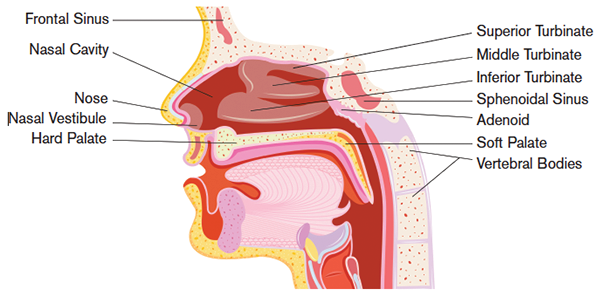
Figure 1. Nasal anatomy
Reprinted with permission from Int Forum Allergy Rhinol. 2014;4:397-402.

My last shift started with a 3-year-old with a dog bite to the face, a 10-year-old with a forearm injury, and an anxious 16-year-old who needed a lumbar puncture. When working with children and young adults, we are constantly looking for ways to make the emergency department visit more tolerable for all involved. There are two things that have helped me come closer to that goal. The first is having child life specialists. The second is intranasal medication delivery.

You Might Also Like
  • Fentanyl Versus Ketamine for Intranasal Pain Relief
  • Non-Opioid Pain Medications to Consider for Emergency Department Patients
  • Get the Latest Research in the May Annals
Explore This Issue
ACEP Now: Vol 34 – No 10 – October 2015
Introducing CME NowACEP Now features one article each issue related to an ACEP eCME CME activity.

Log on to the ACEP eCME CME site to complete the activity for this article and earn free AMA PRA Category 1 Credit.

Initially created for local nasal effects, intranasal medications have become a desired route for certain drugs when seeking a systemic effect. Some immunizations have found success using the intranasal method, and several other medications have followed suit, namely those used for sedation and analgesia. There are several benefits to using the intranasal route, including:

  • High vascularization of the nasal mucosa
  • Wide absorption area
  • Avoidance of first-pass metabolism by the gastrointestinal or hepatic pathways
  • Avoidance of IV placement
  • High patient tolerance of the drug administration
  • Quick onset of action1

The nasal fossa is divided into three parts: the vestibule, the cavity, and the turbinates (see Figure 1). The turbinates are classified into the inferior, middle, and superior. The main site for systemic drug entry is around the inferior turbinate due to its high surface area and vascularization.

There are several factors that may play into the effectiveness of intranasal drug delivery, including volume administered, particle diameter, spray administration, factors influencing the site of absorption (eg, other drugs such as phenylephrine), nasal blood flow, and mucociliary clearance and medical conditions that affect it, and these things should be taken into account when administering intranasal medications.2 The best absorbed medications have low molecular weights, are highly lipophilic, and have no net charge at physiologic pH.3

The most basic is the drip method, but this does require a compliant child to achieve success. Probably the most widely used device is the mucosal atomizer.

Intranasal delivery has been used for several different purposes including vaccinations; treatment of certain conditions such as rhinosinusitis, seizures, migraines, and diabetes insipidus; antipsychotic medications; and sedation and analgesia.4 For purposes of this article, we will focus on sedation and analgesia. Historically, two main classes of drugs have been used in intranasal administration: opioids and benzodiazepines (see Table 1 for dosing guidelines). More recently, other drugs, such as ketamine and dexmedetomidine, have also been studied.

Pages: 1 2 3 | Single Page

Topics: AnalgesiaClinical GuidelinesEmergency DepartmentEmergency MedicineEmergency PhysicianIntranasal MedicationMedicationPainPediatricsQualitySedationTreatment

Related

  • FACEPs in the Crowd: Dr. John Ludlow

    November 5, 2025 - 0 Comment
  • Nail Bed Injuries: What to Do—or Not to Do

    August 18, 2025 - 0 Comment
  • Differential Diagnosis of an Infant with Easy Bleeding, Bruising

    August 14, 2025 - 0 Comment

Current Issue

ACEP Now: November 2025

Download PDF

Read More

No Responses to “When to Use Intranasal Medications in Children”

Leave a Reply Cancel Reply

Your email address will not be published. Required fields are marked *


*
*


Wiley
  • Home
  • About Us
  • Contact Us
  • Privacy
  • Terms of Use
  • Advertise
  • Cookie Preferences
Copyright © 2025 by John Wiley & Sons, Inc. All rights reserved, including rights for text and data mining and training of artificial technologies or similar technologies. ISSN 2333-2603
