
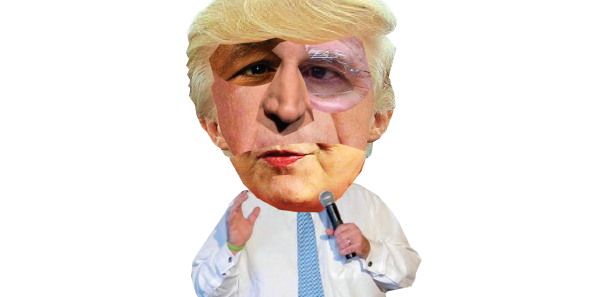
As of Feb. 1, we were officially 292 days away from the next presidential election on Nov. 8. Also on Feb. 1, we heralded the beginning of “primary season,” with the first caucus being held in Iowa. Over the past few months, we have watched the Democratic and a historically unprecedented crowded Republican fields begin to dwindle, with more “thinning of the herd” likely by March 1. (Let’s hope so.) Although only two or maybe three candidates (maybe an Independent) will make it to Election Day, it’s worth getting a preliminary understanding of the current major candidates and their health care policy platforms.
Explore This Issue
ACEP Now: Vol 35 – No 02 – February 2016Let’s start with the Republicans. The one common theme here is pretty consistent: according to the Republican candidates, Obamacare is a “disaster” and must be “repealed and replaced” (R&R). The big question, of course, is replaced with what? Starting at the top of current polling lists and working our way down, we begin with “The Donald.” On his website, Donald Trump doesn’t even have health care listed under his “Issues” tab, and he has not issued any type of comprehensive plan. In debates, Trump has called for repealing Obamacare and cited rising insurance premiums and high deductibles as problems with the program. In a “free market” vein, Trump has been supportive of allowing insurance plans to be offered across state lines and is supportive of health savings accounts.
Next up is U.S. Sen. Ted Cruz, who, although he also doesn’t have health care listed on his “Issues” tab, did sponsor the “Health Care Choice Act” in March 2015 (with co-sponsor U.S. Sen. Marco Rubio), which would allow for insurance plans to be sold across state lines and, of course, repeal key sections of Obamacare. Cruz, as a federal employee, insured his family through a private plan rather than going through the federal health care exchange after his wife took a leave of absence from her private-sector job, and her employer-based insurance, to join his campaign. Through a measure added to the Affordable Care Act, members of Congress are no longer eligible for federal (employer-based) health insurance but can receive subsidies to offset the costs of obtaining private insurance (which are not available to all other Americans); Cruz has said he will not accept the subsidies.
Hooray! Finally a Republican candidate with health care as an issue on his website. Rubio, in addition to being part of the R&R gang, lays out the following three building blocks for health care reform: provide a refundable tax credit that can be used to purchase insurance, ensure access by expanding access to consumer-centered health plans with insurance regulation reform, and create a Medicaid block-grant program for states to manage. Rubio also has been critical of “profiteering” by pharmaceutical companies, which has become another rallying cry for both Republican and Democratic candidates.
Last on my major Republican candidate list is Dr. Ben Carson. Dr. Carson is the renowned pediatric neurosurgeon and one of two Republican physician candidates. (Did you know that Rand Paul was a practicing ophthalmologist for 18 years?) Carson is on the R&R bus and has his own unique plan for health care reform. Touting the failures of Medicaid and Medicare to deliver equitable health care, Carson has proposed the creation of health empowerment accounts (HEAs). These accounts would provide Medicaid and Medicare beneficiaries the freedom to purchase health insurance in the private market. Carson would also gradually raise the Medicare eligibility age to 70 and provide block grants to states for Medicaid, which would then fund the HEAs for individual beneficiaries.
For the remaining GOP candidates—Chris Christie, Jeb Bush, John Kasich, Carly Fiorina, Mike Huckabee, Rick Santorum, and Paul—anything is possible, but none of them has really distinguished themselves on health care. [Editor’s Note: Shortly after the Iowa caucuses, candidates Huckabee, Santorum, and Rand suspended their campaigns. Santorum has endorsed Rubio.]
Sen. Bernie Sanders has created the most comprehensive, dramatic, and detailed plan for health care reform of all the candidates, touting his “Medicare-for-All” plan. Sanders would create a universal coverage, single-payer system administered by the federal government.
Now for the Democrats. Interestingly, despite the size of the Republican field, it has been on the Democrat side that we have seen more details about health care reform. Former First Lady, U.S. Sen., and Secretary of State Hillary Clinton has been developing and refining her beliefs about health care since her 1993 role as the head of the Task Force on National Health Care Reform, established by President Bill Clinton. Although never adopted, for many political and policy reasons, the plan pushed for universal health care by mandating health insurance for all employed workers. Currently, Mrs. Clinton continues to support that health care coverage is a universal right and is generally supportive of Obamacare but has pushed for lowering the out-of-pocket deductibles and eliminating the “Cadillac tax” on health insurance plans that is scheduled to start in 2018. Another key component of Clinton’s health care reform platform is requiring pharmaceutical companies to lower the cost of prescription medications and capping out-of-pocket drug costs at $250 per month.
U.S. Sen. Bernie Sanders has created the most comprehensive, dramatic, and detailed plan for health care reform of all the candidates, touting his “Medicare for All” plan. Sanders would create a universal coverage, single-payer system administered by the federal government. Costing $14 trillion over 10 years, it would be paid for partially by a combination of a payroll tax paid by employers, a tax increase on earnings paid by workers, an increase in the marginal tax rate (to more than 50 percent for incomes greater than $10 million per year), and an elimination of the capital-gains tax break. Under Sanders’ proposal, there is still a projected shortfall of almost $600 billion, which he states would be made up by “trimming costs” based upon the improved negotiating power with providers that the government would have as a single payer. Sanders also hasn’t defined whether all services would be paid at the current Medicare levels, which are only “adequate” in the setting of most providers who are able to obtain higher reimbursements from commercial payers.
[Editor’s Note: Democratic candidate and former Maryland Gov. Martin O’Malley dropped out after the Iowa caucuses.]
Stay tuned as the political pressure builds during the upcoming few months. Stay informed by watching the debates and checking out the details on each candidate’s website and press releases.
 Dr. Cirillo is director of health policy and legislative advocacy for US Acute Care Solutions/EMP in Canton, Ohio, and chair of the ACEP Federal Government Affairs Committee.
D.C. Office Perspective
By Gordon B. Wheeler
 Hats off to Tony for tackling a controversial and constantly changing subject. Less than three weeks ago, Ben Carson was the talk of the airwaves. And now, he’s all but gone. Ted Cruz was supposedly going to take care of Donald Trump in Iowa, and while Cruz won, Trump is still in the race. Have any of the well-read and learned political pundits gotten any of this right? As far as I can tell, not one. Chuck Todd, NBC News’ political director and moderator of Meet the Press, has been saying for months that it’s only a matter of time before Trump flops. I think that’s completely wrong.
One of the most illusive challenges this cycle is determining who’s telling the truth. When candidates ask one another if their position on an issue is X, you never get a straight answer. In fact, there may only be a simple denial and then they move on to another issue. If you’re like me, you’d like to know where to go to separate fact from fiction. You could go to each of the candidates’ websites and do your own research. I suggest you go to www.factcheck.org, a nonpartisan project of the Annenberg Public Policy Center. It monitors the “factual accuracy of what is said by major U.S. political players in the form of TV ads, debates, speeches, interviews, and news releases.”
Mr. Wheeler is ACEP’s associate executive director for public affairs.
Pages: 1 2 3 | Multi-Page



No Responses to “What Will 2016 Presidential Election Mean for Health Care in the U.S.?”