
Logo

Log In Sign Up |  An official publication of: American College of Emergency Physicians
Navigation
  • Home
  • Multimedia
    • Podcasts
    • Videos
  • Clinical
    • Airway Managment
    • Case Reports
    • Critical Care
    • Guidelines
    • Imaging & Ultrasound
    • Pain & Palliative Care
    • Pediatrics
    • Resuscitation
    • Trauma & Injury
  • Resource Centers
    • mTBI Resource Center
  • Career
    • Practice Management
      • Benchmarking
      • Reimbursement & Coding
      • Care Team
      • Legal
      • Operations
      • Quality & Safety
    • Awards
    • Certification
    • Compensation
    • Early Career
    • Education
    • Leadership
    • Profiles
    • Retirement
    • Work-Life Balance
  • Columns
    • ACEP4U
    • Airway
    • Benchmarking
    • Brief19
    • By the Numbers
    • Coding Wizard
    • EM Cases
    • End of the Rainbow
    • Equity Equation
    • FACEPs in the Crowd
    • Forensic Facts
    • From the College
    • Images in EM
    • Kids Korner
    • Medicolegal Mind
    • Opinion
      • Break Room
      • New Spin
      • Pro-Con
    • Pearls From EM Literature
    • Policy Rx
    • Practice Changers
    • Problem Solvers
    • Residency Spotlight
    • Resident Voice
    • Skeptics’ Guide to Emergency Medicine
    • Sound Advice
    • Special OPs
    • Toxicology Q&A
    • WorldTravelERs
  • Resources
    • ACEP.org
    • ACEP Knowledge Quiz
    • Issue Archives
    • CME Now
    • Annual Scientific Assembly
      • ACEP14
      • ACEP15
      • ACEP16
      • ACEP17
      • ACEP18
      • ACEP19
    • Annals of Emergency Medicine
    • JACEP Open
    • Emergency Medicine Foundation
  • About
    • Our Mission
    • Medical Editor in Chief
    • Editorial Advisory Board
    • Awards
    • Authors
    • Article Submission
    • Contact Us
    • Advertise
    • Subscribe
    • Privacy Policy
    • Copyright Information

We Can Thank the Space Race for Patient Monitoring Technologies

By John Hauber, MD | on February 19, 2021 | 0 Comment
Features
  • Tweet
  • Click to email a link to a friend (Opens in new window) Email
Print-Friendly Version
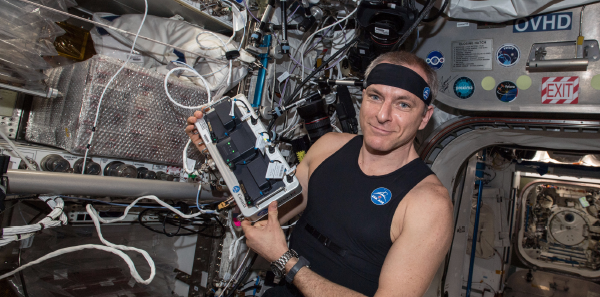
Canadian Space Agency astronaut David Saint-Jacques tries the Bio-Monitor, a smart shirt system is designed to measure and record astronauts’ vital signs.

Dr. HauberDr. Hauber is an emergency medicine resident at Mount Sinai Morningside-West in New York City.

You Might Also Like
  • Pulse Oximetry, Race, and COVID-19
  • End-Tidal Capnography Can be Useful for Detecting Diabetic Ketoacidosis, Monitoring COPD
  • ZIO XT Patch Cardiac Monitoring Device May Be Good Option for Evaluating Possible Dysrhythmias
Explore This Issue
ACEP Now: Vol 40 – No 02 – February 2021

References

  1. Pitts J. SP-4213 The Human Factor: Biomedicine in the Manned Space Program to 1980. Washington, DC: NASA; 1985. 
  2. SP-45 Mercury Project summary, chapter 8. National Aeronautics and Space Administration website. Accessed Dec. 11, 2020.
  3. Miller J. Inventing the Apollo spaceflight biomedical sensors. Smithsonian National Air and Space Museum website. Accessed Nov. 19, 2020.
  4. SP-368 Biomedical Results of Apollo. National Aeronautics and Space Administration website. Accessed Dec. 11, 2020.
  5. Bio-Monitor: keeping an eye on astronauts’ vital signs. Canadian Space Agency website . Accessed Nov. 24, 2020.

Pages: 1 2 | Single Page

Topics: Blood PressureECGMonitortelemetry

Related

  • Annals ECG of the Month: Acute Coronary Occlusion

    August 4, 2025 - 0 Comment
  • ACEP Clinical Policy on Outpatient Mgmt. of Adults with Asymptomatic Elevated Blood Pressure

    June 25, 2025 - 0 Comment
  • Case Report: When Syncope Gets Hairy

    June 17, 2025 - 0 Comment

Current Issue

ACEP Now: November 2025

Download PDF

Read More

No Responses to “We Can Thank the Space Race for Patient Monitoring Technologies”

Leave a Reply Cancel Reply

Your email address will not be published. Required fields are marked *


*
*


Wiley
  • Home
  • About Us
  • Contact Us
  • Privacy
  • Terms of Use
  • Advertise
  • Cookie Preferences
Copyright © 2025 by John Wiley & Sons, Inc. All rights reserved, including rights for text and data mining and training of artificial technologies or similar technologies. ISSN 2333-2603
