

In summary, the current recommendations for vasopressor use in severe sepsis and septic shock follow an algorithmic approach, titrating a MAP >65 mmHg: intravenous fluid bolus, followed by norepinephrine, vasopressin, and then epinephrine if there is no underlying cardiac dysfunction.
Explore This Issue
ACEP Now: Vol 43 – No 06 – June 20246. Steroids
Another controversial topic in sepsis management has been the use of corticosteroids. The current recommendation by the SSC is the use of intravenous corticosteroids with ongoing vasopressor therapy.7 One regimen includes hydrocortisone 200 mg/day, 50 mg every six hours or as a continuous infusion.15 Interestingly, the HYPRESS trial studied the early use of hydrocortisone therapy in patients with severe sepsis who had not yet developed septic shock. They concluded that hydrocortisone compared with placebo did not reduce the risk of septic shock within 14 days.16
The current recommendation is the use of corticosteroids with ongoing vasopressor therapy or hypotension despite vasopressors.
7. Random facts
Vitamin C
A study by Lamontagne and colleagues found that in adults with sepsis currently receiving vasopressor therapy in the ICU, administration of intravenous vitamin C had a higher risk of death at 28 days compared to placebo.17
The current recommendation from the SSC suggests against intravenous vitamin C.7
Albumin
The ALBIOS study investigated albumin replacement in addition to crystalloids compared to crystalloids alone in overall survival of patients with severe sepsis. They concluded that the addition of albumin did not improve overall survival at 28 and 90 days.18
The current recommendation from the SSC suggests utilizing albumin in patients who have received large volumes of crystalloid.7
Protein C
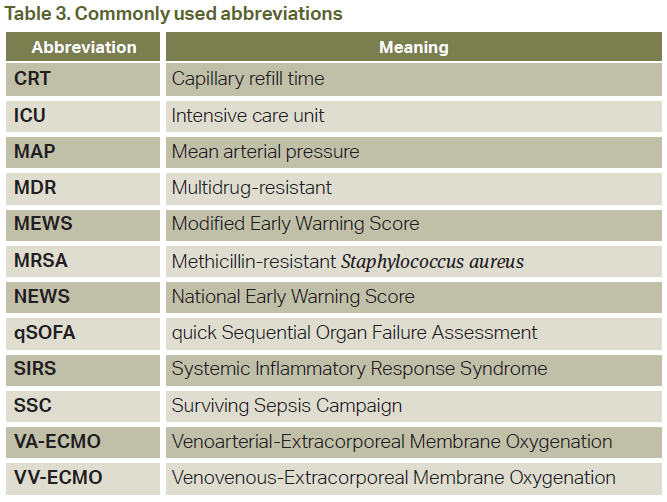
Click to enlarge.
The PROWESS-SHOCK trial compared recombinant human activated protein C versus placebo and concluded there was no significant reduction in mortality at 28 or 90 days compared to placebo.19
There are no current recommendations from the SSC to use activated protein C.
ECMO
A study conducted by Helwani and colleagues demonstrated the use of VA-ECMO in patients with sepsis-induced cardiomyopathy. In the setting of persistent hypotension despite standard management of septic shock with evidence of severe cardiac systolic dysfunction and end-organ perfusion, VA-ECMO should be considered.20
Current recommendations by the SSC are the utilization of VV-ECMO in the setting of severe acute respiratory distress syndrome when conventional mechanical ventilation fails, without mention of VA-ECMO.7
 Dr. Carvey is a resident at MetroHealth/Cleveland Clinic Residency Emergency Medicine.



One Response to “Updates in the Management of Severe Sepsis and Septic Shock”
July 1, 2024
Joseph R Shiber, MDDear ACEPNow Editor,
Excellent synopsis of ED treatment of septic shock but I would like to add a few clarifications. The preferred balanced IVF is Plasmalyte-A since LR is somewhat hypotonic (Na 130) and uses lactate as a buffer, compared to acetate and gluconate in Plasmalyte-A (Na 140). The additional lactate is not actually detrimental to cellular activity but can hamper the usefulness of tracking lactate levels especially with hepatic or mitochondrial dysfunction where lactate is not being converted back to pyruvate for preparation to enter the TCA cycle. The optimal vasopressor for septic shock should correct the hemodynamic disorder(s) causing the tissue hypoxia. Levophed is certainly the most useful to help restore vascular tone (alpha effect) in the low SVR vasodilatory state of distributive shock while supplying a small B1-2 effect but there are cases where an inappropriate heart-rate response occurs (HR <80) due to medications (such as AVN blockers) or to intrinsic chronotropic failure (age or sepsis related). In these cases, it is paramount to address the heart rate at the same time, since if the heart rate remains inappropriately low while simply increasing SVR the cardiac output and tissue perfusion will potentially go down not up. Lastly, although ECMO is well recognized as a rescue for ARDS (V-V) and circulatory shock (V-A) it should be noted that active bacteremia or fungemia is a contraindication since the circuit will be contaminated immediately and cannot be sterilized.
Respectfully,
Joseph Shiber, MD, FACEP, FACP, FNCS, FCCM