Logo

Log In Sign Up |  An official publication of: American College of Emergency Physicians
Navigation
  • Home
  • Multimedia
    • Podcasts
    • Videos
  • Clinical
    • Airway Managment
    • Case Reports
    • Critical Care
    • Guidelines
    • Imaging & Ultrasound
    • Pain & Palliative Care
    • Pediatrics
    • Resuscitation
    • Trauma & Injury
  • Resource Centers
    • mTBI Resource Center
  • Career
    • Practice Management
      • Benchmarking
      • Reimbursement & Coding
      • Care Team
      • Legal
      • Operations
      • Quality & Safety
    • Awards
    • Certification
    • Compensation
    • Early Career
    • Education
    • Leadership
    • Profiles
    • Retirement
    • Work-Life Balance
  • Columns
    • ACEP4U
    • Airway
    • Benchmarking
    • Brief19
    • By the Numbers
    • Coding Wizard
    • EM Cases
    • End of the Rainbow
    • Equity Equation
    • FACEPs in the Crowd
    • Forensic Facts
    • From the College
    • Images in EM
    • Kids Korner
    • Medicolegal Mind
    • Opinion
      • Break Room
      • New Spin
      • Pro-Con
    • Pearls From EM Literature
    • Policy Rx
    • Practice Changers
    • Problem Solvers
    • Residency Spotlight
    • Resident Voice
    • Skeptics’ Guide to Emergency Medicine
    • Sound Advice
    • Special OPs
    • Toxicology Q&A
    • WorldTravelERs
  • Resources
    • ACEP.org
    • ACEP Knowledge Quiz
    • Issue Archives
    • CME Now
    • Annual Scientific Assembly
      • ACEP14
      • ACEP15
      • ACEP16
      • ACEP17
      • ACEP18
      • ACEP19
    • Annals of Emergency Medicine
    • JACEP Open
    • Emergency Medicine Foundation
  • About
    • Our Mission
    • Medical Editor in Chief
    • Editorial Advisory Board
    • Awards
    • Authors
    • Article Submission
    • Contact Us
    • Advertise
    • Subscribe
    • Privacy Policy
    • Copyright Information

Update from ACEP’s 2019 Leadership & Advocacy Conference

By L. Anthony Cirillo, MD, FACEP | on June 19, 2019 | 0 Comment
Features
  • Tweet
  • Click to email a link to a friend (Opens in new window) Email
Print-Friendly Version
ACEP
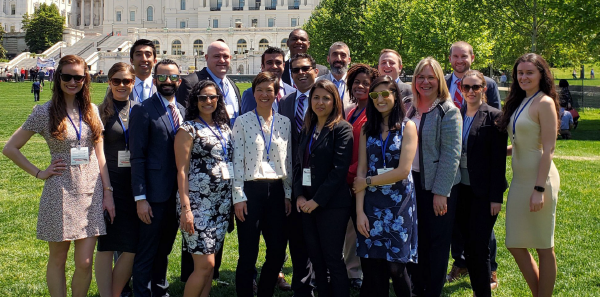
LAC attendees on Capitol Hill.

You Might Also Like
  • Make Plans Now for ACEP’s Leadership & Advocacy Conference in May
  • Register for ACEP’s Leadership And Advocacy Conference
  • Don’t Miss the ACEP Leadership and Advocacy Conference!
Explore This Issue
ACEP Now: Vol 38 – No 06 – June 2019

Credit: ACEP

The ACEP Leadership & Advocacy Conference (LAC) gives ACEP members a unique opportunity to learn more about what it takes to be a leader and provides updates on the key national and state issues affecting the practice of emergency medicine. This year, we descended on Capitol Hill May 5–8 to amplify the voice of emergency medicine with members of Congress on the issues of surprise billing and our country’s mental health crisis.

The Prep

With nearly 150 EM residents and medical students included in the 500-plus attendees at the conference, the Emergency Medicine Residents’ Association (EMRA) and ACEP’s Young Physicians Section (YPS) once again started the action on Sunday with their Health Policy Primer program. This half-day session started with a keynote talk by Steven Stack, MD, MBA, FACEP, the only emergency physician to be president of the American Medical Association. Dr. Stack challenged attendees to be “doers” who turn their words into action. Attendees got an introduction to several key issues—the opioid epidemic, prudent layperson, surprise billing, and the road to universal health care—during the lighting rounds.

As a new addition to the conference, ACEP developed a “Chapter Leadership Session” providing information and advice for current and future chapter leaders to more effectively engage members and strategically lead their chapters.

The Kickoff

The Leadership Summit challenged us to take the lead on creating positive change in the health care arena. Brian Williams, MD, a trauma surgeon from Texas, provided a very personal and emotional description of advancing through the medical education system as an African American male. He described what it was like to play a central role caring for the Dallas police officers wounded by a gunman who was reportedly angry over police shootings of African American men. During that shooting, which occurred at the end of a protest against the police killings of Alton Sterling in Louisiana and Philando Castile in Minnesota, five police officers were killed and nine were injured. Dr. Williams’ touching comments at the press conference after the shooting resonated with people across the country, and his LAC session was riveting.

The Deep Dive

Monday’s afternoon session kicked off with a panel discussion about the public health crisis of firearm-related injuries and deaths and the emotionally-charged political and policy issues that influence attempts to better understand and reduce injuries from firearms. Demonstrating how emergency physicians can “walk the walk,” Roneet Lev, MD, FACEP, who was recently appointed chief medical officer of the White House Office of National Drug Control Policy, and Gerard R. Cox, MD, MHA, deputy undersecretary of health for the Veterans Health Administration, discussed the critical importance of emergency physicians being willing to serve in the public sector and how those who serve can become key policymakers in health care.

The final full group session of the day brought staff members from both congressional members and key House and Senate committee offices to talk about the increasing activity on out-of-network/surprise billing legislation at the federal level. These speakers are key thought leaders and senior policymakers in Congress. The opportunity to provide them the emergency medicine perspective was critically important to ensure that they understand the unique challenges facing our specialty as the 24/7/365 safety net for the country.

On the Hill
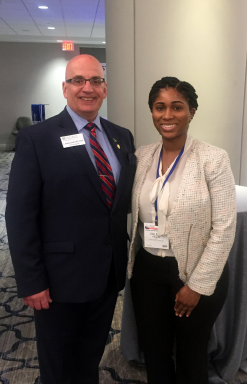
L. Anthony Cirillo, MD, FACEP, (left) and Valerie A. Pierre, MD.

L. Anthony Cirillo, MD, FACEP, (left) and Valerie A. Pierre, MD.
Valerie Pierre

Tuesday’s meetings on Capitol Hill were perfectly timed. We asked members of Congress to co-sponsor ACEP-crafted legislation to improve the community resources available for patients needing mental health care. The Improving Mental Health Access from the Emergency Department Act, sponsored in the House by emergency physician Rep. Raul Ruiz, MD (D-CA), and in the Senate by Sen. Shelley Capito-Moore (R-WV), would provide grant funding to communities to bolster outpatient and inpatient behavioral health care services.

As we met with legislators, our second request was for support for a fair and reasonable legislative solution to the issue of out-of-network balance billing. ACEP is advocating for a framework solution that protects patients from additional financial risk when they receive out-of-network care in an ED but ensures providers receive a fair payment from insurers for the care provided. This is a rapidly-developing issue. See the sidebar to catch up with the surprise billing developments since LAC.

Be There Next Year

LAC is a great opportunity to educate yourself on the political and policy issues affecting how we care for patients. It is a tremendous opportunity to be a strong voice for your patients and your profession by speaking directly with members of Congress and other federal policymakers.

Save the date: The next Leadership & Advocacy Conference is April 25, 2020.


Dr. Cirillo is a member of the ACEP Board of Directors and the director of government affairs for US Acute Care Solutions.

LAC19: A First-Timer’s Perspective

by Valerie A. Pierre, MD

LAC19 was an amazing networking and professional opportunity that solidified my interest in emergency medicine policy. As the health care landscape in America rapidly evolves, emergency physicians can no longer adequately care for our patients within the confines of our departments. To best serve our diverse and unique patient populations, we must become advocates outside the ED as well.

The Health Policy Primer sponsored by EMRA and ACEP’s Young Physicians Section gave me a better perspective of the importance of leadership and advocacy in our field. There is an increasing focus on mental health, its complex interface with substance abuse, and one’s physical health, in addition to the rising health care costs and their effect on our economy.

Steven Stack, MD, MBA, FACEP, the first emergency physician to serve as president of the AMA, reaffirmed what I now know to be true when he said, “If you don’t have a seat at the table, you’re probably on the menu.”

We must be involved, continue to humbly gain time and experience in our field, and be pragmatic about our approach to the issues we are facing. Our society is changing, and we can no longer be silent on things that matter. Our patients’ lives literally depend on us.


Dr. Pierre is an emergency medicine resident at Brookdale Hospital Medical Center in Brooklyn, New York.

The Surprise Billing Battle: What You Need to Know

Surprise billing (also known as out-of-network billing) is one of the most important issues facing emergency physicians today. The decisions being made in Washington, D.C., could have a far greater impact on how we care for our patients than even EMTALA did in 1986.

For more than a year, surprise billing has been a central focus of ACEP’s federal advocacy efforts, building on years of state-level advocacy already done on this issue. Much of this conflict over surprise billing is playing out in the media, and insurers have been trying to paint emergency physicians in a bad light. Our public relations team is working diligently to make sure the physician side of the story is fairly portrayed both in the press and in Congress.

We’ve seen a flurry of legislative activity after LAC19. In response to the May 9, 2019, release of the White House‘s principles regarding surprise billing, ACEP President Vidor Friedman, MD, FACEP, said “ACEP shares the administration‘s view that improving transparency is critical to stopping surprise bills … Still, the principles the White House laid out do not go far enough to protect patients.”

On May 17, 2019, we responded to the STOP Surprise Medical Bills Act of 2019 introduced by several senators, saying it would tilt a proposed arbitration process in the insurer’s favor.

The surprise billing debate is changing daily, and ACEP’s advocacy efforts are ongoing. To stay current on what’s happening in D.C..

Pages: 1 2 3 | Multi-Page

Topics: AdvocacyfirearmsLACLeadership and Advocacy ConferencePublic Policysurprise billing

Related

  • Q&A with ACEP President L. Anthony Cirillo

    November 5, 2025 - 0 Comment
  • October 2025 News from the College

    September 23, 2025 - 0 Comment
  • ACEP and ACEP Chapters Affect Change in 2025

    September 3, 2025 - 0 Comment

Current Issue

ACEP Now: November 2025

Download PDF

Read More

About the Author

L. Anthony Cirillo, MD, FACEP

Dr. Cirillo serves on the ACEP Board of Directors. He still actively practices emergency medicine and serves as the director of government affairs for US Acute Care Solutions.

View this author's posts »

No Responses to “Update from ACEP’s 2019 Leadership & Advocacy Conference”

Leave a Reply Cancel Reply

Your email address will not be published. Required fields are marked *


*
*


Wiley
  • Home
  • About Us
  • Contact Us
  • Privacy
  • Terms of Use
  • Advertise
  • Cookie Preferences
Copyright © 2025 by John Wiley & Sons, Inc. All rights reserved, including rights for text and data mining and training of artificial technologies or similar technologies. ISSN 2333-2603