
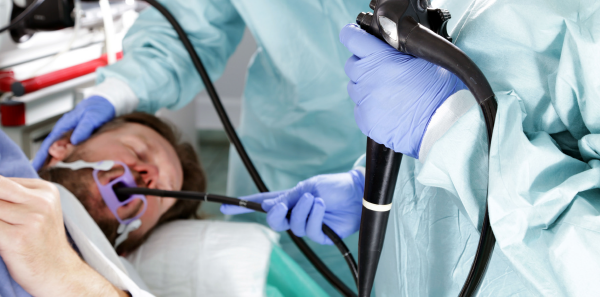
When COVID-19 reached the United States, emergency departments had one of two experiences. In places with large outbreaks, every ounce of energy went into taking care of critically ill patients. Everywhere else, emergency visits plummeted by 42 percent.1 It was actually a quiet time.
Explore This Issue
ACEP Now: Vol 39 – No 09 – September 2020Now, patient volumes are starting to return to normal in many areas. That means that the usual culprits are back in steady force. Depending on whether your emergency department is in a COVID-19 hotspot, you may feel the need either to rush patients to endoscopy (ie, keeping the emergency department and observation units as empty as possible) or delay the procedures out of a concern for the safety of everyone involved. Regardless of COVID-19, where do we stand on the question of how quickly patients with suspected upper gastrointestinal bleeding (UGIB) must have an endoscopy?
Best Timing for Endoscopy
The first of two important related articles released during the COVID-19 pandemic (and perhaps flying under the radar) looks at this.2 Do GI consultants really need to answer our 2 a.m. pages and rally the team of nurses and equipment for endoscopy immediately?
The answer is surprising, especially considering how ill the patients enrolled in the first trial we’ll discuss were. The authors recruited and enrolled patients with Glasgow-Blatchford Bleeding Scores (GBS) of 12 or above, which is considered “high risk” for an UGIB likely to require a medical intervention (transfusion, endoscopy, or surgery).
The median enrolled hemoglobin level was 7.4 g/dL, a third had tachycardia, and about a sixth were already hypotensive. Virtually all (90 percent) received a transfusion of packed red blood cells, with a mean requirement of 2.4 units. Patients were excluded if they were in hypotensive shock and unstable despite initial resuscitation (ie, the need for a procedure meant that waiting was not an option). In short, these were genuinely the sort of patients who are worrying to emergency physicians but not clearly in extremis.
The 516 patients randomized in this trial were sorted to either an “urgent endoscopy,” endoscopy within six hours, or “early endoscopy,” an endoscopy within 24 hours. All patients were treated with continuous infusion of high-dose proton-pump inhibitors, while those suspected of having variceal bleeding received vasoactive agents and antibiotics. The primary outcome of the study was mortality at 30 days following enrollment, with secondary measures of clinical progression, recurrence, and resource utilization.
The quick answer: Mortality was not significantly different between groups. The difference favored waiting for endoscopy, but the trial was not large enough to claim any sort of hidden trend. As might be expected, delaying endoscopy meant fewer patients with active bleeding identified and subsequently fewer interventions. Neither transfusion requirements nor occurrences of rebleeding were different, and there were no signs of potential hazard associated with waiting.
It should be noted there were 20 patients in the “early” endoscopy cohort who converted to “urgent” as a result of new hypotension, hematemesis, melena, or otherwise failing to respond to initial resuscitation. While these data indicate it is clearly safe to delay endoscopic evaluation, vigilance regarding possible deterioration is required. A little fewer than one in 10 patients may necessitate a change in plans.
When to Give Tranexamic Acid
The second new article on this topic represents a possible change in practice many of us have likely adopted or considered adopting already: Should emergency physicians be giving tranexamic acid (TXA) to patients with acute gastrointestinal bleeding?3 After all, we’ve been giving it to patients with major bleeding in trauma, as well as considering it to be likely beneficial for those with severe head injuries and postpartum hemorrhage.4–6
Like other TXA trials, this latest trial was a massive undertaking, enrolling nearly 12,000 patients over six years across 164 hospitals. Patients were eligible for inclusion based on pragmatic, subjective clinical assessment. To be included, patients simply needed to be judged likely to have a significant or life-threatening gastrointestinal bleed. Disease severity was assessed using the Rockall Score, which differs from the GBS as it incorporates findings identified at endoscopy as well as clinical presentation. Overall, however, patients appeared similarly ill as the endoscopy study above when accounting for tachycardia, melena, and signs of shock.
In contrast to the other TXA trials, unfortunately, there is simply no way to parse these results in a fashion favoring the intervention. Whether measured in deaths due to bleeding, recurrent bleeding, or all-cause mortality, outcomes were virtually identical. A majority of patients required transfusion, and these transfusion requirements were not altered by whether TXA was given. Adverse events were rare, but a small excess of venous thromboembolic events was seen in the cohort receiving TXA. The absolute difference, even in this study of 12,000 patients, was just a handful but likely does reflect an increased risk for venous thromboembolism in those receiving TXA.
Considering neither the CRASH-2 nor WOMAN trial detected an increase in thromboembolic events, the risk seen with TXA here is likely related to this specific population enrolled with gastrointestinal bleeding. Conceptually, this makes sense. Nearly half the patients enrolled were described as having liver disease severe enough to be judged to potentially result in variceal bleeding. Patients with advanced liver disease maintain a balance of deranged hemostasis, with relative excess and absence of coagulation factors and components. It is likely that hypofibrinolytic underlying states tipped off-balance by TXA resulted in the observed increases in venous thromboembolism. Regardless of liver functional status, however, absent a detectable benefit for TXA in gastrointestinal bleeding, this trial reveals that this medication has no apparent role in the treatment of GIB.
Conclusions
In sum, we have two potentially practice-changing conclusions. First, even a very ill patient with UGIB undergoing transfusion may be managed medically for an extended period of time prior to a decision to perform an endoscopy, rather than requiring urgent intervention, provided they are hemodynamically stable. Second, if you’ve been extrapolating the potential advantage of TXA from other clinical applications to your gastrointestinal bleeding patients, it seems clear this is unlikely to help and may even result in a small amount of harm in a subset of patients.
The opinions expressed here are solely those of Dr. Radecki and do not necessarily reflect those of his employer or academic affiliates.
References
- Hartnett KP, Kite-Powell A, DeVies J, et al. Impact of the COVID-19 pandemic on emergency department visits—United States, January 1, 2019–May 30, 2020. MMWR Morb Mortal Wkly Rep. 2020;69(23);699-704.
- Lau JYW, Yu Y, Tang RSY, et al. Timing of endoscopy for acute upper gastrointestinal bleeding. N Engl J Med. 2020;382(14):1299-1308.
- HALT-IT Trial Collaborators. Effects of a high-dose 24-h infusion of tranexamic acid on death and thromboembolic events in patients with acute gastrointestinal bleeding (HALT-IT): an international randomised, double-blind, placebo-controlled trial. Lancet 2020;395:1927-1936.
- CRASH2 trial collaborators , Shakur H, Roberts I, et al. Effects of tranexamic acid on death, vascular occlusive events, and blood transfusion in trauma patients with significant haemorrhage (CRASH2): a randomised, placebocontrolled trial. Lancet 2010;376 (9734):23-32.
- CRASH3 trial collaborators. Effects of tranexamic acid on death, disability, vascular occlusive events and other morbidities in patients with acute traumatic brain injury (CRASH3): a randomised, placebocontrolled trial. Lancet. 2019;394 (10210):1713-1723.
- WOMAN Trial Collaborators. Effect of early tranexamic acid administration on mortality, hysterectomy, and other morbidities in women with post-partum haemorrhage (WOMAN): an international, randomised, double-blind, placebocontrolled trial. Lancet 2017;389(10084):2105-2116.
Pages: 1 2 3 | Multi-Page


2 Responses to “Two Studies Show When To Do an Endoscopy and Give Tranexamic Acid”
October 11, 2020
Micelle Jo HaydelIn HALT-IT, do the authors document home many patients were excluded because the physician chose to give TXA instead of enrolling ing the trial?
October 11, 2020
Ryan RadeckiHi Michelle –
I’m afraid they do not. The enrollment figure only reports how many were ultimately randomized, not how many they screened (or presented with UGIB). The supplementary appendix offers no further detail.
Excellent question.
– Ryan