
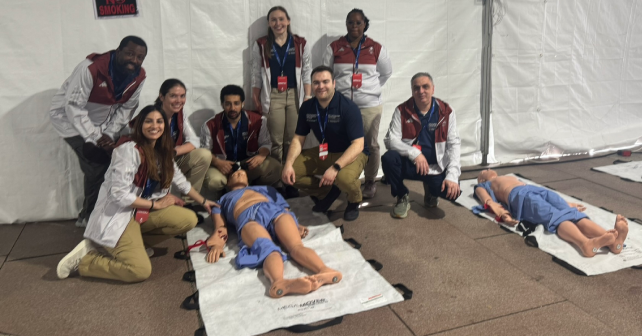
The Beth Israel Deaconess Medical Center (BIDMC) Disaster Medicine Fellowship within its department of emergency medicine has been awarded a medical research grant from the Boston Athletic Association (BAA) for their innovative disaster preparedness project at the 2025 Boston Marathon presented by Bank of America.
Explore This Issue
ACEP Now: October 2025 (Digital)The research team is led by fellowship director and principal investigator Gregory Ciottone, MD, FACEP, a renowned expert in disaster medicine and advocate for trauma first-aid preparedness at mass gatherings. The project aims to standardize trauma response capabilities at one of the country’s most prominent sporting events.
“Mass gatherings like the Boston Marathon require specialized disaster preparedness beyond traditional sports medicine,” Dr. Ciottone noted. “Our research will create a model for integrating disaster medicine into mass gathering medicine protocols that could be adopted globally.”
Disaster Medicine
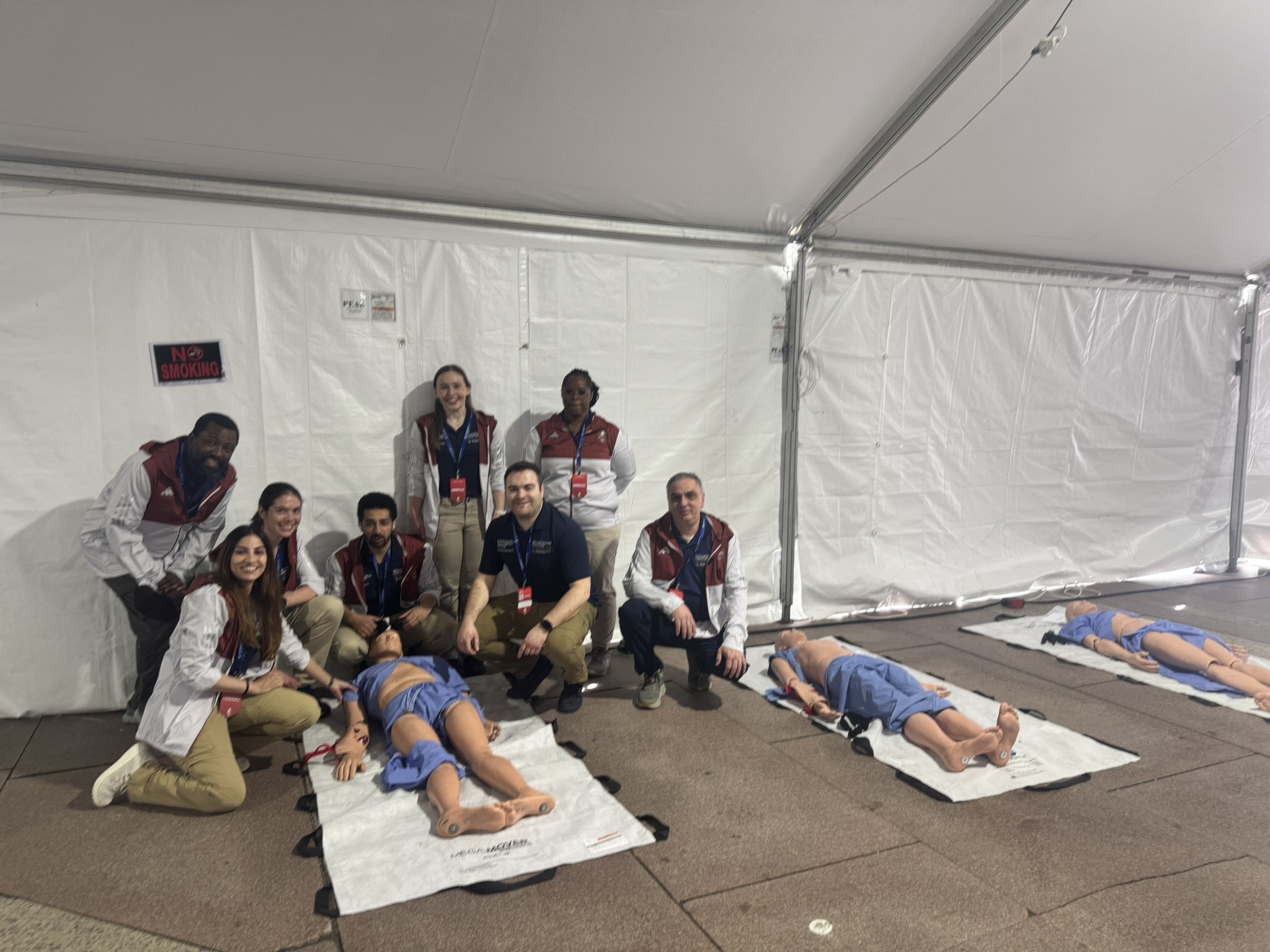
The BIDMC disaster medicine fellows ran a simulation in 2025 to teach disaster preparedness at the Boston Marathon. Click to enlarge. (Photo: Fadi Issa, MD, JBEM, EMDM)
Emergency medicine has long been at the forefront of disaster medicine, with mass gathering and event medicine a particular prehospital niche.1,2 Although the medical components of mass gatherings can be run by a variety of organizations, historically, EMS have taken an active leadership role. However, given the variable nature of mass gatherings, post-event medical reporting from events is often inconsistent, making it difficult to assess hazards and vulnerabilities.1,2 To this end, the National Association of EMS Physicians has issued a position statement to help define the parameters of care and optimize planning and response.2 They emphasize the need for having a mass-casualty incident plan and equipment on site.2
This is especially true given the continued threats—and at times, successful attacks— against mass gatherings worldwide, from rallies to concerts to sporting events. More than 10 years ago, the 2013 Boston Marathon bombing injured 281 people and killed three.3 Heroic first responders and bystanders applied 27 improvised tourniquets.3 Other high-profile incidents include the 2017 Las Vegas Route 91 Harvest Festival, in which 100 people were wounded or killed, and the more recent New Orleans New Year’s Day car ramming incident in 2025, emphasizing again that mass gatherings across the country are soft targets for terrorist attacks.4,5
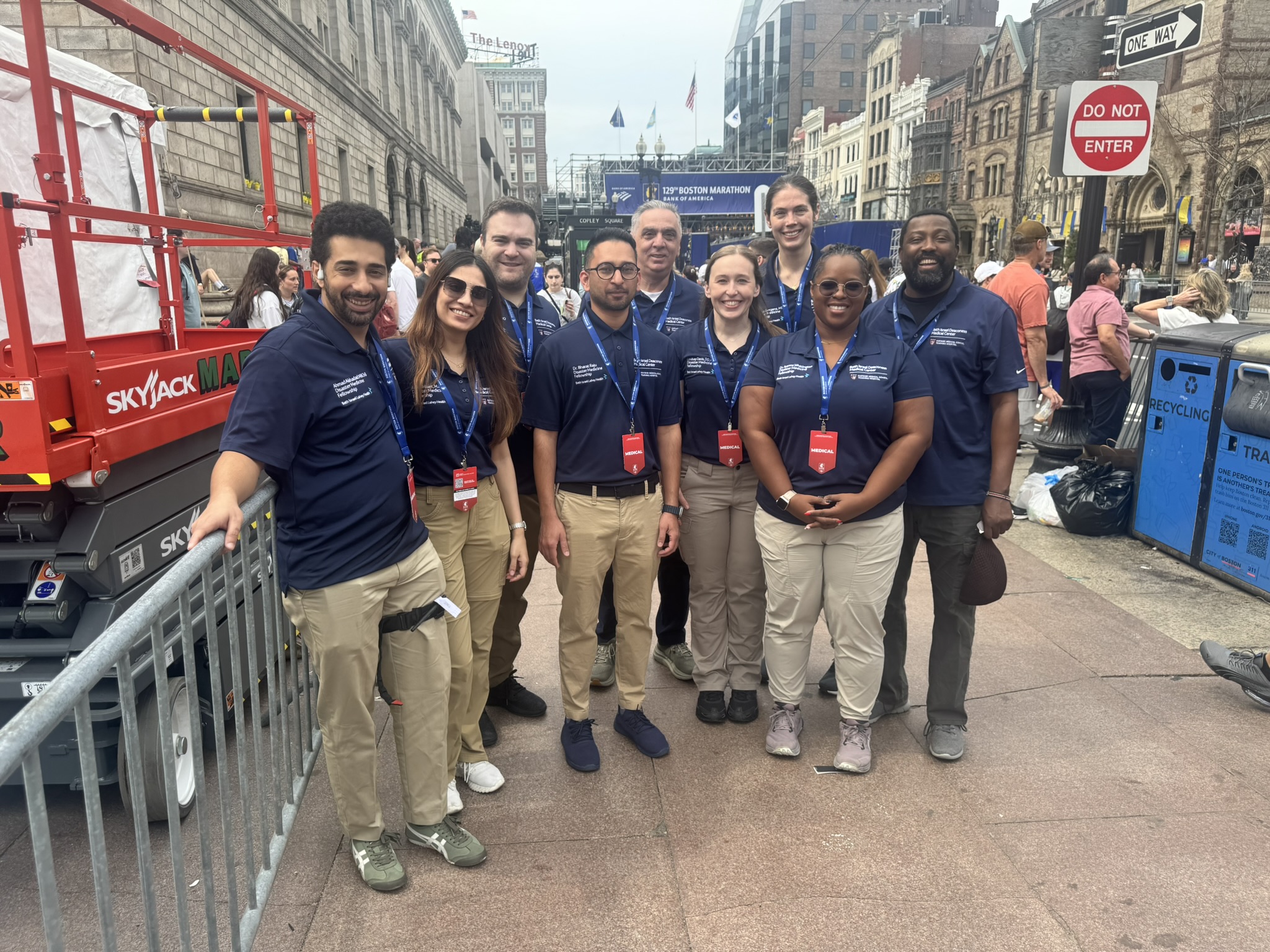
Left to right: Ahmad Alshadad, MBChB; Almas Malik, MD; Jonathan Shecter, DO, MPH; Bharat Raju, MD, MEM; Fadi Issa MD, JBEM, EMDM; Lindsay Davis, DO, MPH; Sophia Görgens, MD; Ayanna Whittington, MBBS, MPH, DMEM; and Anany Prosper, MD, MPH. Click to enlarge. (Photo: Fadi Issa, MD, JBEM, EMDM)
Although mass gatherings are well prepared for sports injuries, drug overdoses, or other expected pathologies, they often have no set response for these types of traumatic mass casualty incidents. It is here that we can look to combat medicine for guidance. Just behind the frontlines, health care workers near combat zones often use trauma stabilization points (TSPs) to provide lifesaving interventions in a timely manner before transport to a field or tertiary hospital for more definitive care.6,7 In a similar way, the medical tents at events—usually used for seeing injured athletes or unwell concert goers, depending on the event—could, with the right equipment and training, be turned into TSPs if needed.
Better Prepared
To address this gap in trauma supplies and training at mass gathering medical tents, the BIDMC Disaster Medicine Fellowship initiated a project to introduce essential trauma training for medical professionals and trauma first-aid kits to all medical tents along the Boston Marathon route. These kits include commercial tourniquets, hemostatic gauze, pressure dressings, medical gloves, and trauma shears—crucial tools for controlling life-threatening hemorrhage. The kits along with the training would prepare the medical tents to become TSPs in the case of a traumatic mass casualty event.
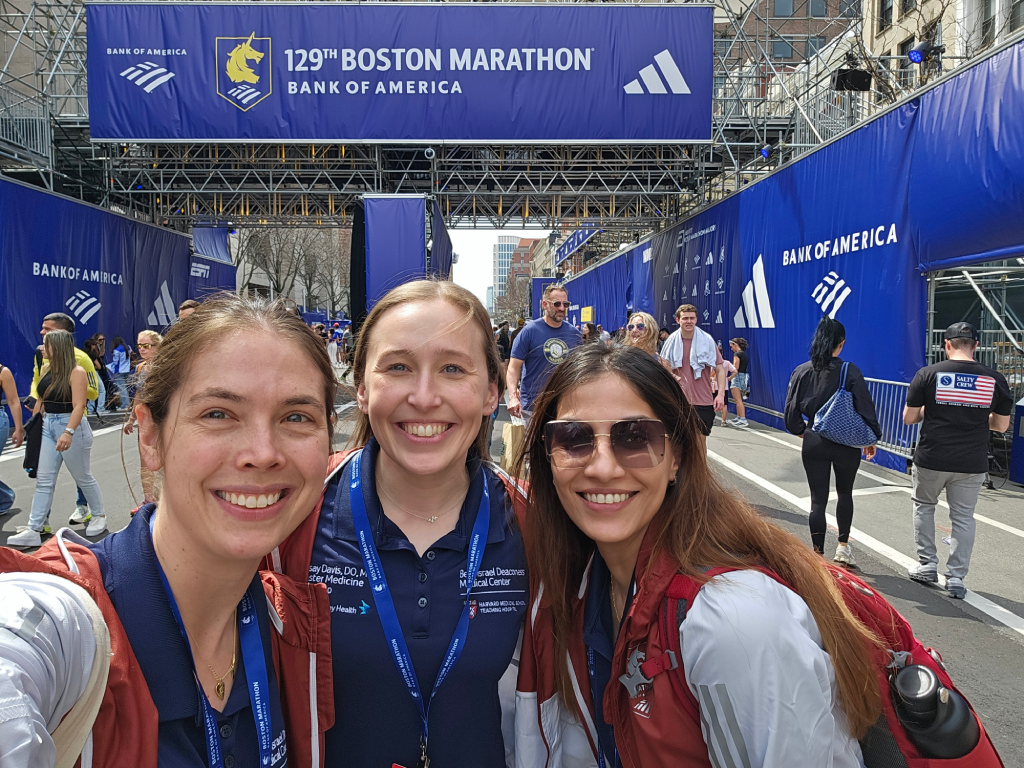
Left to right: Sophia Görgens, MD; Lindsay Davis, DO, MPH; and Almas Malik, MD, pose at the Boston Marathon finish line. Click to enlarge. (Photo: Sophia Görgens, MD)
Because little research exists on disaster medicine preparedness at mass gathering events, more data and advocacy for preparedness is crucial to mitigate the fallout from future terrorist attacks such as car rammings, active shooters, or bombing attacks.
Like many other mass gatherings, the Boston Marathon uses a group of diverse medical volunteers, from athletic trainers to physical therapists to emergency physicians.
“Medical volunteers at marathons come from various specialties and don’t all possess the same prehospital or first-aid skills,” said Christina Woodward, MD, who serves as associate director of education, BIDMC Disaster Medicine Fellowship. “Our standardized trauma education ensures all volunteers possess essential life-saving skills, regardless of their specialty background.”
Although emergency physicians have always been leaders in trauma and disaster care, mass gatherings allow them to share their expertise and ensure that everyone is prepared. The American College of Surgeons, who implemented their Stop the Bleed program in 2015 to teach laypeople the basics of trauma first-aid, provides an excellent example of how teaching these skills is feasible and effective.8,9
Among the disaster medicine fellows, Ahmad Alshadad, MBChB, and I have focused on creating effective training protocols tailored to the unique environment of marathon medical tents. Together, we have created video-based training material that will be freely accessible to all medical volunteers at the marathon and have also run a simulation on proper tourniquet placement and wound-packing prior to the marathon. The rest of the disaster medicine fellows—Amit Boukai, MD, MPH; Lindsay Davis, DO, MPH; Almas Malik, MD; Anany Prosper, MD, MPH; Bharat Raju, MD, MEM; Jonathan Shecter, DO, MPH; Ayanna Whittington, MBBS, MPH, DMEM—assisted with data collection, training implementation, and analysis, with fellowship co-director Amalia Voskanyan, RN, and education director Fadi Issa, MD, JBEM, EMDM, providing guidance.
Brad Newbury, MPA, NRP, president of the National Medical Education & Training Center (which provided training support for the project) added, “Creating realistic simulation scenarios is vital for effective training. Our aim is to help medical volunteers build muscle memory for these critical skills in a controlled environment.”
Data collected will inform best practices for future events, potentially transforming how mass gatherings approach emergency preparedness. A grant from the Boston Athletic Association helped support this work, and without their funding, the implementation of the trauma kits along the marathon route would not be possible.
With continued incidents of violence at public events globally, this research will provide timely insights into how medical response can be optimized to protect and preserve lives during unexpected tragedies.
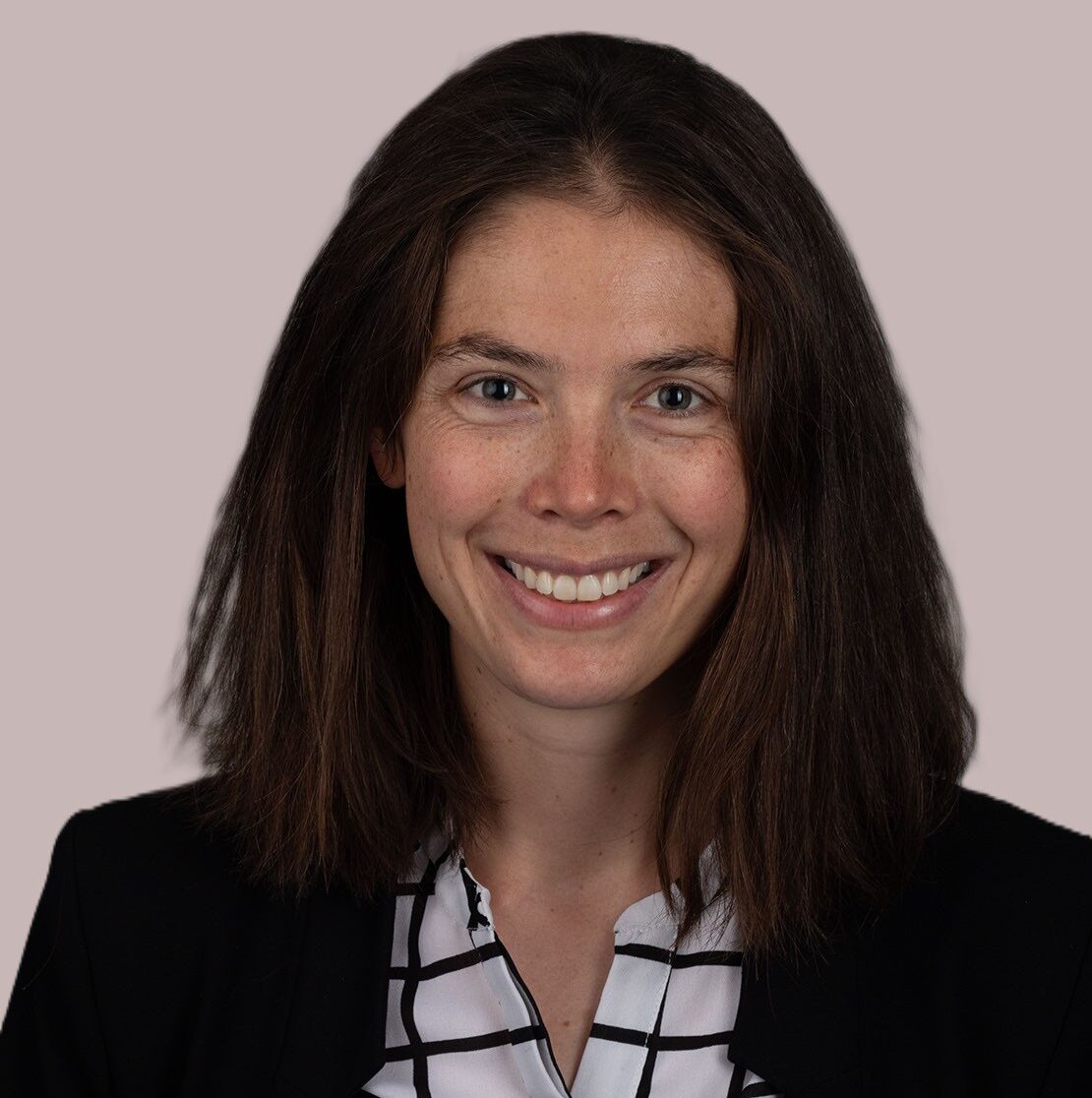 Dr. Görgens is an emergency physician at Yale University. She completed a fellowship in emergency medical services with the Fire Department of New York City and Northwell as well as a disaster medicine fellowship with Beth Israel Deaconess Medical Center and Harvard University.
References
- Turris S, Rabb H, Munn MB, et al. Measuring the masses: the current state of mass-gathering medical case reporting (paper 1). Prehosp Disaster Med. 2021;36(2):202-210.
- Schwartz B, Nafziger S, Milsten A, et al. Mass gathering medical care: resource document for the National Association of EMS Physicians Position Statement. Prehosp Emerg Care. 2015;19(4):559-568.
- Gates JD, Arabian S, Biddinger P, et al. The initial response to the Boston Marathon bombing: lessons learned to prepare for the next disaster. Ann Surg. 2014;260(6):960.
- Lake CK. A day like no other: the Las Vegas mass shooting lessons from America’s largest mass casualty event. Trauma Surg Acute Care Open. 2025;10(Suppl 1):e001786.
- FBI Statement on the Attack in New Orleans — FBI. FBI National Press Office. https://www.fbi.gov/news/press-releases/fbi-statement-on-the-attack-in-new-orleans. Published January 1, 2025. Accessed June 8, 2025.
- Wren SM, Wild HB, Gurney J, et al. A consensus framework for the humanitarian surgical response to armed conflict in 21st century warfare. JAMA Surg. 2020;155(2):114-121.
- Garber K, Kushner AL, Wren SM, et al. Applying trauma systems concepts to humanitarian battlefield care: a qualitative analysis of the Mosul trauma pathway. Confl Health. 2020;14:5.
- ACS Stop the Bleed | Stop the Bleed. The American College of Surgeons. https://www.stopthebleed.org/. Accessed June 8, 2025.
- Tang X, Nie Y, Wu S, et al. Effectiveness of “Stop the Bleed” courses: a systematic review and meta-analysis. J Surg Educ. 2023;80(3):407-419.
Pages: 1 2 3 4 | Multi-Page


No Responses to “Trauma First Aid at the 2025 Boston Marathon”