
Background
My favorite part of the fig plant (Ficus carica L.) is the fruit, of course. These sweet, refreshing waterdrop-shaped packages of goodness are exactly what I need some days to keep going. So much so, that in every home I’ve owned, I’ve planted a fig tree; enjoying the fruit of my labors while acknowledging the link this plant has with humans and culture over time.
Explore This Issue
ACEP Now: Vol 42 – No 06 – June 2023History
The fig (Ficus carica) is part of the mulberry family. It was among the first plants deliberately bred as a food source more than 11,000 years ago—predating cultivated grains by a thousand years.1
The fig features prominently in art, history, and theology, tightly wrapped within human experience. It is used symbolically to represent various human attributes including abundance, prosperity, fertility, wisdom, and strength. Being native and abundant in the Middle East, Asia, and the Mediterranean, it figures prominently in historical writings—Emperor Tiberius describes supporting a thriving fig trade; Theophrastus, Pliny, and Cato often discussed them; and they were mentioned in the Old Testament and the Koran, and described frequently in ancient Greek. In Homer’s Odyssey, Tantalus reached out for figs in his agony; Venus and also Adam and Eve covered up with fig leaves; the goddess Isis is described teaching humans how to eat figs; and more recently D. H. Lawrence, in “Figs,” described how to eat one in Proper society.
Description of the Plant
The fig tree is a deciduous, multi-trunk tree with smooth, gray, finely coarse bark that grows 15 to 30 feet high with a low canopy of green. There are many varieties of the fig tree, but most common are Black Mission and Brown Turkey. The trees are native to Southeast Asia and Eastern Mediterranean areas, where they grow in rocky and shrubby areas. In the U.S. it is grown commercially in the West and South—California, Texas, Oregon, and Washington.
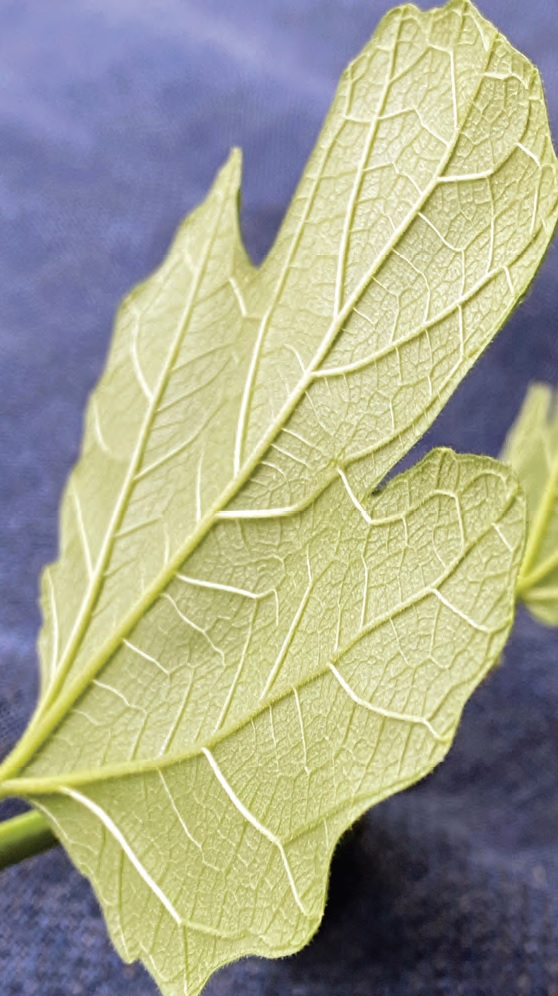
FIGURE 1: The fuzzy surfaces (the indumentum) are coarse on the upper surface and soft on the underside. (Click to enlarge.)
The leaves are easily identified: toothed and deeply lobed with symmetrical sinuses. The fuzzy surfaces (the indumentum) are coarse on the upper surface and soft on the underside (see Figure 1).
They also have a “fig plant” smell that you either love or hate.
Once mature (four to five years) the tree produces one or two fig crops of brown-purplish fruit a year—often only one of them is deliciously edible.
Favorites
My second favorite thing about the fig is that they are simple-appearing, but amazingly complex—very few things about this plant are straightforward.
Its complexity is reflected in the descriptions one encounters when reading the scientific literature about figs. The volume and variety of strange, wonderful terms brings me back to the first year in medical school—a straight-up learning curve to try and wrap your head around.
Plant leaves are boring, except when it’s a fig leaf. A quote from Giordano’s 2020 paper about the fig’s leaf is a case in point. They analyzed leaves with light, confocal laser scanning, and electronic microscopes which revealed “Protective trichomes are located on both [leaf] surfaces while capitate secretive hairs and stomata appear only abaxially.” The fig uses ground-water-absorbed silicate to create a crystalline scaffolding “armor” (assisted by the calcium oxalate inclusions) that strengthen the leaf, protect delicate cells from the sun, and act as defense for hungry insects and herbivores.2

FIGURE 2: The fruit itself is
anatomically a hollow-ended stem that swells
to contain many flowers. (Click to enlarge.)
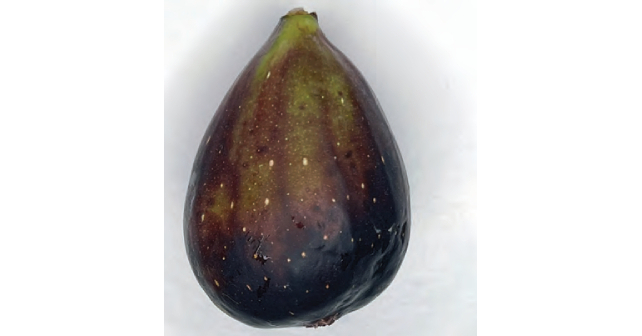
The fig “fruit” is another example of simple hidden complexity. Although called a fruit, it is actually an infructescence (an urn-like structure lined internally with tiny flowers that develop into multiple ovaries on the inside surface), also known as a false fruit or multiple fruit. The fruit itself is anatomically a hollow-ended stem that swells to contain many flowers. Think of that next time you take a bite! (see Figure 2)
And don’t get me started on how the fig is pollinated in the wild—no fuzzy bumblebee for this plant. Instead, it is a classic example of obligate mutualism, where each type of fig relies on a specific type of fig wasp (Blastophaga psenes) for their mutual survival. A female wasp, attracted to the plant by the odor that the leaves emit, enters the fruiting body with pollen attached to her from her hatchery, fertilizes the internal flowers, and lays her eggs; but it’s a one-way trip, because her wings and antennae are ripped off as she enters the fig’s infructescence due to the narrow entry passage.
She lives out the rest of her days inside the fruit. The eggs hatch and the males mate with their sisters and tunnel out of the fruit; the newly hatched and fertilized females leave through these open tunnels carrying their incubator’s pollen and begin to search for their own fig fruit. Any remaining wasps are digested and absorbed by the fruit using ficin (a special fig-produced wasp dissolvent) for nutrients.
Etymology
According to Merriam-Webster, in ancient Greece, sykophantēs meant “slanderer.” This word is derived from sykon (meaning “fig”) and phainein (meaning “to show or reveal”). Fig farmers had to pay taxes on the number of figs brought to market, and sometimes they counted low. Someone else might tell the tax collector on them—the “fig revealers”—and they would be forced to pay. Through time the meaning of sykophantēs evolved from squealer to flatterer.3
Medical Uses
Fig plants and derivatives have been used for a variety of illness through time.
Wound coverings from fresh or dried figs, fig leaves, or fig wines have been used. The sap has been used as an expectorant, diuretic, and de-worming agent.
Fig leaves have been used for their antidiabetic and vermifugal effect.
Toxicity
Handling the plant, especially the leaves and sap, can cause a contact phytophotodermatitis and eye irritation if topically introduced.
The sap of fig trees contains furocoumarins (5-methoxypsoralen) and other defensive chemicals to protect the tree from fungal pathogens. When the fig latex (white sap) comes in contact with skin it causes a keratolytic effect, resulting in delayed blistering and vesicle formation.
The main symptoms of phytophotodermatitis are burning, itchy erythema, and edema, which usually begin 24 hours after exposure. Post-burn, it can also cause long term hyperpigmentation.
Imen describes four young children who used fig leaves to create a paste that they colored and spread on their skin in play resulting in severe second-degree burns sending them to the burn unit for care. The article’s pictures of blistering and skin sloughing clearly demonstrate the severe dermatological reactions that can occur.4
There is no antidote.
 Dr. Hack is chief of the division of medical toxicology and vice chair for research at East Carolina University in Greenville, North Carolina.
References
- Kislev ME, et al. Early domesticated fig in the Jordan Valley. Science. 2006;312:1372–1374.
- Giordano C, et al. Ficus carica L. leaf anatomy: Trichomes and solid inclusions. Annals of Applied Biology. 2020;176:47-54.
- Merriam Webster online dictionary. https://www.merriam-webster.com/dictionary/sycophant. Accessed May 16, 2023.
- Imen MS, et al. The curious cases of burn by fig tree leaves. Indian J Dermatol. 2019;64:71-73
Pages: 1 2 3 | Multi-Page



No Responses to “Toxicology Answer: The Fig Tree”