Logo

Log In Sign Up |  An official publication of: American College of Emergency Physicians
Navigation
  • Home
  • Multimedia
    • Podcasts
    • Videos
  • Clinical
    • Airway Managment
    • Case Reports
    • Critical Care
    • Guidelines
    • Imaging & Ultrasound
    • Pain & Palliative Care
    • Pediatrics
    • Resuscitation
    • Trauma & Injury
  • Resource Centers
    • mTBI Resource Center
  • Career
    • Practice Management
      • Benchmarking
      • Reimbursement & Coding
      • Care Team
      • Legal
      • Operations
      • Quality & Safety
    • Awards
    • Certification
    • Compensation
    • Early Career
    • Education
    • Leadership
    • Profiles
    • Retirement
    • Work-Life Balance
  • Columns
    • ACEP4U
    • Airway
    • Benchmarking
    • Brief19
    • By the Numbers
    • Coding Wizard
    • EM Cases
    • End of the Rainbow
    • Equity Equation
    • FACEPs in the Crowd
    • Forensic Facts
    • From the College
    • Images in EM
    • Kids Korner
    • Medicolegal Mind
    • Opinion
      • Break Room
      • New Spin
      • Pro-Con
    • Pearls From EM Literature
    • Policy Rx
    • Practice Changers
    • Problem Solvers
    • Residency Spotlight
    • Resident Voice
    • Skeptics’ Guide to Emergency Medicine
    • Sound Advice
    • Special OPs
    • Toxicology Q&A
    • WorldTravelERs
  • Resources
    • ACEP.org
    • ACEP Knowledge Quiz
    • Issue Archives
    • CME Now
    • Annual Scientific Assembly
      • ACEP14
      • ACEP15
      • ACEP16
      • ACEP17
      • ACEP18
      • ACEP19
    • Annals of Emergency Medicine
    • JACEP Open
    • Emergency Medicine Foundation
  • About
    • Our Mission
    • Medical Editor in Chief
    • Editorial Advisory Board
    • Awards
    • Authors
    • Article Submission
    • Contact Us
    • Advertise
    • Subscribe
    • Privacy Policy
    • Copyright Information

Tips for Treatment Following Possible Rabies Exposure

By David A. Talan, MD, FACEP, FIDSA | on September 25, 2018 | 0 Comment
CME Now
  • Tweet
  • Click to email a link to a friend (Opens in new window) Email
Print-Friendly Version
New, More Potent Rabies Treatment Now Available

For example, the concentration of older RIG formulations is 150 IU/mL. For a 75 kg person, 20 IU/kg requires 1,500 IU in 10 mL. Imagine trying to infiltrate a 10 mL syringe of RIG into the tip of a finger. Alternatively, the concentration of HyperRAB is 300 IU/mL, which in this example would equate to half of the previous amount, or 5 mL; it would still be difficult to get all of it in a finger wound, but twice as much could be injected. For my friend, this would represent the difference between having a small bump on his forehead or one that more resembles Pott’s puffy tumor. According to Red Book prices, the new HyperRAB formulation costs the same as the older HyperRAB S/D and the other RIG products, about $3,200 for 1,500 IU.

You Might Also Like
  • New, More Potent Rabies Treatment Now Available
  • Zika Virus Transmission, Testing, and Treatment Information You Need to Know
  • Buprenorphine Explained, And Opioid Addiction Treatment Tips
Explore This Issue
ACEP Now: Vol 37 – No 09 – September 2018

If the price that hospitals and insurers negotiate is similar among formulations, pharmacies may decide to stock HyperRAB, both for its theoretical greater effectiveness by allowing more immunoglobulin to be injected into the wound and for the less pain associated with the remaining lower-volume intramuscular injection.

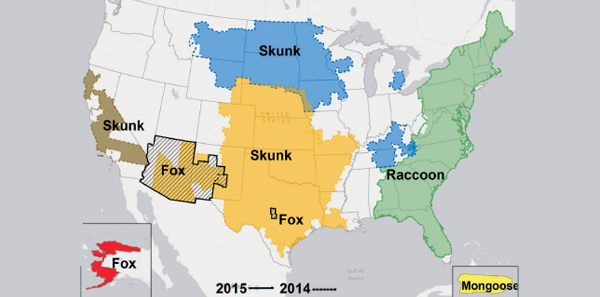
Rabies remains endemic in raccoons, foxes, and skunks regionally in the United States (see Figure 1) and bats everywhere, and each year between 60 and 70 dogs and more than 250 cats are found rabid. However, only 23 cases of human rabies have been reported in the past decade compared to 60,000 cases annually worldwide, and none were due to RPEP failure. So it does not appear that our previously available RIG preparations have been ineffective. RPEP failures have rarely occurred due to RIG injected only intramuscularly and not into all the wounds.

There are potential drawbacks with higher-concentrated RIG. For example, for extensive wounds, the Advisory Committee on Immunization Practices recommends diluting RIG to ensure sufficient volume to infiltrate all of the wounds. In this scenario, the doubly concentrated formulation might require additional dilution, which must be done with 5 percent dextrose in water rather than normal saline. Thus, the standard concentration might be preferred in this situation. Also, the change in concentration may increase the risk of miscalculating the dosage if clinicians mistakenly use the previous standard concentration.

In addition to RIG, rabies vaccine should be administered intramuscularly in the deltoid area, 1 mL initially (day 0) and then again on days 3, 7, and 14 (also day 28 if the patient is immunocompromised). Two licensed vaccines are currently available in the United States: human diploid cell vaccine (Imovax Rabies, Sanofi Pasteur) and purified chick embryo cell vaccine (RabAvert, Novartis Vaccine and Diagnostics).

Pages: 1 2 3 4 | Single Page

Topics: HyperRABRabiesrabies immune globulin

Related

  • New, More Potent Rabies Treatment Now Available

    September 25, 2018 - 2 Comments

Current Issue

ACEP Now: November 2025

Download PDF

Read More

No Responses to “Tips for Treatment Following Possible Rabies Exposure”

Leave a Reply Cancel Reply

Your email address will not be published. Required fields are marked *


*
*


Wiley
  • Home
  • About Us
  • Contact Us
  • Privacy
  • Terms of Use
  • Advertise
  • Cookie Preferences
Copyright © 2025 by John Wiley & Sons, Inc. All rights reserved, including rights for text and data mining and training of artificial technologies or similar technologies. ISSN 2333-2603