Logo

Log In Sign Up |  An official publication of: American College of Emergency Physicians
Navigation
  • Home
  • Multimedia
    • Podcasts
    • Videos
  • Clinical
    • Airway Managment
    • Case Reports
    • Critical Care
    • Guidelines
    • Imaging & Ultrasound
    • Pain & Palliative Care
    • Pediatrics
    • Resuscitation
    • Trauma & Injury
  • Resource Centers
    • mTBI Resource Center
  • Career
    • Practice Management
      • Benchmarking
      • Reimbursement & Coding
      • Care Team
      • Legal
      • Operations
      • Quality & Safety
    • Awards
    • Certification
    • Compensation
    • Early Career
    • Education
    • Leadership
    • Profiles
    • Retirement
    • Work-Life Balance
  • Columns
    • ACEP4U
    • Airway
    • Benchmarking
    • Brief19
    • By the Numbers
    • Coding Wizard
    • EM Cases
    • End of the Rainbow
    • Equity Equation
    • FACEPs in the Crowd
    • Forensic Facts
    • From the College
    • Images in EM
    • Kids Korner
    • Medicolegal Mind
    • Opinion
      • Break Room
      • New Spin
      • Pro-Con
    • Pearls From EM Literature
    • Policy Rx
    • Practice Changers
    • Problem Solvers
    • Residency Spotlight
    • Resident Voice
    • Skeptics’ Guide to Emergency Medicine
    • Sound Advice
    • Special OPs
    • Toxicology Q&A
    • WorldTravelERs
  • Resources
    • ACEP.org
    • ACEP Knowledge Quiz
    • Issue Archives
    • CME Now
    • Annual Scientific Assembly
      • ACEP14
      • ACEP15
      • ACEP16
      • ACEP17
      • ACEP18
      • ACEP19
    • Annals of Emergency Medicine
    • JACEP Open
    • Emergency Medicine Foundation
  • About
    • Our Mission
    • Medical Editor in Chief
    • Editorial Advisory Board
    • Awards
    • Authors
    • Article Submission
    • Contact Us
    • Advertise
    • Subscribe
    • Privacy Policy
    • Copyright Information

Thoracic Aortic Dissection Clinical Policy Approved by ACEP Board

By Andrew Fredericks, MD, and Deborah Diercks, MD, FACEP | on May 14, 2015 | 0 Comment
Features
  • Tweet
  • Click to email a link to a friend (Opens in new window) Email
Print-Friendly Version
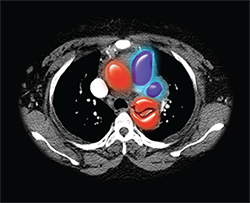
Color-enhanced computerized axial tomography (CT) image of a human chest, showing a dissection of the descending thoracic aorta (red fish-mouth shaped structure) in which the wall of the artery tears and blood accumulates within the artery wall.

You Might Also Like
  • Comment Period Open for ACEP Draft Thoracic Aortic Dissection Clinical Policy
  • ACEP Clinical Policy on Acute Carbon Monoxide Poisoning
  • ACEP Board Approves tPA Clinical Policy
Explore This Issue
ACEP Now: Vol 34 – No 05 – May 2015

Color-enhanced computerized axial tomography (CT) image of a human chest, showing a dissection of the descending thoracic aorta (red fish-mouth shaped structure) in which the wall of the artery tears and blood accumulates within the artery wall.
Image Credit: Living Art Enterprises, LLC / Science Source

In October 2014, the ACEP Board of Directors approved a new clinical policy, developed by ACEP’s Clinical Policies Committee, on the evaluation and management of adult patients with suspected acute nontraumatic thoracic aortic dissection. As is the case with all of ACEP’s clinical policies, it has been published in Annals of Emergency Medicine.1

Acute nontraumatic thoracic aortic dissection is a deadly disease and a can’t-miss diagnosis in the emergency department. Although inpatient mortality from this condition approaches 27 percent, the disease has a very low incidence, and there is little high-quality evidence to guide an approach to diagnosis and management. Considerable medical-legal risk also surrounds its misdiagnosis.

Committee members focused on five critical questions associated with the ED evaluation and management of this condition. A systematic review of the evidence was conducted, and the committee then elucidated a strength of recommendation (A, B, or C) associated with answers to each of the questions (see Table 1). Input was received from ACEP members and individual members of the American Heart Association and the Society for Vascular Surgery during the 60-day open-comment period.

Critical Question 1

In adult patients with suspected acute nontraumatic thoracic aortic dissection, are there clinical decision rules that identify a group of patients at very low risk for the diagnosis of thoracic aortic dissection?

Approximately 8–10 percent of all patients present to the ED with chest pain, and because chest pain is a common complaint in aortic dissection, the treating clinician often considers the diagnosis in patients with this complaint. Therefore, it would be ideal if a clinical decision rule could be used to identify patients at very low risk for having an aortic dissection who do not need to be evaluated for dissection by diagnostic testing. Unfortunately, no such clinical decision rule has been validated in a prospective trial, thus use of clinical decision rules to identify patients at very low risk for acute nontraumatic thoracic aortic dissection was given a Level C recommendation.

Critical Question 2

In adult patients with suspected acute nontraumatic thoracic aortic dissection, is a negative serum D-dimer sufficient to identify a group of patients at very low risk for the diagnosis of thoracic aortic dissection?

Pages: 1 2 3 | Single Page

Topics: ACEPAmerican College of Emergency PhysiciansCardiovascularClinical GuidelineProcedures and SkillsQuality

Related

  • Nail Bed Injuries: What to Do—or Not to Do

    August 18, 2025 - 0 Comment
  • ACEP Clinical Policy on Outpatient Mgmt. of Adults with Asymptomatic Elevated Blood Pressure

    June 25, 2025 - 0 Comment
  • How Emergency Physicians Can Thrive in Value-Based Care Landscapes

    June 24, 2025 - 0 Comment

Current Issue

ACEP Now: November 2025

Download PDF

Read More

No Responses to “Thoracic Aortic Dissection Clinical Policy Approved by ACEP Board”

Leave a Reply Cancel Reply

Your email address will not be published. Required fields are marked *


*
*


Wiley
  • Home
  • About Us
  • Contact Us
  • Privacy
  • Terms of Use
  • Advertise
  • Cookie Preferences
Copyright © 2025 by John Wiley & Sons, Inc. All rights reserved, including rights for text and data mining and training of artificial technologies or similar technologies. ISSN 2333-2603
