

Every once in a while, I get a text from a friend of a meme decrying the inevitability of becoming interested in birds as you age. In a way, it’s true; it came out of nowhere for me. And granted it can seem peculiar to the uninitiated. But now that I have been indoctrinated for a couple of years, it has become much more than a hobby to me. I see it as a healthful exercise, a practice in mindfulness. I want to share it with you because I think many emergency physicians would benefit from this practice and are especially poised to enjoy and succeed in it. If you hear me out, maybe you can come to see it as a simple, cheap, and surprisingly fun way to make your life a little better.
Explore This Issue
ACEP Now: Vol 43 – No 08 – August 2024Like many of you, five years ago, I had no idea what “birding” was. I was vaguely aware of these little creatures that would occasionally peck on my house, excrete on my car, or chirp outside my window. Birding is really just another name for birdwatching, although it also implies an additional, intentional cultivation of the art and science of the field, an appreciation (maybe even admiration) for these avian organisms. For me, it began one spring when I noticed that I kept seeing dozens of different small, colorful birds, whistling from the branches of the redbud trees outside my back window. I curiously began to take note. Fortunately, my next-door neighbor is a wizened naturalist, who was able to tell me that this occurrence was the spring migration. He helped me identify a few birds, and after that I was hooked. Now, I’m no pro, but in the way of credentials I have 1) traveled to regional birding events, 2) keep a pair of binoculars in my glove box, and 3) have no problem picking out the buzzy crescendo of the Northern Parula from a cacophony of forest songs in early May. Birding is now one of my go-to activities for experiencing nature, enjoying time alone, and investigating non-medical knowledge. It has brought me a wealth of joy. But, you might be asking, why should you care?
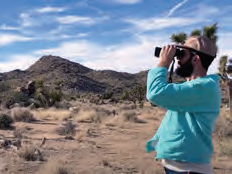
Dr. Prats.
Well, it happens that my interest in birding seemed to parallel a simultaneous growth in the practice of mindfulness in medicine. It didn’t take long to start drawing connections. In case you are not familiar, mindfulness could be very simply defined as an intentional awareness of your surroundings in order to help focus on the present. Studies on healthcare workers have shown that mindfulness practices can decrease emotional exhaustion, improve mood, reduce burnout, and help sleep.1-3 It might even make you a better communicator with your patients.4 While the studies so far have used a variety of interventions to cultivate mindfulness, none that I could find have used birding, so bear with me while I extrapolate the data. Birding incorporates major themes of mindfulness in observing, describing, and nonjudgement. In addition, in my experience, there is something about the peaceful and untamed essence of (many) birds that is calming, in the same way being in nature can be. A study by environmental psychologist Eleanor Ratcliffe even suggested that hearing bird song can influence your perceived restoration from stress and cognitive fatigue.5 There could be many additional interlaced benefits such as exercise, meditation, time to ponder, or adventure. Several books have been written on this topic with great names like Ornitherapy, Zen Birds, and Keep Looking Up.6-8 Hopefully you are following my reasoning that since emergency physicians can benefit from mindfulness practices, and birding is one form of mindfulness, that therefore emergency physicians can benefit from birding. Now let me take it one step further and tell you why emergency physicians in particular make excellent birders.
In the emergency department we rely heavily on our powers of observation, whether it is the subtle smell of DKA or the look of fear in a patient’s eyes. We also are experts at taking a broad differential and narrowing it down to a few manageable options with only a snapshot of interaction. In my experience, our group tends to be curious and open to learning new skills. This is the perfect recipe for a fledgling birder! You can fine-tune your observation in noting subtle feather shades and patterns; you can recognize the wing shape of an undifferentiated warbler and then deduce your way down to a specific species; you can readily delve into the cornucopia of flight patterns, song sonograms, and unique behaviors with gusto. We learn new skills all the time for our jobs, maybe it’s time to learn a new skill for a wholesome hobby?
What might you need to get started? Most people use binoculars, although you can bird with the naked eye if so inclined. If you want binoculars, you don’t need anything fancy, but a wide field of view and something like 8x or 10x magnification will make it easier to find the bird through a lens. Then, simply download the free Merlin Bird ID app (a wonderful resource made by the Cornell Lab of Ornithology) and you will be able to identify birds with ease using its sound ID feature, a photo, or by answering a few quick questions. If you already have done all that and are hungry for more, the next step is exploring the extensive data available at ebird.org to seek out local hotspots and interesting birds seen in your area.
So the next time you travel to a conference, pack some binoculars. The next time you walk outside, take notice of how many different species you can see and hear. Whether it is a form of peaceful solitude or engaging with the larger birding community, embracing birding can bring you a multitude of benefits.

Dr. Prats is an associate professor of emergency medicine at the Ohio State University Wexner Medical Center and runs the Ultrasound GEL podcast that reviews articles in point-of-care ultrasound.
Pages: 1 2 | Multi-Page



No Responses to “The Doc Side of the Loon”