Logo

Log In Sign Up |  An official publication of: American College of Emergency Physicians
Navigation
  • Home
  • Multimedia
    • Podcasts
    • Videos
  • Clinical
    • Airway Managment
    • Case Reports
    • Critical Care
    • Guidelines
    • Imaging & Ultrasound
    • Pain & Palliative Care
    • Pediatrics
    • Resuscitation
    • Trauma & Injury
  • Resource Centers
    • mTBI Resource Center
  • Career
    • Practice Management
      • Benchmarking
      • Reimbursement & Coding
      • Care Team
      • Legal
      • Operations
      • Quality & Safety
    • Awards
    • Certification
    • Compensation
    • Early Career
    • Education
    • Leadership
    • Profiles
    • Retirement
    • Work-Life Balance
  • Columns
    • ACEP4U
    • Airway
    • Benchmarking
    • Brief19
    • By the Numbers
    • Coding Wizard
    • EM Cases
    • End of the Rainbow
    • Equity Equation
    • FACEPs in the Crowd
    • Forensic Facts
    • From the College
    • Images in EM
    • Kids Korner
    • Medicolegal Mind
    • Opinion
      • Break Room
      • New Spin
      • Pro-Con
    • Pearls From EM Literature
    • Policy Rx
    • Practice Changers
    • Problem Solvers
    • Residency Spotlight
    • Resident Voice
    • Skeptics’ Guide to Emergency Medicine
    • Sound Advice
    • Special OPs
    • Toxicology Q&A
    • WorldTravelERs
  • Resources
    • ACEP.org
    • ACEP Knowledge Quiz
    • Issue Archives
    • CME Now
    • Annual Scientific Assembly
      • ACEP14
      • ACEP15
      • ACEP16
      • ACEP17
      • ACEP18
      • ACEP19
    • Annals of Emergency Medicine
    • JACEP Open
    • Emergency Medicine Foundation
  • About
    • Our Mission
    • Medical Editor in Chief
    • Editorial Advisory Board
    • Awards
    • Authors
    • Article Submission
    • Contact Us
    • Advertise
    • Subscribe
    • Privacy Policy
    • Copyright Information

Statistical Trends of Diagnostic Testing in the Emergency Department

By James J. Augustine, MD, FACEP | on February 19, 2021 | 1 Comment
Benchmarking
  • Tweet
  • Click to email a link to a friend (Opens in new window) Email
Print-Friendly Version
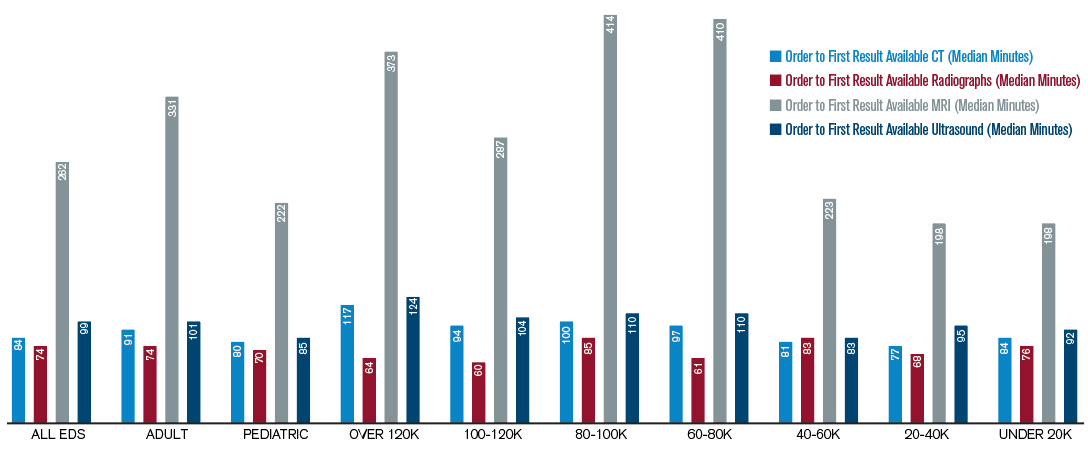
Figure 2: Median Diagnostic Imaging Turnaround Times (Minutes)

You Might Also Like
  • Expanded Diagnostic Testing in the Emergency Department Raises Need for Cohort Data
  • Diagnostic Testing in the ED Supports Development of New Metrics as Quality Indicators
  • Diagnostic Testing Usage Data Can Help Emergency Physicians Manage Utilization
Explore This Issue
ACEP Now: Vol 40 – No 02 – February 2021

(click for larger image) Figure 2: Median Diagnostic Imaging Turnaround Times (Minutes)

To further characterize performance, hospitals were sorted based on trauma center designation. CT scans are used more frequently in Level I and II trauma centers, especially in facilities that also serve as high-level stroke centers and see a greater proportion of adults. There are 31 CT procedures per 100 patients in Level I and II trauma centers, and around 22 procedures in lower-level and nontrauma centers. ED leaders should be aware of the differences and, when called upon to study institutional utilization, should compare their experience to cohorts at a similar level of trauma designation and pediatric mix. 

Diagnostic Imaging Turnaround Times

In 2019, EDBA assembled its first collection of data on turnaround times for select radiology and laboratory metrics. Turnaround time is defined as the median time interval from order placed in the electronic health record by the ED staff to first result available to the ED staff. For imaging procedures, this may be when the “preliminary” or “final” results are available, depending on the emergency department’s policy of decision making for a given imaging modality. The intervals are presented in Figure 2 for routine radiographs, CT scans, MRI scans, and ultrasound procedures, with all displayed as median time elements in minutes. There are important time differences, and like many other elements of ED processing, they are shorter in the lower-volume emergency departments. Because this is the first year this data set has been reported, there are no trending graphs.

The emergency department is the diagnostic center for the medical community. This role is particularly important for patients who have the greatest need for timely evaluation and treatment and might require hospitalization.

The emergency department is the diagnostic center for the medical community. This role is particularly important for patients who have the greatest need for timely evaluation and treatment and might require hospitalization. Because about 67 percent of inpatients are processed through the emergency department, emergency physicians are responsible for a disproportionate share of diagnostic testing and related patient flow issues. 

Emergency physicians should understand the typical utilization rates and turnaround times for diagnostic testing in their department. Now, thanks to new data, departments can see how their utilization practices compare to similar ones around the nation. It is hoped that this will allow better decision making about diagnostic imaging use as a marker of quality and lead to productive discussions with the hospital’s imaging department about ensuring turnaround times are appropriate. 

Pages: 1 2 3 | Single Page

Topics: Diagnostic TestingEmergency Department trendsImaging & UltrasoundStatistics

Related

  • ACEP’s October 2025 Poll: How Often Do You Read Your Own X-Rays?

    September 30, 2025 - 0 Comment
  • Case Report: Rapid Diagnosis of Acute Aortic Dissection with POCUS

    June 11, 2025 - 1 Comment
  • How Well Does Ultrasound Detect Volvulus in Infants?

    September 5, 2024 - 0 Comment

Current Issue

ACEP Now: November 2025

Download PDF

Read More

About the Author

James J. Augustine, MD, FACEP

James J. Augustine, MD, FACEP, is national director of prehospital strategy for US Acute Care Solutions in Canton, Ohio; clinical professor of emergency medicine at Wright State University in Dayton, Ohio; and vice president of the Emergency Department Benchmarking Alliance.

View this author's posts »

One Response to “Statistical Trends of Diagnostic Testing in the Emergency Department”

  1. August 25, 2022

    Kevin Flaig M.D. Reply

    Hi James,

    I am an Emergency Medical Director in an Emergency department which sees approximately 50,000 per year. Our CT Utilisation is reported to be approximately 45 per 100. Our radiology colleagues have not noticed overutilization and it seems like we our ordering appropriately. I can’t believe our acuity is that much higher but I am not sure I have an answer to this issue.

    What would be your interpretation of this? What should I do as a director to look into this?

Leave a Reply Cancel Reply

Your email address will not be published. Required fields are marked *


*
*


Wiley
  • Home
  • About Us
  • Contact Us
  • Privacy
  • Terms of Use
  • Advertise
  • Cookie Preferences
Copyright © 2025 by John Wiley & Sons, Inc. All rights reserved, including rights for text and data mining and training of artificial technologies or similar technologies. ISSN 2333-2603
