Logo

Log In Sign Up |  An official publication of: American College of Emergency Physicians
Navigation
  • Home
  • Multimedia
    • Podcasts
    • Videos
  • Clinical
    • Airway Managment
    • Case Reports
    • Critical Care
    • Guidelines
    • Imaging & Ultrasound
    • Pain & Palliative Care
    • Pediatrics
    • Resuscitation
    • Trauma & Injury
  • Resource Centers
    • mTBI Resource Center
  • Career
    • Practice Management
      • Benchmarking
      • Reimbursement & Coding
      • Care Team
      • Legal
      • Operations
      • Quality & Safety
    • Awards
    • Certification
    • Compensation
    • Early Career
    • Education
    • Leadership
    • Profiles
    • Retirement
    • Work-Life Balance
  • Columns
    • ACEP4U
    • Airway
    • Benchmarking
    • Brief19
    • By the Numbers
    • Coding Wizard
    • EM Cases
    • End of the Rainbow
    • Equity Equation
    • FACEPs in the Crowd
    • Forensic Facts
    • From the College
    • Images in EM
    • Kids Korner
    • Medicolegal Mind
    • Opinion
      • Break Room
      • New Spin
      • Pro-Con
    • Pearls From EM Literature
    • Policy Rx
    • Practice Changers
    • Problem Solvers
    • Residency Spotlight
    • Resident Voice
    • Skeptics’ Guide to Emergency Medicine
    • Sound Advice
    • Special OPs
    • Toxicology Q&A
    • WorldTravelERs
  • Resources
    • ACEP.org
    • ACEP Knowledge Quiz
    • Issue Archives
    • CME Now
    • Annual Scientific Assembly
      • ACEP14
      • ACEP15
      • ACEP16
      • ACEP17
      • ACEP18
      • ACEP19
    • Annals of Emergency Medicine
    • JACEP Open
    • Emergency Medicine Foundation
  • About
    • Our Mission
    • Medical Editor in Chief
    • Editorial Advisory Board
    • Awards
    • Authors
    • Article Submission
    • Contact Us
    • Advertise
    • Subscribe
    • Privacy Policy
    • Copyright Information

St. Joseph’s Regional Medical Center Aims to Avoid Opioid Use in Emergency Department

By Alexis M. LaPietra, DO | on August 16, 2016 | 0 Comment
Features
  • Tweet
  • Click to email a link to a friend (Opens in new window) Email
Print-Friendly Version

Opioids have a place in the emergency department for the treatment of acute pain. However, they can also lead to significant morbidity and mortality with their misuse. The United States is in the middle of an epidemic, seeing an increasing number of preventable deaths and emergency department visits due to prescription opioid abuse. Of the more than 47,000 lethal opioid drug overdoses in the United States in 2014, 18,893 were related to prescription pain relievers, and 10,574 were related to heroin.1 According to the Centers for Disease Control and Prevention, 259 million prescriptions were written for opioids in 2012—enough for every U.S. adult to have their own bottle of pills.2

You Might Also Like
  • Regional Anesthesia an Alternative to Opioids in the Emergency Department
  • Discover Opioid Alternatives and How to Get Paid for Using Them
  • Non-Opioid Pain Medications to Consider for Emergency Department Patients
Explore This Issue
ACEP Now: Vol 35 – No 08 – August 2016

After residency, I completed a yearlong emergency medicine acute pain management fellowship. My training included managing chronic pain with and without opioids, performing ultrasound-guided nerve blocks, and understanding best practice for acute pain control. My training extended to rotations with orthopedic spine surgery, neurology, radiology, physical medicine and rehabilitation, palliative care, and addiction medicine. During my fellowship year, I was exposed to the concept that for the majority of painful conditions, opioids are not immediately necessary but rather should be reserved as a last resort and only for severe pain. Physicians must be aware of the non-opioid modalities and medications available and work to integrate them into their day-to-day practice.
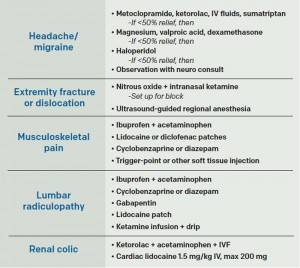
Table 1. Clinical Applications for ALTO Program Protocols

(click for larger image)
Table 1. Clinical Applications for ALTO Program Protocols

St. Joseph’s Regional Medical Center in Paterson, New Jersey, launched a formal program called Alternatives to Opiates (ALTO) to help improve pain management, patient care, and patient safety. The ALTO program utilizes targeted non-opioid medications, trigger-point injections, nitrous oxide, and ultrasound-guided nerve blocks to tailor patients’ pain management needs and avoid opioid use whenever possible.

Not every condition is appropriate for ALTO treatment. Cancer pain, significant trauma, or intra-abdominal pathology are conditions in which opioids are appropriate and often required. Examples of ALTO treatment include kidney stone pain now being treated with intravenous lidocaine instead of opioids; acute low back pain being treated with a combination of oral and topical pain medications, as well as trigger-point injections; extremity fractures being treated with focused ultrasound-guided nerve blocks; and acute headache and migraine pain being treated based on an algorithm using a variety of non-opioid medications. However, if patients’ pain is not adequately managed using ALTO techniques, opioids are used as second line.

Through the ALTO program, the emergency department is taking every step it can to decrease its opioid use in and out of the hospital. It has partnered with the St. Joseph’s Healthcare System Overdose Prevention and Naloxone Distribution Program to educate friends and family members of high-risk individuals about prescription opioid abuse and provide a naloxone kit to be kept in the home.

Pages: 1 2 3 | Single Page

Topics: AddictionAlternative to OpiatesED Critical CareEmergency DepartmentEmergency MedicineEmergency PhysicianOpioidOpioid CrisisOverdosePatient CarePractice ManagementSt. Joseph Medical Center

Related

  • Florida Emergency Department Adds Medication-Dispensing Kiosk

    November 7, 2025 - 1 Comment
  • Q&A with ACEP President L. Anthony Cirillo

    November 5, 2025 - 0 Comment
  • Let Core Values Help Guide Patient Care

    November 5, 2025 - 0 Comment

Current Issue

ACEP Now: November 2025

Download PDF

Read More

No Responses to “St. Joseph’s Regional Medical Center Aims to Avoid Opioid Use in Emergency Department”

Leave a Reply Cancel Reply

Your email address will not be published. Required fields are marked *


*
*


Wiley
  • Home
  • About Us
  • Contact Us
  • Privacy
  • Terms of Use
  • Advertise
  • Cookie Preferences
Copyright © 2025 by John Wiley & Sons, Inc. All rights reserved, including rights for text and data mining and training of artificial technologies or similar technologies. ISSN 2333-2603
