Logo

Log In Sign Up |  An official publication of: American College of Emergency Physicians
Navigation
  • Home
  • Multimedia
    • Podcasts
    • Videos
  • Clinical
    • Airway Managment
    • Case Reports
    • Critical Care
    • Guidelines
    • Imaging & Ultrasound
    • Pain & Palliative Care
    • Pediatrics
    • Resuscitation
    • Trauma & Injury
  • Resource Centers
    • mTBI Resource Center
  • Career
    • Practice Management
      • Benchmarking
      • Reimbursement & Coding
      • Care Team
      • Legal
      • Operations
      • Quality & Safety
    • Awards
    • Certification
    • Compensation
    • Early Career
    • Education
    • Leadership
    • Profiles
    • Retirement
    • Work-Life Balance
  • Columns
    • ACEP4U
    • Airway
    • Benchmarking
    • Brief19
    • By the Numbers
    • Coding Wizard
    • EM Cases
    • End of the Rainbow
    • Equity Equation
    • FACEPs in the Crowd
    • Forensic Facts
    • From the College
    • Images in EM
    • Kids Korner
    • Medicolegal Mind
    • Opinion
      • Break Room
      • New Spin
      • Pro-Con
    • Pearls From EM Literature
    • Policy Rx
    • Practice Changers
    • Problem Solvers
    • Residency Spotlight
    • Resident Voice
    • Skeptics’ Guide to Emergency Medicine
    • Sound Advice
    • Special OPs
    • Toxicology Q&A
    • WorldTravelERs
  • Resources
    • ACEP.org
    • ACEP Knowledge Quiz
    • Issue Archives
    • CME Now
    • Annual Scientific Assembly
      • ACEP14
      • ACEP15
      • ACEP16
      • ACEP17
      • ACEP18
      • ACEP19
    • Annals of Emergency Medicine
    • JACEP Open
    • Emergency Medicine Foundation
  • About
    • Our Mission
    • Medical Editor in Chief
    • Editorial Advisory Board
    • Awards
    • Authors
    • Article Submission
    • Contact Us
    • Advertise
    • Subscribe
    • Privacy Policy
    • Copyright Information

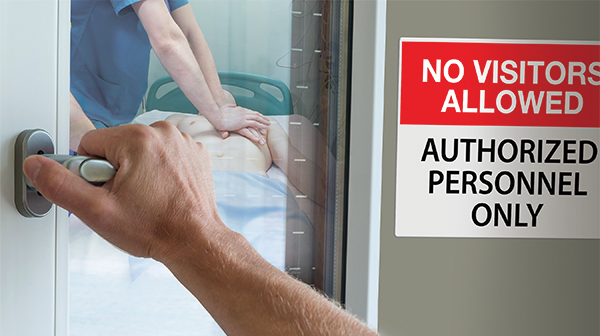
Should Families Watch CPR in the Emergency Department?

By Catherine A. Marco, MD, John Jesus, MD, Elizabeth Phillips, MD, MA, and Gregory Luke Larkin, MD, MSPH | on June 15, 2015 | 2 Comments
Features
  • Tweet
  • Click to email a link to a friend (Opens in new window) Email
Print-Friendly Version
Should Families Watch CPR in the Emergency Department?

Dr. Marco is professor of emergency medicine at Wright State University Boonshoft School of Medicine in Dayton, Ohio. Dr. Jesus is assistant professor of emergency medicine at Christiana Care Health System in Newark, Delaware. Dr. Phillips is chief resident in the department of emergency medicine at George Washington University Hospital in Washington, D.C. Dr. Larkin is Lion Foundation professor and chair of emergency medicine at the University of Auckland in New Zealand.

You Might Also Like
  • When Do You Stop Trying to Resuscitate a Patient?
  • How to Approach End-of-Life Care Discussions, Determine Treatment Goals for Patients Near Death in the Emergency Department
  • ACEP17 Family Forum Brings Families Together for Tours, Activities in Washington, D.C.
Explore This Issue
ACEP Now: Vol 34 – No 06 – June 2015

FWR Recommendations for Pediatric Patients16

  1. Consider FWR as an option for families during pediatric procedures.
  2. Offer FWR as an option if presence will not affect clinical care.
  3. If family is not offered the option for FWR, document the reasons.
  4. Consider the safety of the health care team.
  5. Develop in-hospital transport and transfer policies and procedures for FWR.
  6. Health care policies should undergo legal review.
  7. Educate all health care providers.
  8. Promote research into best methods for education; effects of FWR on patients, family, and staff; best practices for FWR; and legal issues regarding FWR, among others.

References

  1. Doyle CJ, Post H, Burney RE, et al. Family participation during resuscitation: an option. Ann Emerg Med. 1987;16(6):673-675.
  2. Hanson C, Strawser D. Family presence during cardiopulmonary resuscitation: Foote Hospital emergency department’s nine-year perspective. J Emerg Nurs. 1992;18(2):104-106.
  3. McClenathan BM, Torrington KG, Uyehara CFT. Family member presence during cardiopulmonary resuscitation: a survey of US and international critical care professionals. Chest. 2002;122(6):2204-2211.
  4. McMahon-Parkes K, Moule P, Benger J, et al. The views and preferences of resuscitated and non-resuscitated patients towards family-witnessed resuscitation: a qualitative study. Int J Nurs Stud. 2009;46(2):220-229.
  5. Robinson SM, Mackenzie-Ross S, Campbell Hewson GL, et al. Psychological effect of witnessed resuscitation on bereaved relatives. Lancet. 1998;352(9128):614-617.
  6. Jabre P, Belpomme V, Azoulay E, et al. Family presence during cardiopulmonary resuscitation. N Engl J Med. 2013;368(11):1008-1018.
  7. Kramer DB, Mitchell SL. Weighing the benefits and burdens of witnessed resuscitation. N Engl J Med. 2013;368(11):1058-1059.
  8. Edwards EE, Despotopulos LD, Carroll DL. Changes in provider perceptions of family presence during resuscitation. Clin Nurse Spec. 2013;27(5):239-244.
  9. Halm MA. Family presence during resuscitation: a critical review of the literature. Am J Crit Care. 2005;14(6):494-511.
  10. Boudreaux ED, Francis JL, Loyacano T. Family presence during invasive procedures and resuscitations in the emergency department: a critical review and suggestions for future research. Ann Emerg Med. 2002;40(2):193-205.
  11. Bradley C, Lensky M, Brasel K. Implementation of a family presence during resuscitation protocol #233. J Palliat Med. 2011;14(1):98-99.
  12. MacLean SL, Guzzetta CE, White C, et al. Family presence during cardiopulmonary resuscitation and invasive procedures: practices of critical care and emergency nurses. J Emerg Nurs. 2003;29:208-221.
  13. Browning DM, Meyer EC, Truog RD, et al. Difficult conversations in health care: cultivating relational learning to address the hidden curriculum. Acad Med. 2007;82:905-913.
  14. Meyer EC, Sellers DE, Browning DM, et al. Difficult conversations: improving communication skills and relational abilities in health care. Pediatr Crit Care Med. 2009:10;352-359.
  15. Meyer EC, Brodksy D, Hansen AR, et al. An interdisciplinary, family-focused approach to relational learning in neonatal intensive care. J Perinatol. 2011;31:212-219.
  16. Henderson DP, Knapp JF. Report of the National Consensus Conference on Family Presence During Pediatric Cardiopulmonary Resuscitation and Procedures. J Emerg Nurs. 2006;32:23-39.

Pages: 1 2 3 | Single Page

Topics: Case PresentationCPRCritical CareEmergency DepartmentEmergency PhysicianEthicsResuscitationTrauma and Injury

Related

  • Why the Nonrebreather Should be Abandoned

    December 3, 2025 - 0 Comment
  • Let Core Values Help Guide Patient Care

    November 5, 2025 - 0 Comment
  • Non-Invasive Positive Pressure Ventilation in the Emergency Department

    October 1, 2025 - 0 Comment

Current Issue

ACEP Now: November 2025

Download PDF

Read More

2 Responses to “Should Families Watch CPR in the Emergency Department?”

  1. June 23, 2015

    Mark Reply

    Interesting article but not really applicable to ems. We dont get to choose where the resuscitation wffort happens. Could be in a mall, lounge, bedroom or anywhere really. We dont have a spare chaperone handy. Whether telatives whitness the resus is often left up to them. Some do and some choose not to

  2. July 12, 2015

    Ken Milne Reply

    Covered this issue on the Skeptics’ Guide to Emergency Medicine Episode#59 Can I Get A Witness http://thesgem.com/2014/01/sgem59-can-i-get-a-witness-family-members-present-during-cpr/

Leave a Reply Cancel Reply

Your email address will not be published. Required fields are marked *


*
*


Wiley
  • Home
  • About Us
  • Contact Us
  • Privacy
  • Terms of Use
  • Advertise
  • Cookie Preferences
Copyright © 2025 by John Wiley & Sons, Inc. All rights reserved, including rights for text and data mining and training of artificial technologies or similar technologies. ISSN 2333-2603
