
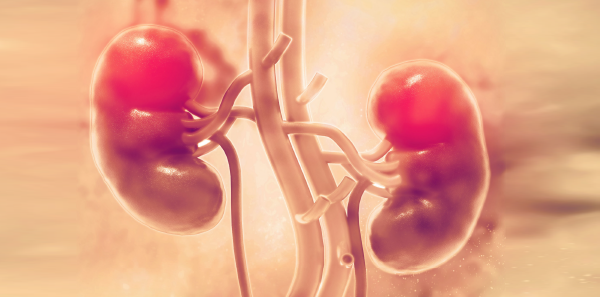
Emergency physicians order basic metabolic panels for a variety of reasons. For patients without a primary care physician, an ED visit presents a potentially important opportunity beyond any acute diagnoses and treatment received. Some chronic medical problems can be detected by intent or by chance in the course of many ED workups. Emergency physicians should be on the lookout for these and seize the opportunity to encourage appropriate follow-up.
Explore This Issue
ACEP Now: Vol 39 – No 08 – August 2020About 37 million American adults (15 percent) are living with kidney disease.1 Among people with chronic kidney disease (CKD), the prevalence of hypertension by disease stage is approximately 36 percent in stage 1, 45 to 50 percent in stage 2, 60 percent in stage 3, and more than 80 percent in stages 4–5.2 The majority (90 percent) of CKD patients are not aware of their condition, and nearly half are in advanced stages when they receive a definitive diagnosis.3 There is a significant likelihood of undiagnosed CKD among ED patients. While only 3.4 percent of people diagnosed with CKD visited the emergency department between 2015 and 2016, approximately one-third of all ED patients present with blood pressure levels above the threshold for hypertension diagnosis, which would also increase the likelihood of concomitant CKD.4,5
Emergency Physicians Are Uniquely Positioned in Kidney Care
CKD is a major threat to population health in the United States, and if the condition is not diagnosed early and managed well, it inevitably progresses to end-stage renal disease (ESRD). One in five patients with ESRD die within a year after starting dialysis, and that number soars to half of patients within five years.4 Approximately 7.2 percent of Medicare fee-for-service annual spending is for the care of ESRD and totaled $35.9 billion in 2017 alone.2
In response to these issues, the White House released the Advancing American Kidney Health Initiative last year, with the intention of urging the transformation of kidney care.6 The priority of this executive order is to “prevent kidney failure whenever possible through better diagnosis, treatment, and incentives for preventive care.”
Emergency physicians are uniquely positioned to answer the call to prevent kidney failure because they interact with significant numbers of affected individuals, most of whom have very low awareness of the disease.
Emergency physicians can increase awareness of CKD among patients with hypertension, and this can be accomplished in part by acknowledging the long-term significance of a low glomerular filtration rate (GFR), discussing it with the patient, and ensuring there is adequate follow-up. When a patient’s GFR is low, emergency physicians might counsel the patient on adherence to antihypertensive medications and provide a referral to primary care for CKD management.
Advancing ED Practice in Value-Based Care
By addressing possible missed diagnoses of CKD and other chronic illnesses, emergency physicians have substantial potential to improve population health. The increasing shift to value-based care, which ties payments to health outcomes, has expanded the role of the emergency department from treating acute episodes to improving the value of the entire system when possible. For example, in 2019, ACEP proposed an innovative value-based payment model, the “Acute Unscheduled Care Model (AUCM): Enhancing Appropriate Admissions, A Physician-Focused Payment Model (PFPM) for Emergency Medicine.”7 The Department of Health and Human Services endorsed this proposal, which provides incentives for emergency physicians to safely discharge Medicare beneficiaries from the emergency department by facilitating and rewarding postdischarge care coordination.
These payment model trends, accompanied by advancing technology in data interoperability, present a new opportunity for emergency physicians to recognize patients at risk of serious chronic conditions continuing to go undiagnosed and therefore unmanaged. This expanded focus will lead to increased patient awareness and education. This, in turn, can motivate individuals to seek and obtain the care they need in a timely manner, leading to better health outcomes and higher health care value.
The federal government may lead this initiative, but there is an equally important role for private payers in the system transition. Private payers can work with emergency departments on alternative payment models ranging from population-based quality measures to more holistic total cost-of-care models, providing additional incentive to move this work forward.
Emergency physicians play a critical role in our nation’s health system and have an amazing opportunity to advance our nation on the path to value-based health care. Nowhere is this more evident than in the benefits that can be realized with earlier identification and management of chronic diseases such as CKD.
The authors thank William Shrank and Courtney Brown, Humana Inc. and Suzanne Dixon, Humana Healthcare Research for providing writing support and contribution.
Disclosure: Dr. Vassalotti is a consultand on type-2 diabetes health services and population health for Janssen, Inc. and on the CKD advisory board for RenalytixAI, Plc.
 Dr. Agarwal is vice president of home solutions at Humana Inc. in Louisville, Kentucky.
 Dr. Vassalotti is chief medical officer of the National Kidney Foundation and Clinical Professor, specializing in nephrology, at Mount Sinai Health System in New York City.
 Dr. Zhou Yang is research consulting lead in Humana Healthcare Research at Humana Inc. in Atlanta, Georgia.
References
- Chronic kidney disease in the United States, 2019. Centers for Disease Control and Prevention website. Accessed June 2, 2020.
- 2011 2011 atlas of CKD & ESD. United States Renal Data System website. Accessed June 2, 2020.
- Awareness of Chronic Kidney Disease (CKD) in the United States Is Low. Centers for Disease Control and Prevention website. Accessed June 2, 2020.
- QuickStats: percentage of emergency department (ED) visits made by patients with chronic kidney disease among persons aged ≥ 18 years, by race/ethnicity and sex — National Hospital Ambulatory Medical Care Survey, 2015–2016. MMWR Morb Mortal Wkly Rep. 2019;68(1):23.
- Skoglund PH, Svensson P. Asking the patient or measuring blood pressure in the emergency department: which one is best? 2016 Curr Hypertens Rep. 2016;18(7):53.
- Executive order on advancing American kidney health. White House website. Accessed June 2, 2020.
- Wooster L. Acute Unscheduled Care Model (AUCM): enhancing appropriate admissions. A physician-focused payment model (PFPM) for emergency medicine. Department of Health and Human Services website. Accessed June 2, 2020.
Pages: 1 2 3 | Multi-Page
No Responses to “Opinion: Should Emergency Departments Watch for Chronic Kidney Disease?”