Logo

Log In Sign Up |  An official publication of: American College of Emergency Physicians
Navigation
  • Home
  • Multimedia
    • Podcasts
    • Videos
  • Clinical
    • Airway Managment
    • Case Reports
    • Critical Care
    • Guidelines
    • Imaging & Ultrasound
    • Pain & Palliative Care
    • Pediatrics
    • Resuscitation
    • Trauma & Injury
  • Resource Centers
    • mTBI Resource Center
  • Career
    • Practice Management
      • Benchmarking
      • Reimbursement & Coding
      • Care Team
      • Legal
      • Operations
      • Quality & Safety
    • Awards
    • Certification
    • Compensation
    • Early Career
    • Education
    • Leadership
    • Profiles
    • Retirement
    • Work-Life Balance
  • Columns
    • ACEP4U
    • Airway
    • Benchmarking
    • Brief19
    • By the Numbers
    • Coding Wizard
    • EM Cases
    • End of the Rainbow
    • Equity Equation
    • FACEPs in the Crowd
    • Forensic Facts
    • From the College
    • Images in EM
    • Kids Korner
    • Medicolegal Mind
    • Opinion
      • Break Room
      • New Spin
      • Pro-Con
    • Pearls From EM Literature
    • Policy Rx
    • Practice Changers
    • Problem Solvers
    • Residency Spotlight
    • Resident Voice
    • Skeptics’ Guide to Emergency Medicine
    • Sound Advice
    • Special OPs
    • Toxicology Q&A
    • WorldTravelERs
  • Resources
    • ACEP.org
    • ACEP Knowledge Quiz
    • Issue Archives
    • CME Now
    • Annual Scientific Assembly
      • ACEP14
      • ACEP15
      • ACEP16
      • ACEP17
      • ACEP18
      • ACEP19
    • Annals of Emergency Medicine
    • JACEP Open
    • Emergency Medicine Foundation
  • About
    • Our Mission
    • Medical Editor in Chief
    • Editorial Advisory Board
    • Awards
    • Authors
    • Article Submission
    • Contact Us
    • Advertise
    • Subscribe
    • Privacy Policy
    • Copyright Information

Revisiting Nitroglycerin in MI with Right-Side Ventricular Involvement

By Ken Milne, MD | on March 5, 2024 | 3 Comments
Skeptics' Guide to EM
  • Tweet
  • Click to email a link to a friend (Opens in new window) Email
Print-Friendly Version

Case Resolution

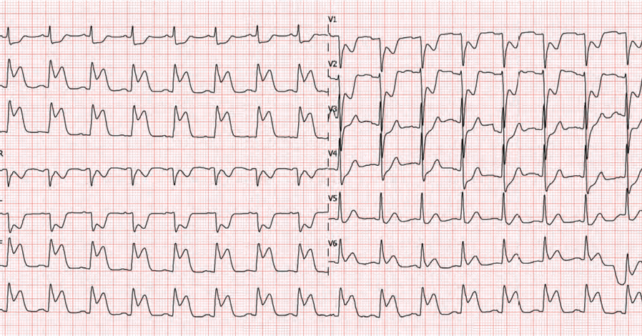
The patient is having eight out of 10 chest pain and the ECG suggests an inferior MI with possible right ventricular involvement. You know the latest evidence doesn’t support the contraindication of nitroglycerin administration and that it might ease his pain. At the same time, you know that any patient with an MI might become hypotensive, so before providing the first spray of nitroglycerin you establish an intravenous line.

You Might Also Like
  • High Dose Nitroglycerin in Acute Heart Failure Goes Mainstream
  • Increased Myocardial Infarction Risk Associated with NSAID Use
  • Updates in the Management of Refractory Ventricular Tachycardia or Ventricular Fibrillation Arrest
Explore This Issue
ACEP Now: Vol 43 – No 03 – March 2024

Thank you to Dr. Rupinder Sahsi who works as an emergency physician in Kitchener-Waterloo, Ontario, Canada and is an assistant medical director for EMS at the Centre for Paramedic Education and Research in Hamilton, Ontario, Canada for his assistance with this critical appraisal.

Remember to be skeptical of anything you learn, even if you heard it on the Skeptics’ Guide to Emergency Medicine.

References

  1. Neumar RW, Shuster M, Callaway CW, et al. Part 1: Executive summary. Circulation. 2015;132:S315–67.
  2. Ferguson JJ, Diver DJ, Boldt M, et al. Significance of nitroglycerin-induced hypotension with inferior wall acute myocardial infarction. Am J Cardiol.1989;64:311–4.
  3. Robichaud L, Ross D, Proulx M-H, et al. Prehospital nitroglycerin safety in inferior ST-elevation myocardial infarction. Prehosp Emerg Care. 2016;20:76–81
  4. McConnell AH, Davis M, Van Aarsen K, et al. LO33: prehospital adverse events associated with nitroglycerin use in STEMI patients with right ventricle infarction. CJEM. 2017;19:S39.

Pages: 1 2 3 | Single Page

Topics: Heart AttackMyocardial InfarctionnitroglycerinResearchright-side ventricular involvement

Related

  • Reflecting on Four Decades at ACEP’s Council

    June 28, 2025 - 0 Comment
  • ACEP4U: Reinventing Research Education

    June 11, 2025 - 0 Comment
  • June 2025 News from the College

    June 5, 2025 - 1 Comment

Current Issue

ACEP Now: November 2025

Download PDF

Read More

3 Responses to “Revisiting Nitroglycerin in MI with Right-Side Ventricular Involvement”

  1. March 10, 2024

    Joseph Shiber, MD Reply

    You have missed the big picture. NTG will cause venodilation in every patient. If they are dependent on RV filling for contraction as during myocardial ischemia/infarction then you will expect this effect to be pronounced. It’s not that you can’t give NTG for the anti-anginal effect of potentially pain relief (that’s all the benefit you will ever get from NTG unless there is actual coronary artery spasm w/o complete coronary occlusion/thrombosis) but you need to be ready to intervene by stopping the NTG (it should be IV and not SL or topical since you need the effect to go away quickly) and give an IVF bolus. If you give a SL NTG and do not have IV access yet to give an IVF bolus, you will never forget this mistake even if the patient hopefully doesn’t arrest.

  2. March 10, 2024

    Andrew Schare Reply

    Another question to ask is why do we give nitrates at all to patients with acute myocardial infarction. There is no benefit to morbidity or mortality.

    • May 14, 2025

      JCPhil Reply

      Ummm… Dare I say, pain?

Leave a Reply Cancel Reply

Your email address will not be published. Required fields are marked *


*
*


Wiley
  • Home
  • About Us
  • Contact Us
  • Privacy
  • Terms of Use
  • Advertise
  • Cookie Preferences
Copyright © 2025 by John Wiley & Sons, Inc. All rights reserved, including rights for text and data mining and training of artificial technologies or similar technologies. ISSN 2333-2603
