Logo

Log In Sign Up |  An official publication of: American College of Emergency Physicians
Navigation
  • Home
  • Multimedia
    • Podcasts
    • Videos
  • Clinical
    • Airway Managment
    • Case Reports
    • Critical Care
    • Guidelines
    • Imaging & Ultrasound
    • Pain & Palliative Care
    • Pediatrics
    • Resuscitation
    • Trauma & Injury
  • Resource Centers
    • mTBI Resource Center
  • Career
    • Practice Management
      • Benchmarking
      • Reimbursement & Coding
      • Care Team
      • Legal
      • Operations
      • Quality & Safety
    • Awards
    • Certification
    • Compensation
    • Early Career
    • Education
    • Leadership
    • Profiles
    • Retirement
    • Work-Life Balance
  • Columns
    • ACEP4U
    • Airway
    • Benchmarking
    • Brief19
    • By the Numbers
    • Coding Wizard
    • EM Cases
    • End of the Rainbow
    • Equity Equation
    • FACEPs in the Crowd
    • Forensic Facts
    • From the College
    • Images in EM
    • Kids Korner
    • Medicolegal Mind
    • Opinion
      • Break Room
      • New Spin
      • Pro-Con
    • Pearls From EM Literature
    • Policy Rx
    • Practice Changers
    • Problem Solvers
    • Residency Spotlight
    • Resident Voice
    • Skeptics’ Guide to Emergency Medicine
    • Sound Advice
    • Special OPs
    • Toxicology Q&A
    • WorldTravelERs
  • Resources
    • ACEP.org
    • ACEP Knowledge Quiz
    • Issue Archives
    • CME Now
    • Annual Scientific Assembly
      • ACEP14
      • ACEP15
      • ACEP16
      • ACEP17
      • ACEP18
      • ACEP19
    • Annals of Emergency Medicine
    • JACEP Open
    • Emergency Medicine Foundation
  • About
    • Our Mission
    • Medical Editor in Chief
    • Editorial Advisory Board
    • Awards
    • Authors
    • Article Submission
    • Contact Us
    • Advertise
    • Subscribe
    • Privacy Policy
    • Copyright Information

Rescue Team Doctor at the Surfside Condo Collapse Shares Experience

By Benjamin Abo, DO, PMD, FAWM | on October 25, 2021 | 1 Comment
Features
  • Tweet
  • Click to email a link to a friend (Opens in new window) Email
Print-Friendly Version
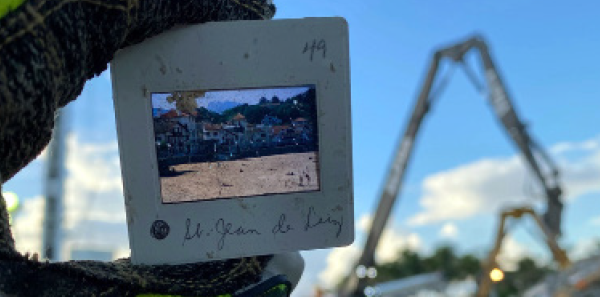
Dr. Benjamin Abo holds up a photo slide, one of many mementos that his team recovered from the site.
 AfteAfter being on-site for two and a half weeks, Dr. Abo glanced down and spotted this photo from 1968 right next to his boot. r being on-site for two and a half weeks, Dr. Abo glanced down and spotted this photo from 1968 right next to his boot.

You Might Also Like
  • Emergency Physician Shares Story and Lessons Learned from Wildfire Evacuation
  • Treatment Strategies for Precipitated Opioid Withdrawal after Naloxone Rescue
  • Dr. Jon Krohmer Supports Team Approach as Leader of OEMS at the National Highway Traffic Safety Administration
Explore This Issue
ACEP Now: Vol 40 – No 10 – October 2021

After being on-site for two and a half weeks, Dr. Abo glanced down and spotted this photo from 1968 right next to his boot.
Benjamin Abo

A Place to Recover

We noticed a small memorial had started on the chain-link fence next to our tents. Someone had hung a photo and some flowers upside down so they would dry. I added a stuffed alligator we found inside the collapse. Within days, the entire fence was covered in objects to memorialize the victims. Now it takes up the whole block. The problem was that our rescue team’s tents, each with 16 beds inside, were set up on the tennis courts right inside that fence. We were working all night and trying to sleep in those tents during the day, but all we could hear were people visiting the memorial, sobbing, grieving. There was no place for us to get away from it, no quiet place to recover both physically and emotionally between our shifts. After two weeks, we moved our tents to a park a few blocks away.
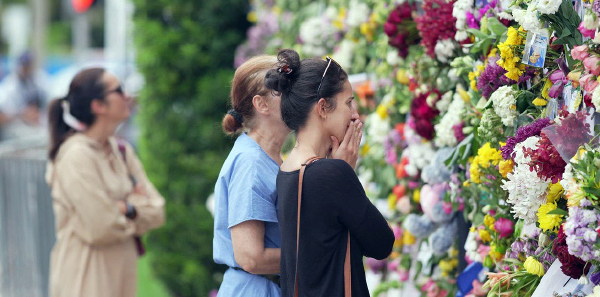
Visitors spend time at the memorial that grew on the fence next to the site.

Visitors spend time at the memorial that grew on the fence next to the site.
Rick Stephens of Miami-Dade Fire Rescue

Preparation Versus Reality

I started volunteering with EMS when I was 16 years old in New Jersey and then in Pittsburgh during college. My Pittsburgh mentors taught me that we are not paid for what we do but for what we are prepared to do.

I’ve been working in disaster medicine a long time—Katrina, Haiti, Dorian, plus a lot of local responses to homicides, accidents, and various things. I’ve always identified with Miami-Dade Fire Rescue’s motto, “Always ready, proud to serve.” But this was different. This was my community. These were people I knew.

I will never forget where I was standing when we found the daughter of one of our firefighters. I will always remember seeing his face in that moment and the way we all lined up for a procession to gently take her out of the rubble. Our teams are as ready as we can be, but there is no way to prepare for moments like that.
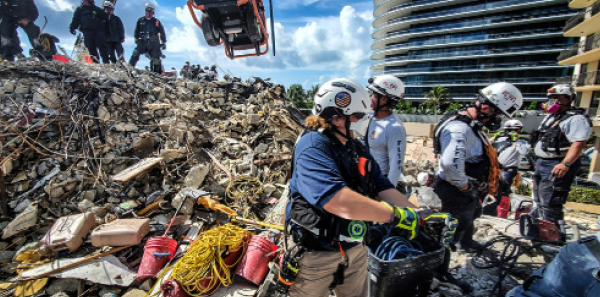
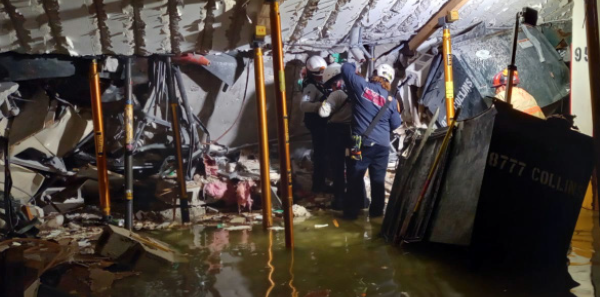
The Urban Search and Rescue team worked 24-7 in 12-hour shifts in and atop the debris, searching, geolocating information, and assuring safety.

The Urban Search and Rescue team worked 24-7 in 12-hour shifts in and atop the debris, searching, geolocating information, and assuring safety.
Rick Stephens of Miami-Dade Fire Rescue

Peer Support

We are all dealing with so many emotions. I think it helps to talk about it, so I encourage that for our team members. I think it’s important that we don’t hold it in. I remember seeing a physician colleague of mine. As we hugged hello, we both cried. (And that’s OK—I felt better after and went back to work.) It’s not helpful when outside people ask for gritty details about what we are witnessing, but it can be cathartic when we get to talk about our feelings and what we are processing. For me, seeing and knowing that everyone is looking out for one another, that helps. But I also think this is going to hit harder once we aren’t so busy and we have more time to think about it.

Pages: 1 2 3 4 | Single Page

Topics: BurnoutMass Casualty Event

Related

  • Let Core Values Help Guide Patient Care

    November 5, 2025 - 0 Comment
  • November 2025 News from the College

    November 4, 2025 - 0 Comment
  • Are Physician-Led Unions the Wave of the Future?

    September 30, 2025 - 0 Comment

Current Issue

ACEP Now: November 2025

Download PDF

Read More

One Response to “Rescue Team Doctor at the Surfside Condo Collapse Shares Experience”

  1. October 27, 2021

    Laurie Bryant Reply

    I had the privilege to work alongside Dr. Ben Abo (Medical team Manager for FTF-1) at the Surfside Collapse while I served as Medical Team Manager for FTF-5. A truly representative article…in its most raw form. This is why i pursued emergency medicine, and working alongside leaders such as Ben make me a better physician.

    Respectfully,

    Laurie Bryant, DO
    Jacksonville, FL

Leave a Reply Cancel Reply

Your email address will not be published. Required fields are marked *


*
*


Wiley
  • Home
  • About Us
  • Contact Us
  • Privacy
  • Terms of Use
  • Advertise
  • Cookie Preferences
Copyright © 2025 by John Wiley & Sons, Inc. All rights reserved, including rights for text and data mining and training of artificial technologies or similar technologies. ISSN 2333-2603
