Logo

Log In Sign Up |  An official publication of: American College of Emergency Physicians
Navigation
  • Home
  • Multimedia
    • Podcasts
    • Videos
  • Clinical
    • Airway Managment
    • Case Reports
    • Critical Care
    • Guidelines
    • Imaging & Ultrasound
    • Pain & Palliative Care
    • Pediatrics
    • Resuscitation
    • Trauma & Injury
  • Resource Centers
    • mTBI Resource Center
  • Career
    • Practice Management
      • Benchmarking
      • Reimbursement & Coding
      • Care Team
      • Legal
      • Operations
      • Quality & Safety
    • Awards
    • Certification
    • Compensation
    • Early Career
    • Education
    • Leadership
    • Profiles
    • Retirement
    • Work-Life Balance
  • Columns
    • ACEP4U
    • Airway
    • Benchmarking
    • Brief19
    • By the Numbers
    • Coding Wizard
    • EM Cases
    • End of the Rainbow
    • Equity Equation
    • FACEPs in the Crowd
    • Forensic Facts
    • From the College
    • Images in EM
    • Kids Korner
    • Medicolegal Mind
    • Opinion
      • Break Room
      • New Spin
      • Pro-Con
    • Pearls From EM Literature
    • Policy Rx
    • Practice Changers
    • Problem Solvers
    • Residency Spotlight
    • Resident Voice
    • Skeptics’ Guide to Emergency Medicine
    • Sound Advice
    • Special OPs
    • Toxicology Q&A
    • WorldTravelERs
  • Resources
    • ACEP.org
    • ACEP Knowledge Quiz
    • Issue Archives
    • CME Now
    • Annual Scientific Assembly
      • ACEP14
      • ACEP15
      • ACEP16
      • ACEP17
      • ACEP18
      • ACEP19
    • Annals of Emergency Medicine
    • JACEP Open
    • Emergency Medicine Foundation
  • About
    • Our Mission
    • Medical Editor in Chief
    • Editorial Advisory Board
    • Awards
    • Authors
    • Article Submission
    • Contact Us
    • Advertise
    • Subscribe
    • Privacy Policy
    • Copyright Information

Rat-Bite Fever’s Non-Specific Symptoms Make Patient History Important for Diagnosis

By Nicole Vetter, MD | on March 16, 2015 | 2 Comments
CME CME Now Features
  • Tweet
  • Click to email a link to a friend (Opens in new window) Email
Print-Friendly Version
Rat-Bite Fever's Non-Specific Symptoms Make Patient History Important for Diagnosis

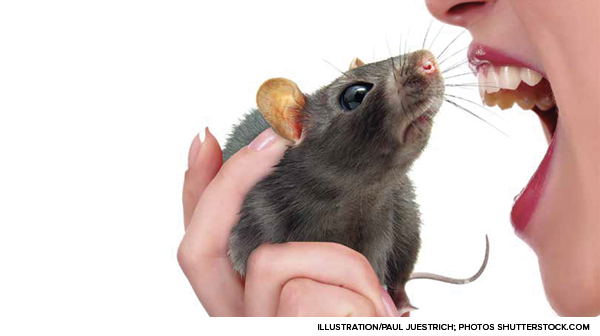
The article further discusses the symptoms of RBF, which include fever (check), rash (check), and arthralgias (check) in a patient with exposure to rats (check). My attending and I are amazed how closely this diagnosis fits our patient. Upon further questioning, the patient denies any rat bites. However, she does admit to allowing the rat to lick her mouth and lips, much to my dismay. With guidance from a pediatric infectious disease specialist, we draw blood cultures and start empiric antibiotic therapy for RBF. The patient’s basic lab work returns at this point and is remarkable for a platelet count of 178K and C-reactive protein of 4.9 mg/L. The rest of her complete blood count, basic metabolic panel, liver function test, and erythrocyte sedimentation rate are within normal limits.

You Might Also Like
  • Botulism Poisoning Diagnosed in Patient with Stroke-like Symptoms
  • Neonatal Meningitis Diagnosis Difficult Given Subtle Symptoms of Vomiting, Irritability
  • Recognize Pediatric Toxic Epidermal Necrolysis Symptoms, Manage Disease
Explore This Issue
ACEP Now: Vol 34 – No 03 – March 2015

The patient is admitted to the hospital on IV doxycycline (2 mg/kg BID), and her symptoms begin to improve the following day. She is discharged within 48 hours, with increased energy, a fading rash, and no joint pain. She is instructed to continue PO doxycycline for two weeks. At follow-up one month later, the parents state their daughter is “perfect” and back to her normal self.

RBF is a rare but fatal bacterial illness in the United States caused predominantly by S. moniliformis, a gram-negative rod that is part of the normal respiratory flora of rodents.2 It is spread to humans via a rat bite, scratch, or, in my patient’s case, a “kiss,” but it is susceptible to antibiotics such as penicillin or doxycycline (see sidebar for dosing). If misdiagnosed or left untreated, however, the disease carries a 13 percent mortality rate.3 Symptoms present anywhere from three to 21 days after rat exposure and include nonspecific symptoms such as fever, fatigue, headache, pharyngitis, and vomiting. These initial symptoms are followed by a rash, which is usually maculopapular, though it can be petechial or purpuric, and is most prominent on the extremities, palms, and soles. Polyarticular and asymmetric arthralgias develop in up to 50 percent of patients. When RBF is suspected, blood cultures should be drawn with specific instructions (see sidebar), as S. monilifomis is a fastidious organism.

Although RBF is a rare diagnosis, this case highlights the importance of taking a thorough history. Having a standard list of questions at your disposal to help sort out nonspecific symptoms, such as fever and rash, is crucial to avoid missing a fatal illness. Although it is unlikely I will encounter another case of RBF, this case serves as a reminder to maintain an open differential and to be less inclined to diagnose a viral illness without first considering other life-threatening diagnoses.

Pages: 1 2 3 | Single Page

Topics: Bites and EnvenomationCase PresentationContinuing Medical EducationCritical CareEmergency DepartmentEmergency MedicineEmergency PhysicianInfectious DiseasePediatrics

Related

  • Why the Nonrebreather Should be Abandoned

    December 3, 2025 - 0 Comment
  • FACEPs in the Crowd: Dr. John Ludlow

    November 5, 2025 - 0 Comment
  • Non-Invasive Positive Pressure Ventilation in the Emergency Department

    October 1, 2025 - 0 Comment

Current Issue

ACEP Now: November 2025

Download PDF

Read More

2 Responses to “Rat-Bite Fever’s Non-Specific Symptoms Make Patient History Important for Diagnosis”

  1. March 29, 2015

    Stephen Colucciello Reply

    The dose for IV PCN is WAY too low. “◾IV penicillin G: 200,000 units every 4 hours for 5–7 days (can be switched to PO once patient shows clinical improvement)”
    This should be 2,000,000 (two million NOT two hundred thousand) q 4 h.
    Off by a factor of 10!

  2. March 29, 2015

    Randall dloan Reply

    Never heard of this .

Leave a Reply Cancel Reply

Your email address will not be published. Required fields are marked *


*
*


Wiley
  • Home
  • About Us
  • Contact Us
  • Privacy
  • Terms of Use
  • Advertise
  • Cookie Preferences
Copyright © 2025 by John Wiley & Sons, Inc. All rights reserved, including rights for text and data mining and training of artificial technologies or similar technologies. ISSN 2333-2603
