Logo

Log In Sign Up |  An official publication of: American College of Emergency Physicians
Navigation
  • Home
  • Multimedia
    • Podcasts
    • Videos
  • Clinical
    • Airway Managment
    • Case Reports
    • Critical Care
    • Guidelines
    • Imaging & Ultrasound
    • Pain & Palliative Care
    • Pediatrics
    • Resuscitation
    • Trauma & Injury
  • Resource Centers
    • mTBI Resource Center
  • Career
    • Practice Management
      • Benchmarking
      • Reimbursement & Coding
      • Care Team
      • Legal
      • Operations
      • Quality & Safety
    • Awards
    • Certification
    • Compensation
    • Early Career
    • Education
    • Leadership
    • Profiles
    • Retirement
    • Work-Life Balance
  • Columns
    • ACEP4U
    • Airway
    • Benchmarking
    • Brief19
    • By the Numbers
    • Coding Wizard
    • EM Cases
    • End of the Rainbow
    • Equity Equation
    • FACEPs in the Crowd
    • Forensic Facts
    • From the College
    • Images in EM
    • Kids Korner
    • Medicolegal Mind
    • Opinion
      • Break Room
      • New Spin
      • Pro-Con
    • Pearls From EM Literature
    • Policy Rx
    • Practice Changers
    • Problem Solvers
    • Residency Spotlight
    • Resident Voice
    • Skeptics’ Guide to Emergency Medicine
    • Sound Advice
    • Special OPs
    • Toxicology Q&A
    • WorldTravelERs
  • Resources
    • ACEP.org
    • ACEP Knowledge Quiz
    • Issue Archives
    • CME Now
    • Annual Scientific Assembly
      • ACEP14
      • ACEP15
      • ACEP16
      • ACEP17
      • ACEP18
      • ACEP19
    • Annals of Emergency Medicine
    • JACEP Open
    • Emergency Medicine Foundation
  • About
    • Our Mission
    • Medical Editor in Chief
    • Editorial Advisory Board
    • Awards
    • Authors
    • Article Submission
    • Contact Us
    • Advertise
    • Subscribe
    • Privacy Policy
    • Copyright Information

Prepping, Packing Among Challenges of Providing Medical Care in Antarctica

By Kenneth V. Iserson, MD, MBA, FACEP, FAAEM | on February 12, 2016 | 0 Comment
Features
  • Tweet
  • Click to email a link to a friend (Opens in new window) Email
Print-Friendly Version
Prepping, Packing to Provide Medical Care in Antarctica Proves Challenging
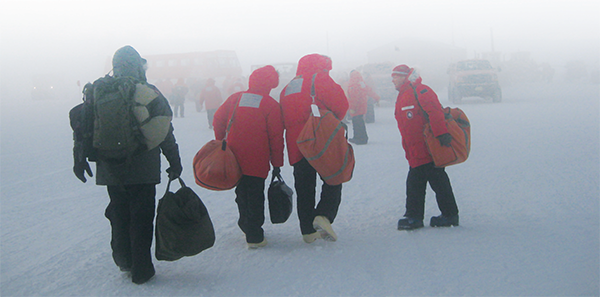
A selection of extreme cold weather gear issued to U.S. Antarctic Program participants.

You Might Also Like
  • Emergency Physician Embarks on Second Medical Expedition to Antarctica
  • Fun, Friends, Flexible Hours Part of Providing Medical Care in Antarctica
  • Cold Temperatures Greet Emergency Physician Spending Winter in Antarctica
Explore This Issue
ACEP Now: Vol 35 – No 02 – February 2016

A selection of extreme cold weather gear issued to U.S. Antarctic Program participants.

Why New Zealand? While the tip of Antarctica’s peninsula (which we call “the Tropics” for its relatively balmy weather) is closest to South America’s tip at Cape Horn, the United States has only the small Palmer Station there. Those working there travel by ship through the Southern Ocean’s often brutal Drake Passage. Those of us working at the McMurdo (77°50’ S, 166°36’ E) and Amundsen-Scott South Pole (90° S, 0° W) stations don’t take that route. McMurdo Station, by far the largest of the three stations, is located directly south of New Zealand.

Christchurch is where the US Antarctic Program has its base of operations and, most important, distributes the ECW gear. A lesson learned last time: make very certain that every piece fits properly; you won’t have an opportunity to swap it out when you get there.

A lesson learned last time: make very certain that every piece fits properly; you won’t have an opportunity to swap it out when you get there.

Once in Christchurch, you arise every morning at about 4 a.m. to see if the weather has cleared sufficiently for the C-17 to attempt the five-hour trip. Often, you get up, get dressed, go into the lobby, and eventually discover that you should just go back to bed and wait another day. That, however, is far better than the experience that many folks have of almost getting to McMurdo or actually flying overhead and then having the plane return to Christchurch because the weather is too bad to land. This time we made it, and the winter adventure in Antarctica begins.


Dr. Iserson is professor emeritus of emergency medicine at The University of Arizona in Tucson.

Pages: 1 2 | Single Page

Topics: AntarcticaEmergency PhysicianKenneth V. IsersonProfile

Related

  • FACEPs in the Crowd: Dr. John Ludlow

    November 5, 2025 - 0 Comment
  • ACEP Member Uses ED, Military Training To Set Standards at FEMA

    August 11, 2025 - 0 Comment
  • Aerospace Medicine Residency Program Pushes the Envelope

    June 25, 2025 - 1 Comment

Current Issue

ACEP Now: November 2025

Download PDF

Read More

No Responses to “Prepping, Packing Among Challenges of Providing Medical Care in Antarctica”

Leave a Reply Cancel Reply

Your email address will not be published. Required fields are marked *


*
*


Wiley
  • Home
  • About Us
  • Contact Us
  • Privacy
  • Terms of Use
  • Advertise
  • Cookie Preferences
Copyright © 2025 by John Wiley & Sons, Inc. All rights reserved, including rights for text and data mining and training of artificial technologies or similar technologies. ISSN 2333-2603