
Point: A Less Than Glowing Interpretation of Urine Fluorescence
by Jessica Shenoi, MD; Michael E. Mullins, MD; and Ari B. Filip, MD
Explore This Issue
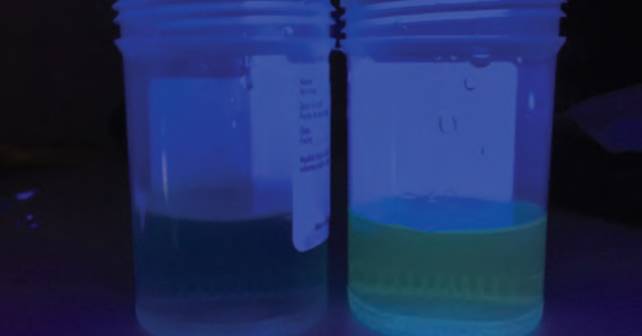
ACEP Now: Vol 43 – No 02 – February 2024We disagree with Dr. Hack’s recommendation for examining urine under ultraviolet (UV) light for suspected ethylene glycol ingestions.1 This test is inherently unreliable with poor sensitivity, specificity, and accuracy (49 percent, 75 percent, and 59 percent, respectively).2 Parsa, et al. found 100 percent of pediatric urine specimens fluoresced even in the absence of ethylene glycol. Other common substances, such as multivitamins and vitamin-fortified cereal may cause urine fluorescence.3 Casavant, et al. corroborated that most pediatric urine samples fluoresce under UV light and found considerable interrater variability.4 The urine containers themselves may contribute to fluorescence.
Parsa, et al. also tested different concentrations of sodium fluorescein in lactated Ringer’s solution.3 The minimum sodium fluorescein concentration to fluoresce reliably was 312 ng/mL. They calculated that this would require an ingestion of about 4 L of ethylene glycol in a 50 kg person.
A more useful indirect clue that Dr. Hack omitted is an extremely high apparent lactic acid concentration. Point-of-care (POC) analyzers rapidly measure lactate using lactate oxidase but cannot distinguish lactate from glycolate (the first acid metabolite of ethylene glycol). Several case reports (including one with no urine fluorescence) found apparent lactate concentrations exceeding 15 mmol/L (often exceeding 30 mmol/L.)6-10 Simultaneous lactate measurement using lactate dehydrogenase typically reveals a “lactate gap”.6-10
In a case with a clear history of antifreeze ingestion and an osmolal gap, we believe that the unreliable examination of the urine under UV light adds nothing to the diagnosis. If uncertainty remains while awaiting definitive testing, a POC lactate is a better clue.
——————————————————–
 Dr. Shenoi is a third-year resident in emergency medicine at the University of Arkansas for Medical Sciences (UAMS) and will start her Medical Toxicology fellowship at Emory University later this year.
 Dr. Mullins is a professor of emergency medicine and faculty member of the Medical Toxicology Fellowship at Washington University School of Medicine.
 Dr. Filip is the medical director of the Arkansas Poison Center and faculty member in the emergency medicine residency at UAMS.
References
- Hack J. An illustrated case of ethylene glycol, direct and indirect. ACEP Now. 2023;43(10):20-21.
- Wallace, KL, Suchard JR, Curry SC, Reagan C. Diagnostic use of physicians’ detection of urine fluorescence in a simulated ingestion of sodium fluorescein–containing antifreeze. Ann Emerg Med. 2001;38(1):49–54. doi: 10.1067/mem.2001.115531.
- Parsa T, Cunningham SJ, Wall SP, Almo SC, Crain EF. The usefulness of urine fluorescence for suspected antifreeze ingestion in children. Am J Emerg Med 2005;23:787-792. doi: 10.1016/j.ajem.2005.02.051.
- Casavant MJ, Shah MN, Battels R. Does the fluorescent urine indicate antifreeze ingestion by children? Pediatrics. 2001;107:113-114. doi: 10.1542/peds.107.1.113.
- Woo MY, Greenway DC, Nadler SP, Cardinal P. Artifactual elevation of lactate in ethylene glycol poisoning. J Emerg Med. 2003;25:289-293. doi: 10.1016/S0736-4679(03)00203-8.
- Brindley PG, Butler MS, Cembrowski G, Brindley DN. Falsely elevated point-of-care lactate measurement after ingestion of ethylene glycol. CMAJ. 2007;176(8):1097-1099. doi 10.1503/cmaj.061288.
- Verelst S, Vermeersch P, Desmet K. Ethylene glycol poisoning presenting with a falsely elevated lactate level. Clin Toxicol. 2009; 47:236–238. doi: 10.1080/15563650802432954.
- Manini AF, Hoffman RS, McMartin KE, Nelson LS. Relationship between serum glycolate and falsely elevated lactate in severe ethylene glycol poisoning. J Anal Toxicol. 2009;33:174-176. doi: 10.1093/jat/33.3.174.
- Pernet P, Bénéteau-Burnat B, Vaubourdolle M, Maury E, Offenstadt G. False elevation of blood lactate reveals ethylene glycol poisoning. Am J Emerg Med. 2009;27:132.e1-132.e2. doi:10.1016/j. ajem.2008.04.029.
- Berg A, Tamama K, Peck-Palmer OM. Metabolic acidosis with discrepant lactate results. Clin Chem. 2013;59(4)713–721. doi: 10.1373/clinchem.2012.197939.
Counterpoint: Many Clues to Catch a Culprit
by Jason Hack, MD, FACEP, FACMT
Drs. Shenoi, Mullins, and Filip may have misread my article about ethylene glycol (EG).1
Nowhere in the piece do I strongly recommend that any one test be used to make the diagnosis of EG ingestion. Instead, my column discusses multiple clues that can be brought to bear and, in aggregate, help diagnose this life-threatening ingestion in real time.
Although they may have missed the point of the column, they have written a concise review on urinary fluorescence and discussion of lactic acid gap measurements in EG ingestions. Yes, there are real issues with urine analysis, however in our case it was shocking how fluorescent the patient’s urine was when exposed to ultraviolet (UV) light. This supported our presumptive diagnosis when combined with other factors.
An apparent ‘lactic gap’ elevation might be useful in centers that use two types of lactate analysis. The technique leverages a positive cross reaction of glycolate and glyoxylate for lactate using different reagents—an L-lactate oxidase test and an L-lactate dehydrogenase test—to identify a gap.2 However, as noted by Drs. Filip and Mullins in their own article the ability to “…exploit laboratory artifact in measurement of lactate as a proxy for toxic metabolites…hinges on availability of multiple methods for testing lactate and will occur only after toxic metabolism has occurred.”3
I agree with their conclusion “In the case with a clear history of antifreeze ingestion and an osmolal gap, the unreliable examination of the urine under UV light adds nothing to the diagnosis.” If you know, you know.
To specifically address the concern that I “strongly recommended using UV light from a Wood’s lamp to examine the urine for fluorescence,” no other light source would work for this purpose. The characteristics of ultraviolet light produces a “glowing” or fluorescence of fluorescein sodium (uranine yellow) by causing an absorption of energy and subsequent release of photons from the dye. In the hospital, the most common source of “black” or UV light is the Wood’s lamp. No other light source would cause the desired effect of fluorescence—not blue light, not room light, not light from a mobile phone.
For readers who missed the October 2023 Toxicology Q&A, I presented a real case of an occult significant ethylene glycol ingestion illustrated with photographs of brightly glowing urine when exposed to a Wood’s lamp.1 I then discussed the multiple direct and indirect clues that might assist the bedside doctor in making this difficult, time-sensitive diagnosis. The subtle clues discussed (history, osmol gap, anion gap, acidosis, urine crystals, urine fluorescence, and renal injury) are especially relevant for patient care, as most centers are unable to return an ethylene glycol level in a clinically relevant timeframe.
——————————————————–
 Dr. Hack is chief of the division of medical toxicology and vice chair for research at East Carolina University in Greenville, North Carolina.
References
- Hack J. An illustrated case of ethylene glycol, direct and indirect. ACEP Now. 2023;43(10):20-21.
- Morgan, Thomas J. MBBS, FFICANZCA; Clark, Christopher FIBMS, MAIMS; Clague, Alan MBBS, BSc, FRCPA. Artifactual elevation of measured plasma L-lactate concentration in the presence of glycolate. Critical Care Medicine. 27(10):p 2177-2179, October 1999.
- Filip AB, Farnsworth CW, Mullins ME, Crews BO, Kraut JA. Accuracy of a Glycerol Dehydrogenase Assay for Ethylene Glycol Detection. J Med Toxicol. 2023 Oct;19(4):362-367. doi: 10.1007/s13181-023-00967-x. Epub 2023 Sep 11. PMID: 37695470; PMCID: PMC10522546.
- Al Aboud DM, Gossman W. Wood’s Light. [Updated 2023 Aug 28]. In: StatPearls [Internet]. Treasure Island (FL): StatPearls Publishing; 2023 Jan.
Pages: 1 2 3 | Multi-Page



No Responses to “Point/Counterpoint: Antifreeze Poisoning Tests”