
The best questions often stem from the inquisitive learner. As educators, we love—and are always humbled by—those moments when we get to say, “I don’t know.” For some of these questions, you may already know the answers. For others, you may never have thought to ask the question. For all, questions, comments, concerns, and critiques are encouraged. Welcome to the Kids Korner.
Explore This Issue
ACEP Now: Vol 42 – No 05 – May 2023Question: Does the height of the fever in children predict the likelihood of serious or invasive bacterial illness?
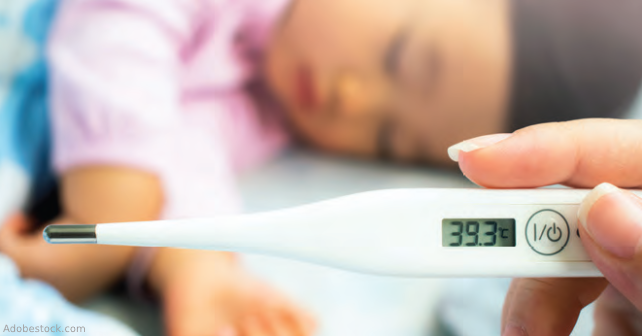
The first Haemophilus Influenza B (Hib) conjugated vaccine was licensed for use in the U.S. in the late 1980s and the first conjugated vaccine for Streptococcus pneumonia (Pneumococcus) was licensed in 2000. Prior to the incorporation of these routine immunizations, the height of fever in infants appeared to be proportionate to the likelihood of bacterial illness.1,2 But, is this still true now that we routinely immunize against these common invasive pathogens? Does it matter if a child has a fever greater than 39 degrees Celsius (102.2 degrees Fahrenheit) or greater than 40 degrees Celsius (104 degrees Fahrenheit)? The American Academy of Pediatrics recently published a clinical practice guideline for well-appearing febrile infants less than 60 days of age and risk-stratified these infants for bacterial illness using serum and urine labs.3 This discussion focuses on children who are over 60 days of age.
A 2006 prospective observational study in the post-pneumococcal vaccine era—meaning after both the Hib and Pneumococcus vaccines—evaluated 429 infants ages 57–180 days old (two to six months of age).4 Overall, 44 infants (10.3 percent) were positive for serious bacterial illness (SBI), which included 41 with positive bacterial urine cultures and four with positive blood cultures. One child had both urine and blood cultures positive. Cerebrospinal fluid was obtained from 58 infants and there were zero cases of bacterial meningitis. Respiratory screening tests were performed on 413 of the 429 infants and were positive in 163 cases (39.5 percent). There were five cases of viral meningitis. Height of fever comparing SBI and non-SBI groups was not significantly different (P=0.18).
A 2006 cross-sectional observational study evaluated 103 children less than 18 years of age over a two-year period who presented with “hyperpyrexia.”5 Hyperpyrexia was defined as greater than or equal to 106 degrees Fahrenheit (41.1 degrees Celsius). Complete blood count, blood culture, and viral respiratory culture were obtained on each patient. Additional lab work and imaging was at the discretion of the attending physician. Of these 103 children, 20 (18.4 percent) had a culture-proven SBI, including urine, blood, and CSF. Twenty-two (21.4 percent) had a positive viral culture. Temperature itself was not predictive of either a bacterial or viral illness. Of note, though, this study did not evaluate and compare children with temperatures less than 41.1 degrees Celsius versus greater than or equal to 41.1 degrees Celsius, therefore it cannot address whether hyperpyrexia was associated with a higher prevalence of bacterial illness.
Pages: 1 2 3 | Single Page


No Responses to “Pediatric Fever and Illness Correlations”