
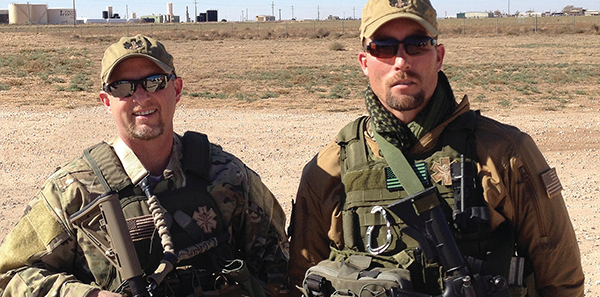
A tactical emergency medical services (TEMS) element was on a hostage rescue call-out when things went bad, very bad. The lead TEMS medic at that time was assigned a role on the rescue team as an armed and fully commissioned operator/medic. (The debate of armed versus unarmed is a whole other can of worms for later discussion.) Upon the emergency rescue, due to the suspect shooting the hostage, the rescue team (including the TEMS medic) was fired upon, and the medic was hit in the neck. Fortunately, his body armor stopped the round in his upper collar. If the bullet had hit a mere 1 mm higher or the medic hadn’t had body armor with an appropriate level of protection, this would have been a very different story.
Explore This Issue
ACEP Now: Vol 34 – No 10 – October 2015With the long-overdue acceptance of TEMS as a component of emergency and out-of-hospital medicine, there has been an evolving discussion and debate about the real danger that TEMS providers face and what level of protection should be required. This debate has primarily hinged on the issue of costs associated with providing expensive protective equipment to TEMS providers and Rescue Task Force (RTF) personnel. While there is no specific limit to funding issued regarding personal protective equipment, just like with any other entity, the bottom dollar and cost association is often a driving factor in the upstart and/or continuation of the TEMS and RTF units. Included in this debate is the discussion of the threat facing medical providers on active-shooter response teams or RTF teams and the threat to TEMS personnel supporting tactical teams.
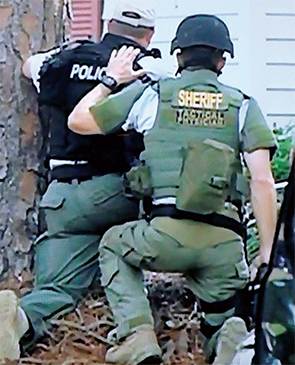
A tactical physician works with a police officer during a potentially dangerous encounter.
First, one must realize that TEMS is a very different animal than a RTF. Yes, there is overlap between the two. However, they are not one and the same. For example, RTFs have little to do with high-risk warrant service, hostage rescue, or barricaded subjects; they specifically deal in active-shooter response only. These concepts have evolved to minimize delays in immediate lifesaving medical care provided to victims in active-shooter events, particularly those with the top-three causes of preventable death in penetrating trauma (hemorrhage, tension pneumothorax, and airway compromise).1 Conversely, TEMS units are not unique to active-shooter events only, and TEMS personnel may not even be among the first arriving responders in an active-shooter event. (Most events are over prior to SWAT’s arrival.)2 RTF personnel are composed of traditional EMS and fire personnel escorted by a force protection element of law enforcement personnel. TEMS units, on the other hand, are composed of EMS and fire personnel trained above and beyond the traditional EMT and paramedic curricula and are integrated with tactical teams specifically. While TEMS elements may be included on RTF teams, the teams do not depend on general TEMS personnel/training specifically. Therefore, to assume that TEMS units and RTFs are one and the same, and thus the risk and danger involved in each is the same, is a misunderstanding of the two concepts.
Now, to address the evolving debate of the appropriate level of protection needed for TEMS units and RTFs. Honestly, this concept is really very simple in my mind. Would you knowingly go into the most dangerous situation anywhere in your city without the maximum level of protection? I know, after 15 years of operational support as a TEMS provider, I personally would never dream of going on an active-shooter event, SWAT call-out, or high-risk warrant service without the maximum level of protection for that mission. Admittedly, I am biased after the above scenario that occurred on my team years ago. However, I believe it remains the standard to provide adequate protection to TEMS providers and RTF personnel.
Is it fair for anyone to say that providers should not be offered the highest level of protection for the job they are performing? Simply because the data show a lack of events occurring in which TEMS providers or RTF personnel are actually hurt or fired upon during their mission does not mean that the risk is nonexistent, and it certainly does not mean the lives of TEMS providers are worth less than the protective equipment, which would be purchased.
To compare ideology in services, how many firefighters are seriously hurt in vehicle extrications every year? Thankfully, very few.3 Yet despite the thankfully low incidence, the National Fire Protection Association clearly mandates bunker gear, personal protective equipment, in all extrications. One can, and should, argue that this is due to the fact that responders are required to wear appropriate protective equipment and that it is, in fact, doing its job protecting from serious injury or death.4 Likewise, how many planes crash at airports every year, yet would anyone even dream of arguing that air-rescue units are too expensive and unneeded statistically and, therefore, we should remove all fire apparatus from commercial airports in order to cut costs?
With a growing number of threats and increasing violence against law enforcement and public safety providers, is this really the time to discuss decreasing the preparedness and protection of our personnel? We certainly cannot bury our heads in the sand and pretend the threat is not increasing and thus it is justifiable to decrease expenditures on appropriate protective equipment for our frontline providers. The simple fact remains that TEMS providers and RTF personnel are entering into dangerous situations when they respond to these events. To look only at data and attempt to justify cost savings by cutting protective equipment is, at best, irresponsible and, at worst, reckless when compared to a clearly established national standard as recommended by the newly released document published by the Department of Homeland Security with clearly defined position statements regarding personal protective equipment.5 At the end of the day, we need to protect those who are protecting us.
Dr. Lewis is owner and medical director of Special Tactics and Rescue Consulting in Lubbock, Texas.
References
- Tactical emergency casualty care (TECC) guidelines. Committee for Tactical Emergency Casualty Care Web site. Accessed Sept. 14, 2015.
- Blair JP, Schweit KW. A study of active shooter incidents 2000–2013. Texas State University and Federal Bureau of Investigation, U.S. Department of Justice, Washington, DC. 2014. FBI Web site. Accessed Sept. 14, 2015.
- Fahy RF, LeBlanc PR, Molis JL. Firefighter fatalities in the United States–2014. National Fire Protection Association Web site. Accessed Sept. 14, 2015.
- NFPA codes and standards. National Fire Protection Association Web site. Accessed Sept. 14, 2015.
- The first responder guidance for improving survivability in improvised explosive device and/or active shooter incidents. US Department of Homeland Security Web site. Accessed Sept. 14, 2015.
Pages: 1 2 3 | Multi-Page



No Responses to “Opinion: Tactical Emergency Medicine Providers Deserve Appropriate Protective Equipment”