
Logo

Log In Sign Up |  An official publication of: American College of Emergency Physicians
Navigation
  • Home
  • Multimedia
    • Podcasts
    • Videos
  • Clinical
    • Airway Managment
    • Case Reports
    • Critical Care
    • Guidelines
    • Imaging & Ultrasound
    • Pain & Palliative Care
    • Pediatrics
    • Resuscitation
    • Trauma & Injury
  • Resource Centers
    • mTBI Resource Center
  • Career
    • Practice Management
      • Benchmarking
      • Reimbursement & Coding
      • Care Team
      • Legal
      • Operations
      • Quality & Safety
    • Awards
    • Certification
    • Compensation
    • Early Career
    • Education
    • Leadership
    • Profiles
    • Retirement
    • Work-Life Balance
  • Columns
    • ACEP4U
    • Airway
    • Benchmarking
    • Brief19
    • By the Numbers
    • Coding Wizard
    • EM Cases
    • End of the Rainbow
    • Equity Equation
    • FACEPs in the Crowd
    • Forensic Facts
    • From the College
    • Images in EM
    • Kids Korner
    • Medicolegal Mind
    • Opinion
      • Break Room
      • New Spin
      • Pro-Con
    • Pearls From EM Literature
    • Policy Rx
    • Practice Changers
    • Problem Solvers
    • Residency Spotlight
    • Resident Voice
    • Skeptics’ Guide to Emergency Medicine
    • Sound Advice
    • Special OPs
    • Toxicology Q&A
    • WorldTravelERs
  • Resources
    • ACEP.org
    • ACEP Knowledge Quiz
    • Issue Archives
    • CME Now
    • Annual Scientific Assembly
      • ACEP14
      • ACEP15
      • ACEP16
      • ACEP17
      • ACEP18
      • ACEP19
    • Annals of Emergency Medicine
    • JACEP Open
    • Emergency Medicine Foundation
  • About
    • Our Mission
    • Medical Editor in Chief
    • Editorial Advisory Board
    • Awards
    • Authors
    • Article Submission
    • Contact Us
    • Advertise
    • Subscribe
    • Privacy Policy
    • Copyright Information

National Surveys on Emergency Department Trends Bring Future Improvements Into Focus

By James J. Augustine, MD, FACEP | on April 13, 2016 | 1 Comment
Benchmarking
  • Tweet
  • Click to email a link to a friend (Opens in new window) Email
Print-Friendly Version
National Surveys on Emergency Department Trends Bring Future Improvements Into Focus
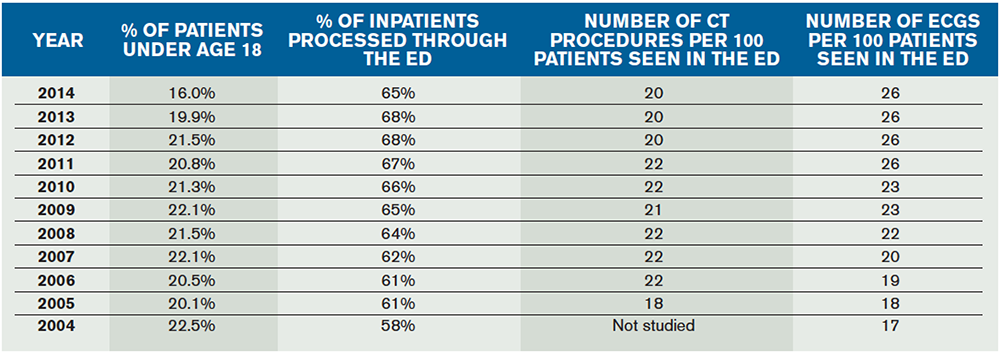
Table 1. Critical Trends in 11 years of the EDBA Data Survey

You Might Also Like
  • Long-Term Trends in Emergency Department Visits, Patient Care Highlighted in National Reports
  • National Hospital Ambulatory Medical Care Survey Data Show Increase in Emergency Department Visits
  • Emergency Department Volume Increase Trend Continues Into 2014
Explore This Issue
ACEP Now: Vol 35 – No 04 – April 2016

(click here for larger image) Table 1. Critical Trends in 11 years of the EDBA Data Survey

Use of CT scanning appears to have reached a high of 22 procedures per 100 patients, but MRI and other special imaging procedures like ultrasound are used at an increasing rate. The other diagnostic tool that is increasing in ED use is the 12 lead ECG. From 2004 to 2014, ECG utilization increased from 17 uses per 100 patients seen to 26 uses. This trend is likely to continue.

There is a continuing growth in the percentage of overall hospital admissions presenting through the ED. The EDBA data survey over the last five years finds that between 65 and 68 percent of hospital inpatients are processed through the ED. This reflects the role of the ED as the “front door” of the hospital.

There is a tremendous effort by many ED leaders to increase the flow of patients. ED providers have the greatest control over the flow of patients who are evaluated, treated, and released for outpatient follow-up. This represents more than 80 percent of the patients seen in American EDs. Patients managed completely in the ED represent the overwhelming majority of the flow. Despite increasing volumes over the last 11 years and increasing age and acuity of patients, the flow of patients has improved (see Tables 1 and 2). For all patients, the door-to-provider time has decreased from more than 40 minutes to about 28 minutes. (The 2011 NHAMCS study reports this number is 27 minutes.) Overall median length of stay for the complete spectrum of ED patients has decreased about 15 minutes, from about 190 minutes to about 175 minutes. Patients treated and released from the ED have been processed an average of 10 minutes quicker in 2014 than in 2008, from 160 to about 150 minutes. Flow improvements have resulted in an overall reduction in ED patient walkaways, from more than 3 percent to about 2.2 percent.
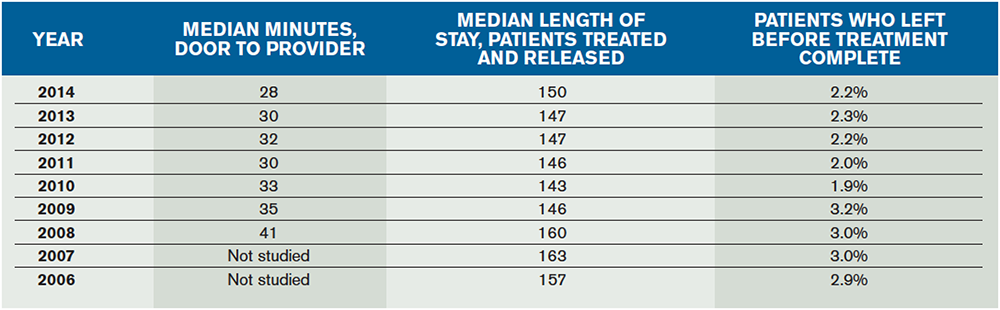
Table 2. Trend in ED Median Length of Stay, Time to Provider, and Walkaways

(click here for larger image) Table 2. Trend in ED Median Length of Stay, Time to Provider, and Walkaways

Data from the CDC and from the EDBA indicate that the emergency department is an important and valuable element of the health system, providing unscheduled care to an increasing number of patients over the last 23 years. The ED patient population is increasingly composed of older persons, a proud accomplishment indicating that efforts to reduce premature death from illness and injury are working.

Pages: 1 2 3 | Single Page

Topics: CDCEmergency DepartmentEmergency Department Benchmarking AllianceEmergency MedicineEmergency PhysicianNational Hospital Ambulatory Medical Care SurveyPatient FlowPractice ManagementPractice TrendsSurveyVisit

Related

  • Florida Emergency Department Adds Medication-Dispensing Kiosk

    November 7, 2025 - 1 Comment
  • Q&A with ACEP President L. Anthony Cirillo

    November 5, 2025 - 0 Comment
  • How Does Emergency Medicine Navigate Consolidation Trends in Health Care?

    October 29, 2025 - 0 Comment

Current Issue

ACEP Now: November 2025

Download PDF

Read More

About the Author

James J. Augustine, MD, FACEP

James J. Augustine, MD, FACEP, is national director of prehospital strategy for US Acute Care Solutions in Canton, Ohio; clinical professor of emergency medicine at Wright State University in Dayton, Ohio; and vice president of the Emergency Department Benchmarking Alliance.

View this author's posts »

One Response to “National Surveys on Emergency Department Trends Bring Future Improvements Into Focus”

  1. December 14, 2018

    Wendy Hoy Reply

    hi, thanks for this article! Do you have any idea what percentage of emergency departments are outsourced or where I could find that data?

    Thanks so much in advance!

Leave a Reply Cancel Reply

Your email address will not be published. Required fields are marked *


*
*


Wiley
  • Home
  • About Us
  • Contact Us
  • Privacy
  • Terms of Use
  • Advertise
  • Cookie Preferences
Copyright © 2025 by John Wiley & Sons, Inc. All rights reserved, including rights for text and data mining and training of artificial technologies or similar technologies. ISSN 2333-2603
