Logo

Log In Sign Up |  An official publication of: American College of Emergency Physicians
Navigation
  • Home
  • Multimedia
    • Podcasts
    • Videos
  • Clinical
    • Airway Managment
    • Case Reports
    • Critical Care
    • Guidelines
    • Imaging & Ultrasound
    • Pain & Palliative Care
    • Pediatrics
    • Resuscitation
    • Trauma & Injury
  • Resource Centers
    • mTBI Resource Center
  • Career
    • Practice Management
      • Benchmarking
      • Reimbursement & Coding
      • Care Team
      • Legal
      • Operations
      • Quality & Safety
    • Awards
    • Certification
    • Compensation
    • Early Career
    • Education
    • Leadership
    • Profiles
    • Retirement
    • Work-Life Balance
  • Columns
    • ACEP4U
    • Airway
    • Benchmarking
    • Brief19
    • By the Numbers
    • Coding Wizard
    • EM Cases
    • End of the Rainbow
    • Equity Equation
    • FACEPs in the Crowd
    • Forensic Facts
    • From the College
    • Images in EM
    • Kids Korner
    • Medicolegal Mind
    • Opinion
      • Break Room
      • New Spin
      • Pro-Con
    • Pearls From EM Literature
    • Policy Rx
    • Practice Changers
    • Problem Solvers
    • Residency Spotlight
    • Resident Voice
    • Skeptics’ Guide to Emergency Medicine
    • Sound Advice
    • Special OPs
    • Toxicology Q&A
    • WorldTravelERs
  • Resources
    • ACEP.org
    • ACEP Knowledge Quiz
    • Issue Archives
    • CME Now
    • Annual Scientific Assembly
      • ACEP14
      • ACEP15
      • ACEP16
      • ACEP17
      • ACEP18
      • ACEP19
    • Annals of Emergency Medicine
    • JACEP Open
    • Emergency Medicine Foundation
  • About
    • Our Mission
    • Medical Editor in Chief
    • Editorial Advisory Board
    • Awards
    • Authors
    • Article Submission
    • Contact Us
    • Advertise
    • Subscribe
    • Privacy Policy
    • Copyright Information

Miriam Hospital’s FAST FORWARD>> Program Regains Lost Patient Flow Efficiencies

By Shari Welch, MD, FACEP | on February 13, 2017 | 0 Comment
Special OPs
  • Tweet
  • Click to email a link to a friend (Opens in new window) Email
Print-Friendly Version
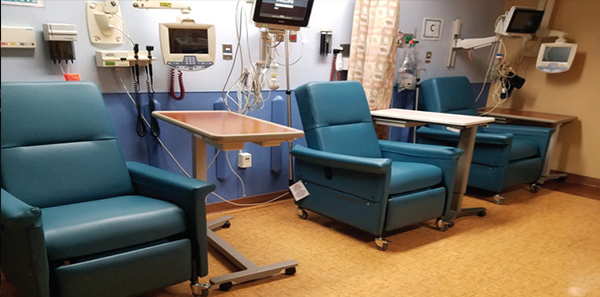
The Miriam Hospital emergency department’s vertical treatment area.
(click for larger image)

You Might Also Like
  • Rhode Island Hospital ED Boosts Efficiency by Adopting Brown University Patient Flow Model
  • Virginia Commonwealth University Improves Patient Flow Through “Vision in Action” Model
  • Patient Flow Improvements to Boost Efficiency in Small Emergency Departments
Explore This Issue
ACEP Now: Vol 36 – No 02 – February 2017

(click for larger image)

The physician contact is now very early in the ED encounter, and lab testing is initiated at triage. The physician can decide which zone is most appropriate for the patient, but the PFC assigns the room.

The PFC is a role that is growing in popularity, especially in emergency departments seeing more than 50,000 visits per year. The PFC manages incoming ambulances and has the 30,000-foot view of the workload in each area. As emergency departments get busy with increased numbers of geographic zones, an overview is lost unless someone is dedicated to monitoring and managing flow. This role works best when it is in addition to the charge nurse role, which was becoming unmanageable in terms of scope of duties. The charge nurse and PFC work as a team and are in constant communication (cellphones with speed dial) to share information for flow management. The charge nurse now focuses on one area with attention to outflow, admissions, and discharges. The charge nurse can inform the PFC as to workload in the back, the status of patients, and which patient is likely to be moving next. Together, they manage overall patient flow.

Patients were grouped according to acuity and resources needed. This allowed for the realization of new efficiencies, and many fast-track patients were turned around in under an hour! Housekeeping fine-tuned its processes to decrease the downtime of most rooms.

The results were astonishing and unequivocal. After four rapid-cycle tests of change, the leaders and stakeholders had ironed out the bugs and were ready to turn on their new ED processes for good. Compare their results where they were underperforming relative to the Academy of Administrators in Academic Emergency Medicine and Emergency Department Benchmarking Alliance cohorts before and are now top performers (see Table 1).

Definitions: PPD, patients per day; D2D, door-to-doctor time; LOS, length of stay; LBTC, left before treatment complete; LWBS, left without being seen; AAAEM, Academy of Administrators in Academic Emergency Medicine; EDBA, Emergency Department Benchmarking Alliance

(click for larger image)
Table 1: Miriam’s Performance Before and After Intervention
Compared to Benchmark Data
Definitions: PPD, patients per day; D2D, door-to-doctor time; LOS, length of stay; LBTC, left before treatment complete; LWBS, left without being seen; AAAEM, Academy of Administrators in Academic Emergency Medicine; EDBA, Emergency Department Benchmarking Alliance

There are some take-home messages that are important to all ED leaders and managers reading this story. You will need to change your processes as your volumes grow. In particular, as you jump a volume band, what has worked before no longer works at the increased volumes. Parallel processing, patient streams that segment patients according to the time and resources they will need, and pushing the provider to the front of the encounter are all forward-thinking ED flow strategies. For The Miriam Hospital emergency department, this change package helped get its mojo back! Once again, the ED members are top performers in their system. From now on, they will continue moving their patients fast forward and achieving higher levels of performance and great success!

Pages: 1 2 3 | Single Page

Topics: EfficiencyEmergency DepartmentEmergency MedicineMiriam HospitalPatient CarePatient FlowPractice ManagementQuality & SafetyRhode IslandWorkforce

Related

  • Florida Emergency Department Adds Medication-Dispensing Kiosk

    November 7, 2025 - 1 Comment
  • Q&A with ACEP President L. Anthony Cirillo

    November 5, 2025 - 0 Comment
  • Let Core Values Help Guide Patient Care

    November 5, 2025 - 0 Comment

Current Issue

ACEP Now: November 2025

Download PDF

Read More

About the Author

Shari Welch, MD, FACEP

Shari Welch, MD, FACEP, is a practicing emergency physician with Utah Emergency Physicians and a research fellow at the Intermountain Institute for Health Care Delivery Research. She has written numerous articles and three books on ED quality, safety, and efficiency. She is a consultant with Quality Matters Consulting, and her expertise is in ED operations.

View this author's posts »

No Responses to “Miriam Hospital’s FAST FORWARD>> Program Regains Lost Patient Flow Efficiencies”

Leave a Reply Cancel Reply

Your email address will not be published. Required fields are marked *


*
*


Wiley
  • Home
  • About Us
  • Contact Us
  • Privacy
  • Terms of Use
  • Advertise
  • Cookie Preferences
Copyright © 2025 by John Wiley & Sons, Inc. All rights reserved, including rights for text and data mining and training of artificial technologies or similar technologies. ISSN 2333-2603
