Logo

Log In Sign Up |  An official publication of: American College of Emergency Physicians
Navigation
  • Home
  • Multimedia
    • Podcasts
    • Videos
  • Clinical
    • Airway Managment
    • Case Reports
    • Critical Care
    • Guidelines
    • Imaging & Ultrasound
    • Pain & Palliative Care
    • Pediatrics
    • Resuscitation
    • Trauma & Injury
  • Resource Centers
    • mTBI Resource Center
  • Career
    • Practice Management
      • Benchmarking
      • Reimbursement & Coding
      • Care Team
      • Legal
      • Operations
      • Quality & Safety
    • Awards
    • Certification
    • Compensation
    • Early Career
    • Education
    • Leadership
    • Profiles
    • Retirement
    • Work-Life Balance
  • Columns
    • ACEP4U
    • Airway
    • Benchmarking
    • Brief19
    • By the Numbers
    • Coding Wizard
    • EM Cases
    • End of the Rainbow
    • Equity Equation
    • FACEPs in the Crowd
    • Forensic Facts
    • From the College
    • Images in EM
    • Kids Korner
    • Medicolegal Mind
    • Opinion
      • Break Room
      • New Spin
      • Pro-Con
    • Pearls From EM Literature
    • Policy Rx
    • Practice Changers
    • Problem Solvers
    • Residency Spotlight
    • Resident Voice
    • Skeptics’ Guide to Emergency Medicine
    • Sound Advice
    • Special OPs
    • Toxicology Q&A
    • WorldTravelERs
  • Resources
    • ACEP.org
    • ACEP Knowledge Quiz
    • Issue Archives
    • CME Now
    • Annual Scientific Assembly
      • ACEP14
      • ACEP15
      • ACEP16
      • ACEP17
      • ACEP18
      • ACEP19
    • Annals of Emergency Medicine
    • JACEP Open
    • Emergency Medicine Foundation
  • About
    • Our Mission
    • Medical Editor in Chief
    • Editorial Advisory Board
    • Awards
    • Authors
    • Article Submission
    • Contact Us
    • Advertise
    • Subscribe
    • Privacy Policy
    • Copyright Information

Miriam Hospital’s FAST FORWARD>> Program Regains Lost Patient Flow Efficiencies

By Shari Welch, MD, FACEP | on February 13, 2017 | 0 Comment
Special OPs
  • Tweet
  • Click to email a link to a friend (Opens in new window) Email
Print-Friendly Version
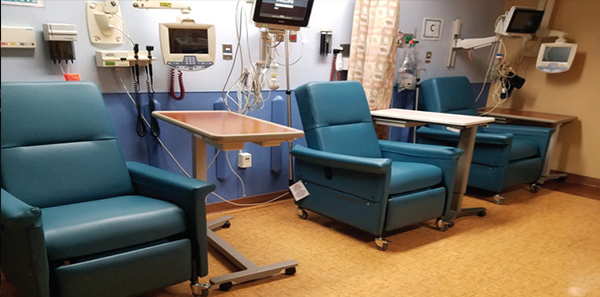
The Miriam Hospital emergency department’s vertical treatment area.

The Miriam Hospital is a 247-bed community hospital affiliated with the Warren Alpert School Medical School of Brown University in Providence, Rhode Island. The emergency department sees 68,000 visits annually in its 61 treatment spaces, which include 21 lounge chairs for vertical flow. The emergency department has had a long reputation for efficiency and service quality. The ED physicians and staff have always been proud of their performance metrics and empty waiting room. However, after crossing the 60,000-visit volume band, the department began to falter operationally, and its wait times increased. The new normal included an often full waiting room. The emergency department, which effectively operates as a geriatric emergency department (more than 30 percent of its patients being older than age 65), often found itself with Emergency Severity Index (ESI) 2 patients being placed back in the waiting room, a situation that did not please staff.

You Might Also Like
  • Rhode Island Hospital ED Boosts Efficiency by Adopting Brown University Patient Flow Model
  • Virginia Commonwealth University Improves Patient Flow Through “Vision in Action” Model
  • Patient Flow Improvements to Boost Efficiency in Small Emergency Departments
Explore This Issue
ACEP Now: Vol 36 – No 02 – February 2017

Hospital President Arthur Sampson and ED Medical Director Gary Bubly, MD, decided to undergo a comprehensive ED operations assessment conducted by an objective third party. The assessment identified opportunities for improvement. The leaders were committed to improving the emergency department but needed a road map of where to start. After the assessment, Dr. Bubly, along with his associate director, Ilse Jenouri, MD, and his nursing counterparts, Denise Brennan, nurse director of emergency services, and Bob Boss, clinical manager, decided to trial a change package with a set of complementary improvements that would commence simultaneously.

Using data, interviews, and observation, the ED operations experts argued that the emergency department had the space and personnel to manage the volumes. Their assessment revealed that intake was cumbersome, with many delays as most steps were conducted in series. Further, though the Miriam emergency department had just begun patient streaming and treating patients in chairs, there was no improvement in wait times because the streaming was not decisive and most geographic zones were mixed-acuity service lines. This made it hard to move low-acuity patients through the system quickly. Other patient flow and housekeeping issues were identified. Using data the leadership team developed, the emergency department implemented the flow model in Figure 1 using the major care/minor care concept used in Great Britain.

The leadership team cleverly dubbed the change package “The Miriam: FAST FORWARD>>.” It connotes the overarching theme of trying to regain lost efficiencies. The changes included:

  1. Team triage, which made the most of the physical layout.
  2. A patient flow coordinator (PFC) to monitor flow into the department and, where possible, load-level the various zones.
  3. Low-acuity patient streams (fast track and vertical flow), which place lower-acuity patients into cohorts depending on resource need.
  4. A housekeeping improvement initiative to rectify the problem of empty but dirty rooms.

The leadership crafted a new triage process that has many steps now happening in parallel (see Figure 2).

Pages: 1 2 3 | Single Page

Topics: EfficiencyEmergency DepartmentEmergency MedicineMiriam HospitalPatient CarePatient FlowPractice ManagementQuality & SafetyRhode IslandWorkforce

Related

  • Florida Emergency Department Adds Medication-Dispensing Kiosk

    November 7, 2025 - 1 Comment
  • Q&A with ACEP President L. Anthony Cirillo

    November 5, 2025 - 0 Comment
  • Let Core Values Help Guide Patient Care

    November 5, 2025 - 0 Comment

Current Issue

ACEP Now: November 2025

Download PDF

Read More

About the Author

Shari Welch, MD, FACEP

Shari Welch, MD, FACEP, is a practicing emergency physician with Utah Emergency Physicians and a research fellow at the Intermountain Institute for Health Care Delivery Research. She has written numerous articles and three books on ED quality, safety, and efficiency. She is a consultant with Quality Matters Consulting, and her expertise is in ED operations.

View this author's posts »

No Responses to “Miriam Hospital’s FAST FORWARD>> Program Regains Lost Patient Flow Efficiencies”

Leave a Reply Cancel Reply

Your email address will not be published. Required fields are marked *


*
*


Wiley
  • Home
  • About Us
  • Contact Us
  • Privacy
  • Terms of Use
  • Advertise
  • Cookie Preferences
Copyright © 2025 by John Wiley & Sons, Inc. All rights reserved, including rights for text and data mining and training of artificial technologies or similar technologies. ISSN 2333-2603
