Logo

Log In Sign Up |  An official publication of: American College of Emergency Physicians
Navigation
  • Home
  • Multimedia
    • Podcasts
    • Videos
  • Clinical
    • Airway Managment
    • Case Reports
    • Critical Care
    • Guidelines
    • Imaging & Ultrasound
    • Pain & Palliative Care
    • Pediatrics
    • Resuscitation
    • Trauma & Injury
  • Resource Centers
    • mTBI Resource Center
  • Career
    • Practice Management
      • Benchmarking
      • Reimbursement & Coding
      • Care Team
      • Legal
      • Operations
      • Quality & Safety
    • Awards
    • Certification
    • Compensation
    • Early Career
    • Education
    • Leadership
    • Profiles
    • Retirement
    • Work-Life Balance
  • Columns
    • ACEP4U
    • Airway
    • Benchmarking
    • Brief19
    • By the Numbers
    • Coding Wizard
    • EM Cases
    • End of the Rainbow
    • Equity Equation
    • FACEPs in the Crowd
    • Forensic Facts
    • From the College
    • Images in EM
    • Kids Korner
    • Medicolegal Mind
    • Opinion
      • Break Room
      • New Spin
      • Pro-Con
    • Pearls From EM Literature
    • Policy Rx
    • Practice Changers
    • Problem Solvers
    • Residency Spotlight
    • Resident Voice
    • Skeptics’ Guide to Emergency Medicine
    • Sound Advice
    • Special OPs
    • Toxicology Q&A
    • WorldTravelERs
  • Resources
    • ACEP.org
    • ACEP Knowledge Quiz
    • Issue Archives
    • CME Now
    • Annual Scientific Assembly
      • ACEP14
      • ACEP15
      • ACEP16
      • ACEP17
      • ACEP18
      • ACEP19
    • Annals of Emergency Medicine
    • JACEP Open
    • Emergency Medicine Foundation
  • About
    • Our Mission
    • Medical Editor in Chief
    • Editorial Advisory Board
    • Awards
    • Authors
    • Article Submission
    • Contact Us
    • Advertise
    • Subscribe
    • Privacy Policy
    • Copyright Information

Medical Education Images on Twitter Have Potential to Go Viral

By Jeremy Samuel Faust, MD, MS, MA, FACEP | on May 13, 2015 | 0 Comment
The Feed
  • Tweet
  • Click to email a link to a friend (Opens in new window) Email
Print-Friendly Version

Even within the confines of 140 characters, much can be said. However, one of Twitter’s great features is that it allows pictures in exchange for characters. When it comes to medical education, tweets with images seem to have special potential to go viral. EM educators like Salim Rezaie, MD, FACEP (@srrezaie), a physician in the division of emergency medicine and hospitalist medicine at the University of Texas Health Science Center at San Antonio, and Michelle Lin, MD (@M_Lin), associate professor of emergency medicine at the University of California, San Francisco, have turned the creation of succinct medical-education images into a form of high art, earning countless views and retweets. Last month, a new account called @EMinfographics popped up and caught my eye. This account is getting in on the act and has already posted a handful of excellent images that anyone can save to their smartphone photo album or desktop with a couple of touches or clicks. I frequently save these images in a “medical images” album on my phone for quick reference during shifts or when teaching. For this month’s column, I’m highlighting some great images that showed up on my feed and that prove a great medical-education picture can be worth 1,000 characters.

You Might Also Like
  • Free Open Access Medical Education Twitter Authors Appear in Top Peer-Reviewed Journals
  • Emergency Medicine Experts Share Tips for Who to Follow on Twitter
  • Free Open Access Medical Resources Beyond Twitter
Explore This Issue
ACEP Now: Vol 34 – No 05 – May 2015
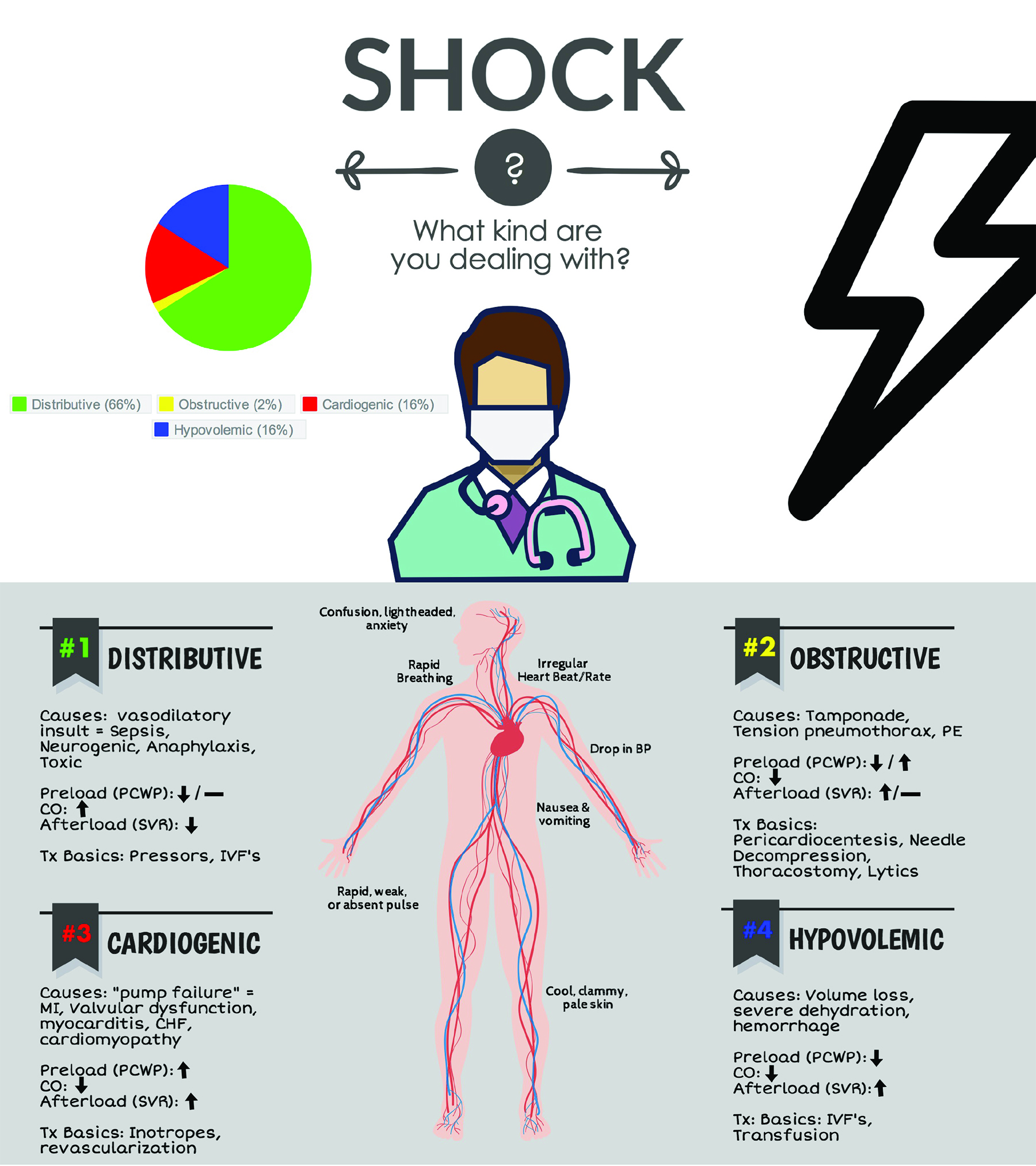
Figure 1.

(click for larger image)
Figure 1.

@EMinfographics posted this image on shock (see Figure 1). On one slide, they’ve packed in important distinguishing features of the four major types of shock we have to rapidly diagnose and treat. It’s a great image for teaching, and it’s even a good reminder to the seasoned vet.


Speaking of shock, Hilary Fairbrother, MD, MPH, FACEP (@hilaryfair), assistant director of undergraduate medical education at the Ronald O. Perelman Department of Emergency Medicine at New York University School of Medicine in New York, tweeted these two images (see Figure 2) from
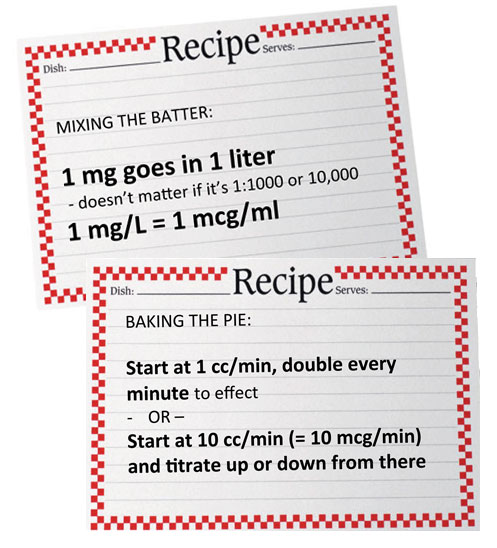
Figure 2.

(click for larger image)
Figure 2.

a lecture by Peter Viccellio, MD, FACEP, clinical professor and vice chair of emergency medicine at Stony Brook School of Medicine (who makes a cameo in the images), with the simple title “Epi drips for dummies.” The first image is the recipe for making a 1 mcg/mL epinephrine drip, and the second gives two titration schemes. I’ve already used these images during my shifts.


Davis Gattas, MD (@dgattas), an intensivist at the University of Sydney, tweeted this image (see Figure 3) from a hot-off-the-press New England Journal of Medicine article that suggests systemic inflammatory response syndrome (SIRS) may not be as accurate or useful as we previously thought.1 The tweeted

Pages: 1 2 | Single Page

Topics: EducationEmergency PhysicianPractice TrendsSocial MediaTechnologyTwitter

Related

  • Florida Emergency Department Adds Medication-Dispensing Kiosk

    November 7, 2025 - 1 Comment
  • FACEPs in the Crowd: Dr. John Ludlow

    November 5, 2025 - 0 Comment
  • ACEP4U: the ACEP/CORD Teaching Fellowship

    November 4, 2025 - 0 Comment

Current Issue

ACEP Now: November 2025

Download PDF

Read More

About the Author

Jeremy Samuel Faust, MD, MS, MA, FACEP

Jeremy Samuel Faust, MD, MS, MA, FACEP, is Medical Editor in Chief of ACEP Now, an instructor at Harvard Medical School and an attending physician in department of emergency medicine at Brigham & Women’s Hospital in Boston. Follow him on twitter @JeremyFaust.

View this author's posts »

No Responses to “Medical Education Images on Twitter Have Potential to Go Viral”

Leave a Reply Cancel Reply

Your email address will not be published. Required fields are marked *


*
*


Wiley
  • Home
  • About Us
  • Contact Us
  • Privacy
  • Terms of Use
  • Advertise
  • Cookie Preferences
Copyright © 2025 by John Wiley & Sons, Inc. All rights reserved, including rights for text and data mining and training of artificial technologies or similar technologies. ISSN 2333-2603