Logo

Log In Sign Up |  An official publication of: American College of Emergency Physicians
Navigation
  • Home
  • Multimedia
    • Podcasts
    • Videos
  • Clinical
    • Airway Managment
    • Case Reports
    • Critical Care
    • Guidelines
    • Imaging & Ultrasound
    • Pain & Palliative Care
    • Pediatrics
    • Resuscitation
    • Trauma & Injury
  • Resource Centers
    • mTBI Resource Center
  • Career
    • Practice Management
      • Benchmarking
      • Reimbursement & Coding
      • Care Team
      • Legal
      • Operations
      • Quality & Safety
    • Awards
    • Certification
    • Compensation
    • Early Career
    • Education
    • Leadership
    • Profiles
    • Retirement
    • Work-Life Balance
  • Columns
    • ACEP4U
    • Airway
    • Benchmarking
    • Brief19
    • By the Numbers
    • Coding Wizard
    • EM Cases
    • End of the Rainbow
    • Equity Equation
    • FACEPs in the Crowd
    • Forensic Facts
    • From the College
    • Images in EM
    • Kids Korner
    • Medicolegal Mind
    • Opinion
      • Break Room
      • New Spin
      • Pro-Con
    • Pearls From EM Literature
    • Policy Rx
    • Practice Changers
    • Problem Solvers
    • Residency Spotlight
    • Resident Voice
    • Skeptics’ Guide to Emergency Medicine
    • Sound Advice
    • Special OPs
    • Toxicology Q&A
    • WorldTravelERs
  • Resources
    • ACEP.org
    • ACEP Knowledge Quiz
    • Issue Archives
    • CME Now
    • Annual Scientific Assembly
      • ACEP14
      • ACEP15
      • ACEP16
      • ACEP17
      • ACEP18
      • ACEP19
    • Annals of Emergency Medicine
    • JACEP Open
    • Emergency Medicine Foundation
  • About
    • Our Mission
    • Medical Editor in Chief
    • Editorial Advisory Board
    • Awards
    • Authors
    • Article Submission
    • Contact Us
    • Advertise
    • Subscribe
    • Privacy Policy
    • Copyright Information

Lack of Data for Evaluating Venothromboembolic Disease In Pregnant Patients Leaves Physicians Looking for Best Approach

By Joseph Harrington | on February 13, 2014 | 0 Comment
Uncategorized
  • Tweet
  • Click to email a link to a friend (Opens in new window) Email
Print-Friendly Version
Lack of Data for Evaluating Venothromboembolic Disease In Pregnant Patients Leaves Physicians Looking for Best Approach

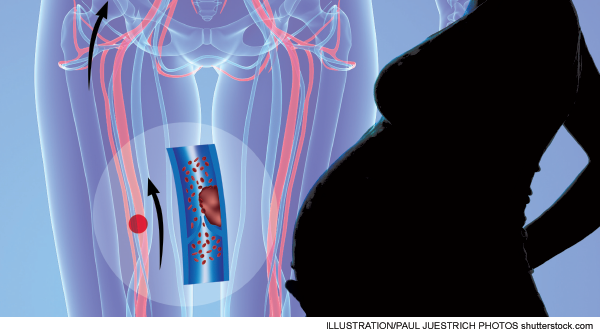
Use caution with pregnant patients who may have VTE. Although our goal is to reduce radiation exposure to the fetus and mother, applying evidence from nonpregnant populations can be disastrous. We must be mindful to avoid unnecessary testing, but the use of CDRs and D-dimers, in particular, have little place—if any—in the risk stratification of pregnant patients.

You Might Also Like
  • Her Chief Complaint Is … And She’s Pregnant
  • ACS In the Pregnant Patient
  • Emergency Department Usage Trend Data Can Help Physicians Prepare for Patients
Explore This Issue
ACEP Now: Vol 33 – No 02 – February 2014

Dr. Klauer is director of the Center for Emergency Medical Education (CEME) and chief medical officer for Emergency Medicine Physicians, Ltd., Canton, Ohio; on the Board of Directors for Physicians Specialty Limited Risk Retention Group; assistant clinical professor at Michigan State University College of Osteopathic Medicine; and medical editor-in-chief of ACEP Now.

References

  1. Marik PD, Plante LA. Venous thromboembolic disease and pregnancy. N Engl J Med. 2008;359:2025-2033.
  2. Greer IA. Thrombosis in pregnancy: updates in diagnosis and management. Hematology Am Soc Hematol Educ Program. 2012;2012:203-207.
  3. Henriksson P, Westerlund E, Wallén H, et al. Incidence of pulmonary and venous thromboembolism in pregnancies after in vitro fertilisation: cross sectional study. BMJ. 2013;346:e8632.
  4. Tan M, Huisman MV. The diagnostic management of acute venous thromboembolism during pregnancy: recent advancements and unresolved issues. Thromb Res. 2011;127(Suppl 3):S13-S16.
  5. Kline JA, Mitchell AM, Kabrhel C, et al. Clinical criteria to prevent unnecessary diagnostic testing in emergency department patients with suspected pulmonary embolism. J Thromb Haemost. 2004;2:1247-1255.
  6. Kline JA, Slattery D, O’Neil BJ, et al. Clinical features of patients with pulmonary embolism and a negative PERC rule result. Ann Emerg Med. 2013;61:122-124.

Pages: 1 2 3 | Single Page

Topics: Clinical GuidelineEmergency MedicineEmergency PhysicianOB/GYNPractice ManagementPregnancyProcedures and SkillsPulmonaryResearchUltrasound

Related

  • Florida Emergency Department Adds Medication-Dispensing Kiosk

    November 7, 2025 - 1 Comment
  • Q&A with ACEP President L. Anthony Cirillo

    November 5, 2025 - 0 Comment
  • November 2025 News from the College

    November 4, 2025 - 0 Comment

Current Issue

ACEP Now: November 2025

Download PDF

Read More

About the Author

Joseph Harrington

View this author's posts »

No Responses to “Lack of Data for Evaluating Venothromboembolic Disease In Pregnant Patients Leaves Physicians Looking for Best Approach”

Leave a Reply Cancel Reply

Your email address will not be published. Required fields are marked *


*
*


Wiley
  • Home
  • About Us
  • Contact Us
  • Privacy
  • Terms of Use
  • Advertise
  • Cookie Preferences
Copyright © 2025 by John Wiley & Sons, Inc. All rights reserved, including rights for text and data mining and training of artificial technologies or similar technologies. ISSN 2333-2603
