
Logo

Log In Sign Up |  An official publication of: American College of Emergency Physicians
Navigation
  • Home
  • Multimedia
    • Podcasts
    • Videos
  • Clinical
    • Airway Managment
    • Case Reports
    • Critical Care
    • Guidelines
    • Imaging & Ultrasound
    • Pain & Palliative Care
    • Pediatrics
    • Resuscitation
    • Trauma & Injury
  • Resource Centers
    • mTBI Resource Center
  • Career
    • Practice Management
      • Benchmarking
      • Reimbursement & Coding
      • Care Team
      • Legal
      • Operations
      • Quality & Safety
    • Awards
    • Certification
    • Compensation
    • Early Career
    • Education
    • Leadership
    • Profiles
    • Retirement
    • Work-Life Balance
  • Columns
    • ACEP4U
    • Airway
    • Benchmarking
    • Brief19
    • By the Numbers
    • Coding Wizard
    • EM Cases
    • End of the Rainbow
    • Equity Equation
    • FACEPs in the Crowd
    • Forensic Facts
    • From the College
    • Images in EM
    • Kids Korner
    • Medicolegal Mind
    • Opinion
      • Break Room
      • New Spin
      • Pro-Con
    • Pearls From EM Literature
    • Policy Rx
    • Practice Changers
    • Problem Solvers
    • Residency Spotlight
    • Resident Voice
    • Skeptics’ Guide to Emergency Medicine
    • Sound Advice
    • Special OPs
    • Toxicology Q&A
    • WorldTravelERs
  • Resources
    • ACEP.org
    • ACEP Knowledge Quiz
    • Issue Archives
    • CME Now
    • Annual Scientific Assembly
      • ACEP14
      • ACEP15
      • ACEP16
      • ACEP17
      • ACEP18
      • ACEP19
    • Annals of Emergency Medicine
    • JACEP Open
    • Emergency Medicine Foundation
  • About
    • Our Mission
    • Medical Editor in Chief
    • Editorial Advisory Board
    • Awards
    • Authors
    • Article Submission
    • Contact Us
    • Advertise
    • Subscribe
    • Privacy Policy
    • Copyright Information

Keep Video Laryngoscope Clear with IV Tubing, Saline, and Some Ingenuity

By Terrance McGovern, DO, MPH and Justin McNamee, DO | on February 11, 2015 | 2 Comments
Tricks of the Trade
  • Tweet
  • Click to email a link to a friend (Opens in new window) Email
Print-Friendly Version
Keep Video Laryngoscope Clear with IV Tubing, Saline, and Some Ingenuity
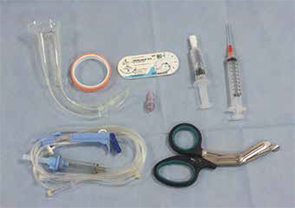
Figure 1. Equipment used to make this laryngoscope tool.

You Might Also Like
  • Tips for Using a Hyperangulated Video Laryngoscope
  • Four Techniques for Handling the Omega-Shaped Epiglottis
  • Is Video or Direct Laryngoscopy Better for Intubation in Trauma Patients?
Explore This Issue
ACEP Now: Vol 34 – No 02 – February 2015

Figure 1. Equipment used to make this laryngoscope tool.

The Case

A 42-year-old female presents to the emergency department after sustaining blunt facial trauma from a high-speed motor vehicle collision. She weighs more than 400 pounds and is back-boarded and collared. Blood is flowing freely from her mouth, and she is unresponsive to painful stimuli and gurgling with each respiration; this patient needs her airway secured five minutes ago. After the newly minted intern gives it a shot by direct laryngoscopy and pulls out with a look that says, “I think I just soiled my pants,” you step in. Using the GlideScope this time, you visualize the epiglottis, but then a splattering of
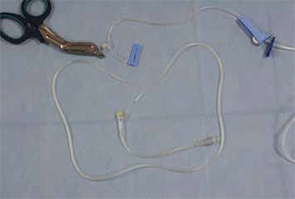
Figure 2. Cut the distal end of the IV tubing at an oblique angle.

Figure 2. Cut the distal end of the IV tubing at an oblique angle.

blood hits the lens of your GlideScope and obscures the view. You try again with the same result. Is it time to dust off the #11 blade, or is there an alternative trick of the trade to improve visualization?

Background

In 1944, Bannister and Macbeth described direct laryngoscopy by aligning the pharyngeal, laryngeal, and oral axes to obtain direct visualization of the glottic inlet.1 Aligning these axes and visualizing the glottic inlet can be easily complicated by difficult airway characteristics (eg, large tongue, short neck, small mandible, bodily fluids in the airway, cervical immobility, facial trauma, edema, or limited mouth opening).2 Prior to the advent of video laryngoscopy, physicians had limited options to handle these complications before proceeding to a surgical airway. Video laryngoscopy can help circumvent these obstacles and has been shown to improve glottic visualization, especially in difficult airways.3 The hyperacute angle of the GlideScope can navigate challenging anatomy, and the video
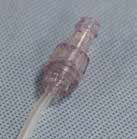
Figure 3. Fit the luer lock into the oblique IV tubing opening.

Figure 3. Fit the luer lock into the oblique IV tubing opening.

display provides a way to supervise novice operators. However, there is no solution for when the video laryngoscope’s view becomes obscured by bodily fluids. Removing the laryngoscope to clean it off wastes time and subjects the patient to another intubation attempt. To assist with clearing secretions, video laryngoscopes have been augmented using an inline suction device attached to the blade of the laryngoscope, but the results showed no improvement in time to intubation or increased success rates.4 Furthermore, the study did not address the complication of getting the secretions off of the screen to allow for better visualization.

To assist with clearing secretions, video laryngoscopes have been augmented using an inline suction device attached to the blade of the laryngoscope, but the results showed no improvement in time to intubation or increased success rates.4

Technique

Attaching IV tubing to a video laryngoscope can help improve visualization during

Pages: 1 2 3 | Single Page

Topics: Airway ManagementCase PresentationCritical CareEmergency DepartmentEmergency PhysicianProcedures and SkillsTrauma and Injury

Related

  • Why the Nonrebreather Should be Abandoned

    December 3, 2025 - 0 Comment
  • Non-Invasive Positive Pressure Ventilation in the Emergency Department

    October 1, 2025 - 0 Comment
  • Emergency Department Management of Prehospital Tourniquets

    October 1, 2025 - 0 Comment

Current Issue

ACEP Now: November 2025

Download PDF

Read More

About the Authors

Terrance McGovern, DO, MPH

Dr. McGovern is an emergency medicine resident at St. Joseph’s Regional Medical Center in Paterson, New Jersey.

View this author's posts »

Justin McNamee, DO

Justin McNamee, DO, is an attending physician at Emergency Medicine Professionals; EMPros, in Ormond Beach, Florida.

View this author's posts »

2 Responses to “Keep Video Laryngoscope Clear with IV Tubing, Saline, and Some Ingenuity”

  1. March 9, 2015

    Kyle Stevens Reply

    Would love to see video of this DYI setup and of it in action

  2. August 30, 2025

    Frank Reply

    for hands free use:

    attach a one way valve to an extension tubing. cut the other end of the extension tubing to length and fasten it to the blade as described. store it with your airway supplies.

    To use the system connect a 100ml saline soft bottle to a regular iv tubing. connect the open end of the iv tubing to the one way valve on the blade. put the bottle on the ground, regulate the saline flow by pressing down your foot on the soft bottle.

Leave a Reply Cancel Reply

Your email address will not be published. Required fields are marked *


*
*


Wiley
  • Home
  • About Us
  • Contact Us
  • Privacy
  • Terms of Use
  • Advertise
  • Cookie Preferences
Copyright © 2025 by John Wiley & Sons, Inc. All rights reserved, including rights for text and data mining and training of artificial technologies or similar technologies. ISSN 2333-2603