
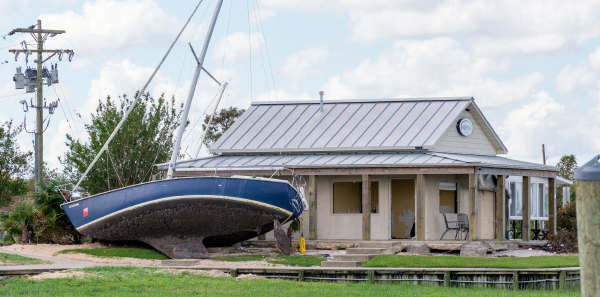
Hurricane Florence struck North Carolina as a Category 1 storm on Sept. 14, 2018, bringing with it record rainfalls and flooding, an estimated $50 billion in damages, and a death toll of 51.1,2
Explore This Issue
ACEP Now: Vol 38 – No 03 – March 2019Coastal Evacuation
Mandatory evacuations forced thousands of residents from their homes. To help those affected, Wake County created six shelters serving 1,100 people. Many of the evacuees had multiple chronic medical conditions, such as diabetes, high blood pressure, heart conditions, and kidney failure. In their flight to safety, many forgot their medications. Additionally, due to the stress of the circumstances, many of the shelter residents developed acute medical conditions, and their only access to physician care was through EMS and local emergency departments. The added call volume from the shelters strained the Wake County EMS system and taxed the already crowded emergency departments in Wake County.
Wake Emergency Physicians and RelyMD
Staffing six different shelters simultaneously with individual qualified providers was beyond the human resources capabilities of the stressed Wake County infrastructure. Wake County EMS and North Carolina Department of Health and Human Services contacted a local telemedicine company, RelyMD, and asked it to deploy its services to the shelters. RelyMD is a telemedicine service that is 100 percent owned and staffed by Wake Emergency Physicians, PA (WEPPA). With more than 160 emergency medicine and telemedicine specialists, WEPPA is a private, independent emergency medicine practice based in Raleigh, North Carolina, that staffs nine different emergency departments across three health care systems. RelyMD provides thousands of annual online medical evaluations via mobile app and internet-enabled computers. Its providers are available 24-7-365 in an on-demand model.
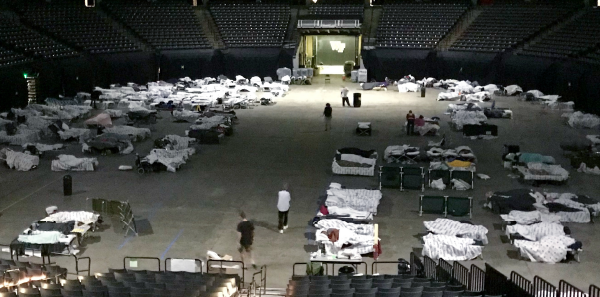
One of the shelters set up for those affected by Hurricane Florence.
Bobby Park
Telemedicine Workflow
Just before the storm hit, the RelyMD team provided a one-hour in-service covering the basics of the platform, which operates on an iPad. During a 10-day hurricane-related period, RelyMD cared for 95 shelter patients, with 67 percent of the care delivered during the first three days of Florence making landfall. The medical issues included respiratory conditions, chest pain, wound care, minor injuries, mental health issues, dialysis coordination, and medication refills. Nurses would evaluate the patient’s needs, take vital signs, review medication lists, and transmit 12-lead ECGs, after which they contacted the RelyMD provider, who would get the “quick story” from the nurse. Then using synchronous real-time audio and video, a physical exam would be performed through the camera of the iPad, with the nurse acting as the provider’s hands. Of the 95 telemedicine consults, nine patients were evaluated and advised to go to the emergency department for further care (see Table 1). The diversion rate of patients who said they would have gone to the emergency department if the telemedicine consult hadn’t been available was 33 out of 41 cases, or 80 percent. (See “Telemedicine Response, By the Numbers” for a summary of this telemedicine initiative.)
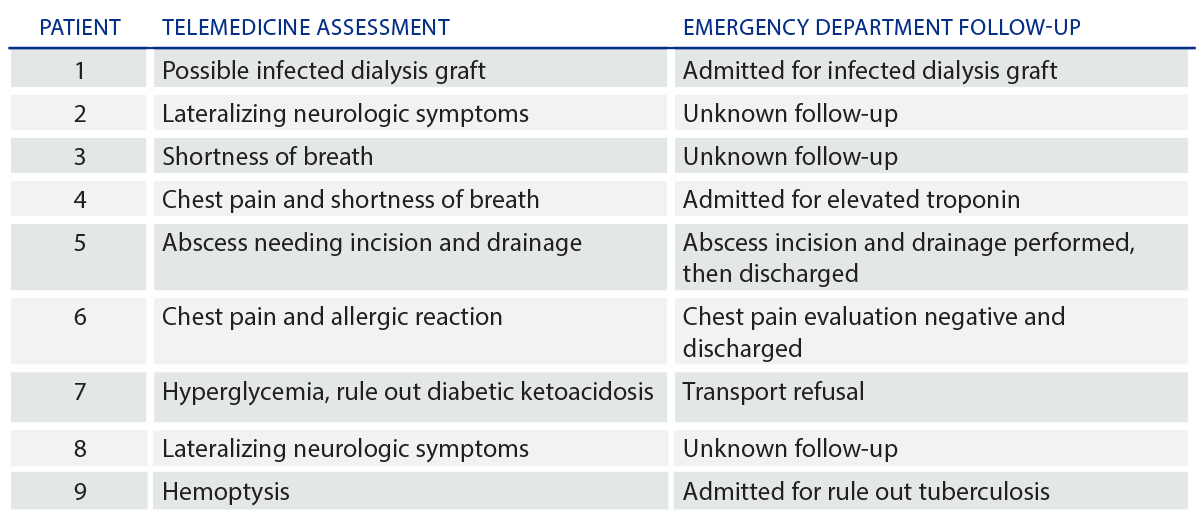
(click for larger image) Table 1: Patients Evaluated by Telemedicine and Directed to Go to the Emergency Department
The Advantages of Telemedicine
The Hurricane Florence telemedicine shelter project is an illustration of how necessity is the mother of invention. Hurricane Florence strained the medical system in Wake County, and the RelyMD telemedicine initiative provided a needed solution. Traditionally, having multiple shelters means requiring multiple medical providers, one for each facility. Through telemedicine, one provider was able to be efficiently deployed to all of the shelters simultaneously.
From a logistical standpoint, the service was deployed quickly, despite the need to go on-site to deliver the iPads, introduce the concept, and show the nurses how to perform the telemedicine visits. The program was up and running in the busiest shelter in less than eight hours.
In a resource-constrained environment, the right care was delivered. Of those patients who said they would have gone to the emergency department for their medical care, the data show that there was an 80 percent emergency department diversion rate. This resulted in significant savings with respect to overall cost and EMS worker hours (see Figure 1). Of the nine patients who were sent to the emergency department after initially being evaluated by RelyMD, three required admission to the hospital.
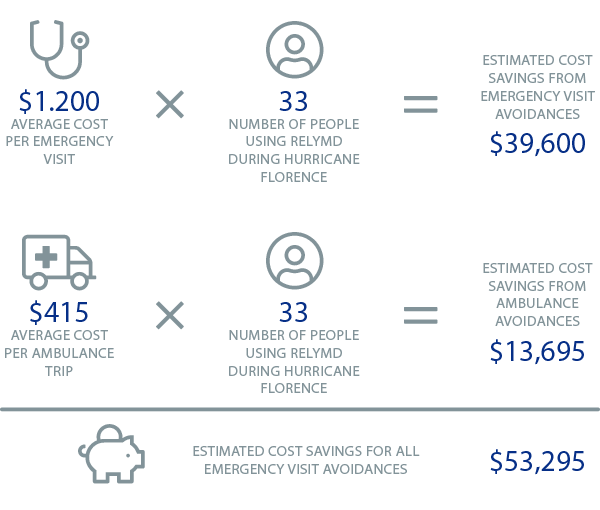
Figure 1. Cost Savings from Telemedicine Program
Beyond the Shelters
RelyMD recognized that there were people affected by Florence all across North Carolina, not only in the shelters. To help those populations, RelyMD offered a coupon code for a free patient-initiated telemedicine evaluation. Patients were able to obtain treatment using the RelyMD app or an internet-enabled computer. RelyMD was able to evaluate and manage more than 100 patients across North Carolina.
Future Disasters
Unfortunately, devastating natural disasters will continue to affect the nation. In this case, telemedicine was a useful tool that helped manage patients quickly and in a high-quality manner. One provider was able to take care of patients across eight different shelters. At one point, there were more than 100 shelters set up for Hurricane Florence victims across North Carolina. Telemedicine has the capacity to take care of all of these patients with a fraction of the usual medical resources.
Dr. Park is the director of RelyMD, a North Carolina–based telemedicine company, and a partner at Wake Emergency Physicians. Ms. Raegen and Mr. Caflisch are executives at RelyMD. Dr. Granovsky is president of LogixHealth, a national coding and billing company.
References
- Scism L, Ailworth E. Moody’s pegs Florence’s economic cost at $38 billion to $50 billion. The Wall Street Journal. Sept. 21, 2018.
- Borter G. Hurricane Florence death toll rises to 51. Reuters. Oct 2, 2018.
Pages: 1 2 3 | Multi-Page



No Responses to “Hurricane Florence and the Use of Telemedicine”