Logo

Log In Sign Up |  An official publication of: American College of Emergency Physicians
Navigation
  • Home
  • Multimedia
    • Podcasts
    • Videos
  • Clinical
    • Airway Managment
    • Case Reports
    • Critical Care
    • Guidelines
    • Imaging & Ultrasound
    • Pain & Palliative Care
    • Pediatrics
    • Resuscitation
    • Trauma & Injury
  • Resource Centers
    • mTBI Resource Center
  • Career
    • Practice Management
      • Benchmarking
      • Reimbursement & Coding
      • Care Team
      • Legal
      • Operations
      • Quality & Safety
    • Awards
    • Certification
    • Compensation
    • Early Career
    • Education
    • Leadership
    • Profiles
    • Retirement
    • Work-Life Balance
  • Columns
    • ACEP4U
    • Airway
    • Benchmarking
    • Brief19
    • By the Numbers
    • Coding Wizard
    • EM Cases
    • End of the Rainbow
    • Equity Equation
    • FACEPs in the Crowd
    • Forensic Facts
    • From the College
    • Images in EM
    • Kids Korner
    • Medicolegal Mind
    • Opinion
      • Break Room
      • New Spin
      • Pro-Con
    • Pearls From EM Literature
    • Policy Rx
    • Practice Changers
    • Problem Solvers
    • Residency Spotlight
    • Resident Voice
    • Skeptics’ Guide to Emergency Medicine
    • Sound Advice
    • Special OPs
    • Toxicology Q&A
    • WorldTravelERs
  • Resources
    • ACEP.org
    • ACEP Knowledge Quiz
    • Issue Archives
    • CME Now
    • Annual Scientific Assembly
      • ACEP14
      • ACEP15
      • ACEP16
      • ACEP17
      • ACEP18
      • ACEP19
    • Annals of Emergency Medicine
    • JACEP Open
    • Emergency Medicine Foundation
  • About
    • Our Mission
    • Medical Editor in Chief
    • Editorial Advisory Board
    • Awards
    • Authors
    • Article Submission
    • Contact Us
    • Advertise
    • Subscribe
    • Privacy Policy
    • Copyright Information

How To Manage Adult Asthma

By Anton Helman, MD, CCFP(EM), FCFP | on May 7, 2024 | 0 Comment
EM Cases
  • Tweet
  • Click to email a link to a friend (Opens in new window) Email
Print-Friendly Version

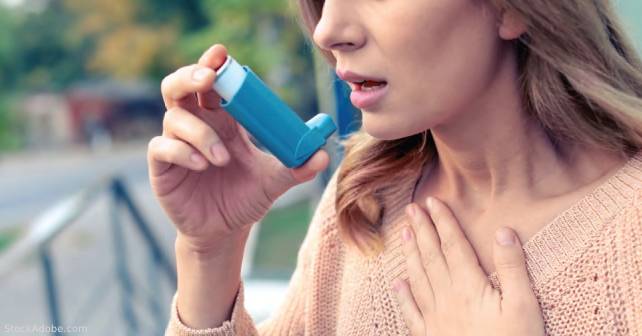
This past summer, it became quite apparent that larger and more intense forest fires were contributing to poor health in the United States.1 One of the consequences of the increase in forest fires was more air pollution. The incidence of asthma is higher if the air in your neighborhood is more polluted.2 The more nitrogen dioxide and carbon monoxide in the air, the more asthma. In fact, a recent study out of Calgary in Canada suggested that there were 13 percent more asthma exacerbations presenting to emergency departments (EDs) when there was visible wildfire smoke in the city.3 Asthma presentations to EDs have increased recently.4 Ten people die from asthma daily in the United States, deaths that are nearly all preventable.5,6 This article outlines how appropriate risk stratification and management of asthma in the ED can reduce preventable deaths and minimize bounce backs.

You Might Also Like
  • Corticosteroid Treatments for Asthma Exacerbation, Intussusception Recurrence in Pediatric Patients
  • Antibiotics Provide No Added Benefit in Severe Asthma Flares
  • Are Pediatric Lungs Just Little Adult Lungs?
Explore This Issue
ACEP Now: Vol 43 – No 05 – May 2024

While you may be aware of the aphorism, “All that wheezes is not asthma,” it can also be stated that “asthma does not always wheeze.” The diagnosis of asthma is usually obvious, with the patient having recurrent exacerbations and visits to the ED. However, the diagnosis is not so obvious, and sometimes what appears to be a recurrent exacerbation is a more sinister diagnosis, like a pulmonary embolism. It is therefore important to entertain wide age-appropriate differential diagnoses, including heart failure and pneumonia in adults and foreign body and bronchiolitis in pediatric patients. Anaphylaxis may overlap with asthma, and when both are present, aggressive treatment is necessary to prevent death. Stridor may be mistaken for wheeze. While stridor is predominantly an inspiratory sound and wheeze an expiratory one, stridor may cause an expiratory sound that can be mistaken for wheeze. The absence of wheeze and a silent chest to auscultation may indicate life-threatening asthma.

Once the diagnosis of asthma exacerbation has been established in the ED, risk stratification is necessary, as this helps guide management and disposition. Risk stratification in the ED can be gleaned simply from the history and physical exam. The most predictive factor for admission is previous hospitalizations for asthma. The next two most predictive variables for admission are room-air O2 saturation less than 95 percent and peak expiratory flow (PEF) severity category (severe/very severe versus mild/moderate).7 Risk factors for asthma-related death that should be gathered from the history include a history of requiring intubation and mechanical ventilation, having a hospitalization or ED visit for asthma in the previous year, not currently using or poorly adherent with therapy, overusing beta agonists, a history of psychiatric disease or psychosocial problems, concomitant food allergy, and currently using or having recently stopped oral corticosteroids.8

Pages: 1 2 3 4 5 | Single Page

Topics: AirwayAirway ManagementAsthmaClinical

Related

  • Why the Nonrebreather Should be Abandoned

    December 3, 2025 - 0 Comment
  • Non-Invasive Positive Pressure Ventilation in the Emergency Department

    October 1, 2025 - 0 Comment
  • Emergency Department Management of Prehospital Tourniquets

    October 1, 2025 - 0 Comment

Current Issue

ACEP Now: December 2025 (Digital)

Read More

No Responses to “How To Manage Adult Asthma”

Leave a Reply Cancel Reply

Your email address will not be published. Required fields are marked *


*
*


Wiley
  • Home
  • About Us
  • Contact Us
  • Privacy
  • Terms of Use
  • Advertise
  • Cookie Preferences
Copyright © 2025 by John Wiley & Sons, Inc. All rights reserved, including rights for text and data mining and training of artificial technologies or similar technologies. ISSN 2333-2603
