Logo

Log In Sign Up |  An official publication of: American College of Emergency Physicians
Navigation
  • Home
  • Multimedia
    • Podcasts
    • Videos
  • Clinical
    • Airway Managment
    • Case Reports
    • Critical Care
    • Guidelines
    • Imaging & Ultrasound
    • Pain & Palliative Care
    • Pediatrics
    • Resuscitation
    • Trauma & Injury
  • Resource Centers
    • mTBI Resource Center
  • Career
    • Practice Management
      • Benchmarking
      • Reimbursement & Coding
      • Care Team
      • Legal
      • Operations
      • Quality & Safety
    • Awards
    • Certification
    • Compensation
    • Early Career
    • Education
    • Leadership
    • Profiles
    • Retirement
    • Work-Life Balance
  • Columns
    • ACEP4U
    • Airway
    • Benchmarking
    • Brief19
    • By the Numbers
    • Coding Wizard
    • EM Cases
    • End of the Rainbow
    • Equity Equation
    • FACEPs in the Crowd
    • Forensic Facts
    • From the College
    • Images in EM
    • Kids Korner
    • Medicolegal Mind
    • Opinion
      • Break Room
      • New Spin
      • Pro-Con
    • Pearls From EM Literature
    • Policy Rx
    • Practice Changers
    • Problem Solvers
    • Residency Spotlight
    • Resident Voice
    • Skeptics’ Guide to Emergency Medicine
    • Sound Advice
    • Special OPs
    • Toxicology Q&A
    • WorldTravelERs
  • Resources
    • ACEP.org
    • ACEP Knowledge Quiz
    • Issue Archives
    • CME Now
    • Annual Scientific Assembly
      • ACEP14
      • ACEP15
      • ACEP16
      • ACEP17
      • ACEP18
      • ACEP19
    • Annals of Emergency Medicine
    • JACEP Open
    • Emergency Medicine Foundation
  • About
    • Our Mission
    • Medical Editor in Chief
    • Editorial Advisory Board
    • Awards
    • Authors
    • Article Submission
    • Contact Us
    • Advertise
    • Subscribe
    • Privacy Policy
    • Copyright Information

How Did University Hospital in San Antonio Reduce ED Boarding?

By Shari Welch, MD, FACEP | on October 21, 2019 | 0 Comment
Special OPs
  • Tweet
  • Click to email a link to a friend (Opens in new window) Email
Print-Friendly Version
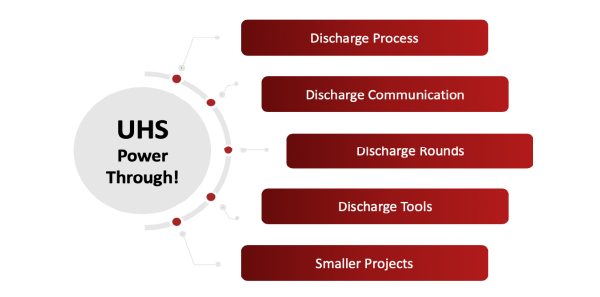
Figure 1: Key Elements of UHS’s Power Through! Plan

You Might Also Like
  • To Reduce Emergency Department Boarding and Hospital Crowding, Look Beyond the ED
  • Early Hospital Discharge Can Improve Capacity, Patient Flow
  • Telepsychiatry, Emergency Psychiatric Services Can Reduce Mental Health Patient Boarding
Explore This Issue
ACEP Now: Vol 38 – No 10 – October 2019

Figure 1: Key Elements of UHS’s Power Through! Plan

Rollout of this program included a retreat that helped to articulate unit level discharge processes, discharge communication, discharge rounds, and tools to support the work. Figure 2 is a sample swim lane diagram articulating the discharge process on a typical unit.
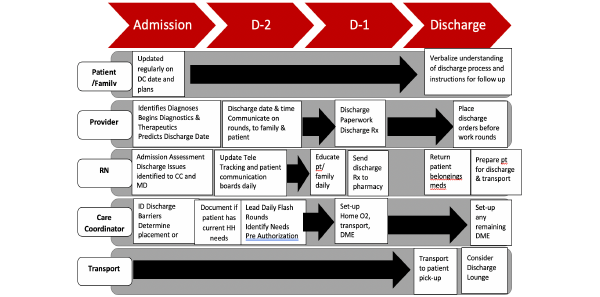
Figure 2: Sample Swim Lane Diagram of the Discharge Process

Figure 2: Sample Swim Lane Diagram of the Discharge Process

The Results

The hospital at-large and the adult services unit performed particularly well (see Figure 3). This project was driven by nursing leaders Nelson Tuazon, assistant chief nursing officer, and Missam Merchant, director of the central operations management group. Note the dramatic increase in early discharges.
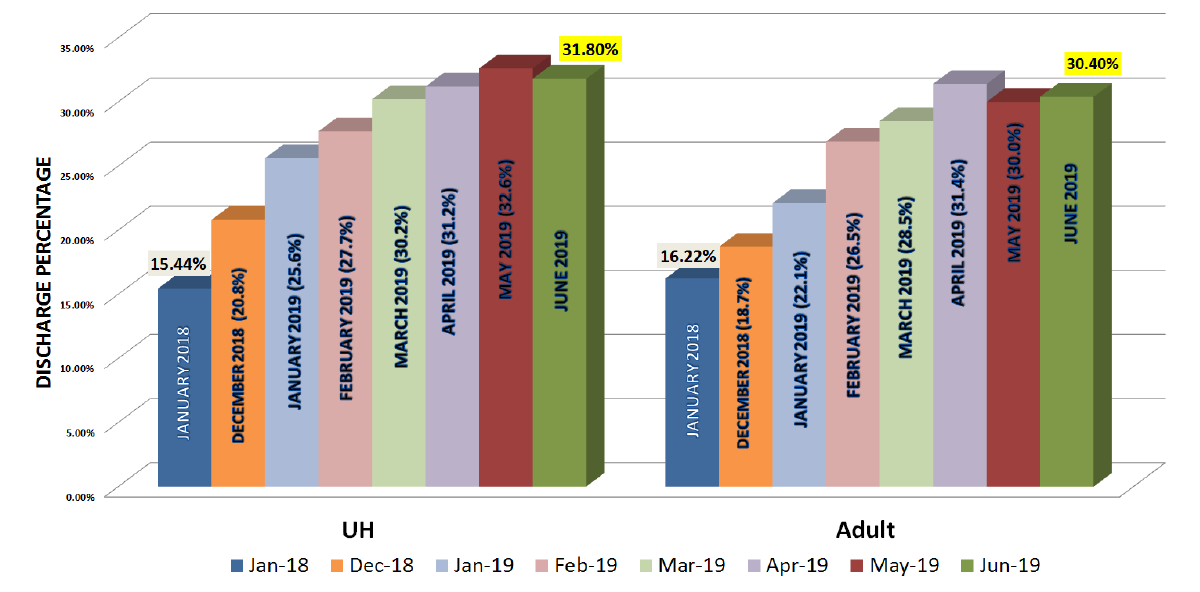
Figure 3: Discharge Before Noon Trends for University Hospital and Its Adult Services Unit

(click for larger image) Figure 3: Discharge Before Noon Trends for University Hospital and Its Adult Services Unit

The effect of early inpatient discharge on ED boarding is impressive (see Figure 4). By initiating discharge momentum earlier, beds opened up for ED admissions, which begin late in the morning and continue throughout the day.
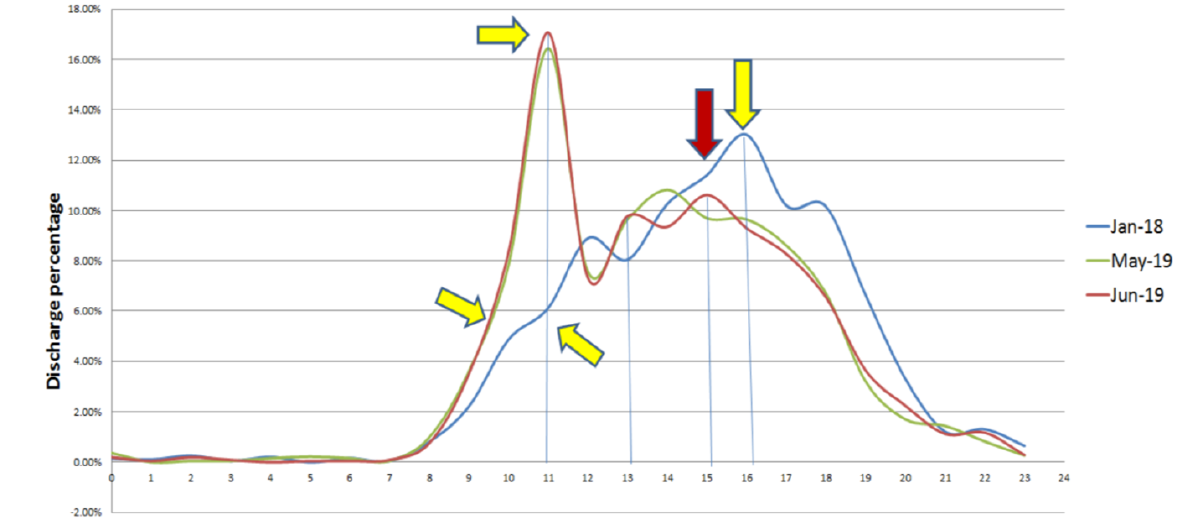
Figure 4: Trends in Discharge by Noon in the Adult Services Unit

(click for larger image) Figure 4: Trends in Discharge by Noon in the Adult Services Unit

At UHS, boarding had been difficult to manage. The increased DBN project had an immediate effect. This nursing-led inpatient project had the support of the dean, the medical school chairs, and the hospital leaders. With everyone aligned with the mission, they recovered wasted capacity without spending a penny on new inpatient rooms. The hospital has improved on its boarding problem so effectively that the emergency department has consistently avoided diversion for the past six months.

The take-home message is there are boarding solutions out there if your hospital is willing to Power Through! 

Pages: 1 2 | Single Page

Topics: BoardingdischargeDoor-To-ProviderLength of StayPractice Managementwalkaways

Related

  • Florida Emergency Department Adds Medication-Dispensing Kiosk

    November 7, 2025 - 1 Comment
  • Q&A with ACEP President L. Anthony Cirillo

    November 5, 2025 - 0 Comment
  • November 2025 News from the College

    November 4, 2025 - 0 Comment

Current Issue

ACEP Now: November 2025

Download PDF

Read More

About the Author

Shari Welch, MD, FACEP

Shari Welch, MD, FACEP, is a practicing emergency physician with Utah Emergency Physicians and a research fellow at the Intermountain Institute for Health Care Delivery Research. She has written numerous articles and three books on ED quality, safety, and efficiency. She is a consultant with Quality Matters Consulting, and her expertise is in ED operations.

View this author's posts »

No Responses to “How Did University Hospital in San Antonio Reduce ED Boarding?”

Leave a Reply Cancel Reply

Your email address will not be published. Required fields are marked *


*
*


Wiley
  • Home
  • About Us
  • Contact Us
  • Privacy
  • Terms of Use
  • Advertise
  • Cookie Preferences
Copyright © 2025 by John Wiley & Sons, Inc. All rights reserved, including rights for text and data mining and training of artificial technologies or similar technologies. ISSN 2333-2603
