
- Implementing discharge-focused rounds
- Scheduling discharges
- Using discharge whiteboards at patient bedside
- Using electronic discharge notification/communication/tracking
- Establishing a discharge or transition lounge (for more on this, see below)
- Having pharmacy students fill discharge prescriptions
- When safe, using ridesharing to transport patients home
- Reserving nursing home beds and homeless shelter beds for inpatients
Top-performing institutions implement a discharge rounding process that identifies tomorrow’s discharges today to allow the multidisciplinary team of nurses, case managers, physical therapists, pharmacists, and others to mobilize and organize their workflow to expedite the discharge and make sure it actually happens.14,15 Some institutions are now even scheduling discharges to further load-level the day.16 When an inpatient charge nurse knows who will be discharged, they can make nurse assignments accordingly so that one nurse does not have multiple patients to discharge. When physical and occupational therapists and case managers know who is being discharged, they can prioritize patients leaving that day. Even imaging and lab personnel can be organized to prioritize patients needing testing on the day of discharge. Highly efficient physicians will do much of the discharge paperwork the day before the anticipated discharge. These physicians also flip their personal workflow to discharge those patients first and then commence rounds on other inpatients. When everyone prioritizes getting patients home, capacity is created.
Explore This Issue
ACEP Now: Vol 40 – No 07 – July 2021Good communication can facilitate early discharges. One surprisingly simple initiative that has shown improvement in early discharges is providing patient bedside whiteboards that notify and prepare them for discharge.17,18 At NYU Langone Medical Center in New York City, an email is sent with a discharge list to all stakeholders (physical therapy, occupational therapy, case management, nursing, imaging, lab, pharmacy) so they can organize their daily workflow to expedite these patients’ discharge process.19 EPIC has a discharge module that helps track patient milestones and discharges. TeleTracking is a patient software module that has a special discharge system with milestones for communication among the team. Ultimately, each hospital can harness technology to improve discharge communication.20
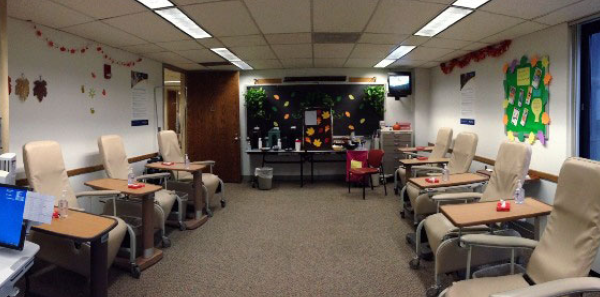
The discharge lounge (see photo) is a newer concept that has been implemented around the country to help get patients out of their beds, particularly when transportation home is delayed. They have had varying levels of success.21–23 A variation on this is the transition lounge. It remedies the problem of delays associated with interfacility transports, which often experience delays for patients waiting for basic or advanced life support–capable transport. In addition, receiving facilities have to communicate their willingness and ability to accept a patient. Valley Hospital Medical Center in Las Vegas created a transition lounge that could hold both patients going home who are awaiting their rides and patients going to SNFs or rehab centers. The hospital partnered with EMS to staff this lounge and parked a rig in the parking lot for the sole purpose of transporting these patients. Eventually, they evolved to a scheduled discharge and transport model.
Some regions have begun using ridesharing services like Uber and Lyft to transport patients who do not need a formal medical transport, with training to ensure that patients get into their homes safely.24
Another barrier to early discharge can be prescription provision, particularly during the COVID-19 pandemic. A promising approach includes using pharmacy interns or technicians to fill prescriptions for patients going home, with the process often beginning the night before.25 Finally, innovative health care systems like UCLA in Los Angeles are leasing SNF beds for their discharged patients, while Providence St. Peter Hospital in Olympia, Washington, is leasing shelter beds in the community for homeless patients being discharged.26
As emergency physicians who have been struggling with a nationwide boarding burden for almost 20 years, we are right to demand that our respective hospital leaders seriously address the issue using effective inpatient strategies for creating capacity. It won’t hurt if we understand the factors leading to discharge delays and bring a few ideas to the table.
Pages: 1 2 3 4 5 | Single Page




No Responses to “Hospital-Wide Strategies for Reducing Inpatient Discharge Delays and Boarding”