Logo

Log In Sign Up |  An official publication of: American College of Emergency Physicians
Navigation
  • Home
  • Multimedia
    • Podcasts
    • Videos
  • Clinical
    • Airway Managment
    • Case Reports
    • Critical Care
    • Guidelines
    • Imaging & Ultrasound
    • Pain & Palliative Care
    • Pediatrics
    • Resuscitation
    • Trauma & Injury
  • Resource Centers
    • mTBI Resource Center
  • Career
    • Practice Management
      • Benchmarking
      • Reimbursement & Coding
      • Care Team
      • Legal
      • Operations
      • Quality & Safety
    • Awards
    • Certification
    • Compensation
    • Early Career
    • Education
    • Leadership
    • Profiles
    • Retirement
    • Work-Life Balance
  • Columns
    • ACEP4U
    • Airway
    • Benchmarking
    • Brief19
    • By the Numbers
    • Coding Wizard
    • EM Cases
    • End of the Rainbow
    • Equity Equation
    • FACEPs in the Crowd
    • Forensic Facts
    • From the College
    • Images in EM
    • Kids Korner
    • Medicolegal Mind
    • Opinion
      • Break Room
      • New Spin
      • Pro-Con
    • Pearls From EM Literature
    • Policy Rx
    • Practice Changers
    • Problem Solvers
    • Residency Spotlight
    • Resident Voice
    • Skeptics’ Guide to Emergency Medicine
    • Sound Advice
    • Special OPs
    • Toxicology Q&A
    • WorldTravelERs
  • Resources
    • ACEP.org
    • ACEP Knowledge Quiz
    • Issue Archives
    • CME Now
    • Annual Scientific Assembly
      • ACEP14
      • ACEP15
      • ACEP16
      • ACEP17
      • ACEP18
      • ACEP19
    • Annals of Emergency Medicine
    • JACEP Open
    • Emergency Medicine Foundation
  • About
    • Our Mission
    • Medical Editor in Chief
    • Editorial Advisory Board
    • Awards
    • Authors
    • Article Submission
    • Contact Us
    • Advertise
    • Subscribe
    • Privacy Policy
    • Copyright Information

Hospital-Wide Strategies for Reducing Inpatient Discharge Delays and Boarding

By Shari Welch, MD, FACEP | on July 27, 2021 | 0 Comment
Special OPs
  • Tweet
  • Click to email a link to a friend (Opens in new window) Email
Print-Friendly Version
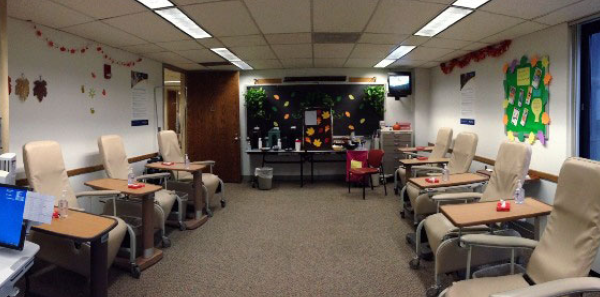
Strong Memorial Hospital
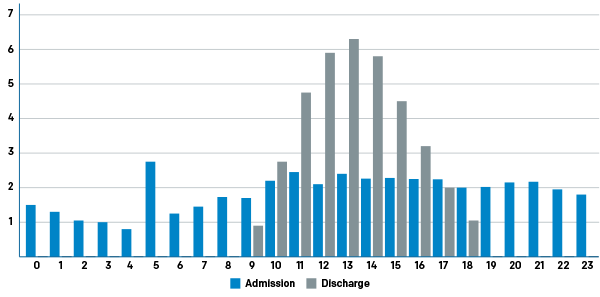
Figure 1: Typical Hospital Disequilibrium by Hour of the Day

You Might Also Like
  • How Did University Hospital in San Antonio Reduce ED Boarding?
  • Early Hospital Discharge Can Improve Capacity, Patient Flow
  • Reducing Boarding Time in the Emergency Department Can Improve Patient Care
Explore This Issue
ACEP Now: Vol 40 – No 07 – July 2021

Figure 1: Typical Hospital Disequilibrium by Hour of the Day

Shifting the discharge curve to the left has a number of positive effects. It creates capacity earlier in the day and smooths the workflow of the team.

Every inpatient bed falls prey to inefficiency due to suboptimally designed operations and processes. Patients no longer needing medical beds continue to occupy them due to process and system failures. Some of the contributors to this squandered capacity are:11–13

  • Waiting for transportation
  • Waiting for durable medical equipment
  • Waiting for medications
  • Waiting for a physician’s order to be written
  • Waiting for the nurse to provide education
  • Waiting for a skilled nursing facility (SNF) or rehabilitation facility bed placement

Hospitalists have become the busiest admitting service in most hospitals across the country, and beds for hospitalist service patients are often the tightest. Facilities that adhere to strict hospital geography by service often find themselves with even more difficulty placing admitted patients because an available bed may not belong to the service or the team to whom the patient has been admitted, creating yet another fixable barrier contributing to boarding.

Improving Discharge Rates

Though many hospitals have employed early discharge orders (eg, by 10 a.m.) as a performance metric for inpatient clinicians (particularly hospitalists), this typically does not translate into an empty clean bed for several hours. Many institutions are tracking true empty beds using a discharge by noon (DBN) metric, which better reflects efficient operations and processes around discharge. Inpatient care is a team sport, and a patient discharge requires a cast of characters touching the patient, including bedside nurses, physical therapists, pharmacists, and case managers. Achieving great DBN numbers requires strong teamwork.

Early discharges don’t happen without a concerted effort. To avoid readmission, patients need education, medication, durable medical equipment, follow-up appointments, and safe transportation home. Often a physical therapy evaluation is necessary to identify whether the patient is a fall risk at home.

All this planning requires coordination. Care coordination (also called case management) is a newer discipline, and care coordinators or case managers have become indispensable members of inpatient health care teams. These team members can be nurses or social workers. More mature departments have separated utilization review from case management and have identified more experienced workers to manage patients with complicated dispositions. Typically, it is harder to get patients going to SNFs or rehabilitation centers discharged early, though it varies by institution. Though it is not the whole story, many hospitals are focusing on the patients being discharged to home for the best results in DBN. That’s because the flow of these patients is the least dependent on factors that are out of the inpatient team’s control.

An evolving body of research describes strategies that can help increase DBN by addressing the barriers listed above. Strategies to increase early discharges include:

Pages: 1 2 3 4 5 | Single Page

Topics: BoardingOperations

Related

  • November 2025 News from the College

    November 4, 2025 - 0 Comment
  • Pediatric Patients in Acute Mental Health Crisis Face Long Waits

    August 29, 2025 - 0 Comment
  • Hospital at Home Is Here: An Opportunity EM Can’t Ignore

    August 25, 2025 - 0 Comment

Current Issue

ACEP Now: November 2025

Download PDF

Read More

About the Author

Shari Welch, MD, FACEP

Shari Welch, MD, FACEP, is a practicing emergency physician with Utah Emergency Physicians and a research fellow at the Intermountain Institute for Health Care Delivery Research. She has written numerous articles and three books on ED quality, safety, and efficiency. She is a consultant with Quality Matters Consulting, and her expertise is in ED operations.

View this author's posts »

No Responses to “Hospital-Wide Strategies for Reducing Inpatient Discharge Delays and Boarding”

Leave a Reply Cancel Reply

Your email address will not be published. Required fields are marked *


*
*


Wiley
  • Home
  • About Us
  • Contact Us
  • Privacy
  • Terms of Use
  • Advertise
  • Cookie Preferences
Copyright © 2025 by John Wiley & Sons, Inc. All rights reserved, including rights for text and data mining and training of artificial technologies or similar technologies. ISSN 2333-2603
