
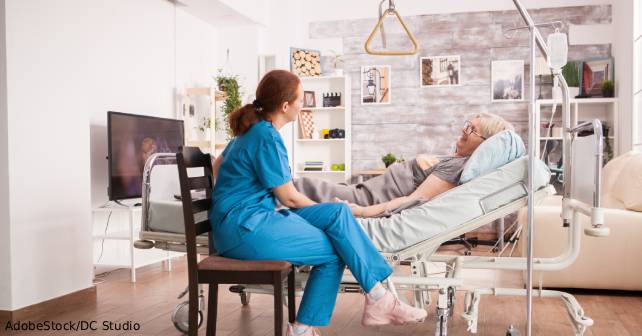
Hospital-at-home may also open new career pathways for emergency physicians. With appropriate training, emergency physicians could play leadership roles in designing and overseeing hospital-at-home programs, as they did in the growth of observation medicine. Emergency medicine is already rapidly evolving to include telehealth monitoring, home triage, and mobile integrated care—roles that may expand in tandem with hospital-at-home. Just as we adapted to the demands of trauma, EMS, and urgent care, we can now help shape and refine the hospital-at-home paradigm.
Explore This Issue
ACEP Now: August 2025 (Digital)These opportunities also come with risk. Without ED input, hospital-at-home programs may increase departments’ administrative burden without improving patient outcomes. Worse, they could inadvertently exacerbate inequities. Hospital-at-home eligibility often hinges on subjective criteria, such as the strength of home support, leaving room for implicit clinician bias.5 Emergency medicine must advocate for fair, structured patient selection processes to ensure that inequities are not compounded.
Over-admission presents another challenge. With a seemingly “lower-risk” option available, clinicians may admit patients to hospital-at-home who would otherwise have been discharged home with follow-up. If hospital-at-home becomes a fallback for low-risk discharges rather than a true substitute for hospital-level care, it may forfeit its financial and operational value.
A Boarding Fix?
Perhaps the most tantalizing promise of hospital-at-home is its potential to relieve ED boarding: the dangerous but ubiquitous practice of keeping admitted patients in the ED while awaiting inpatient beds. Policymakers and hospital executives alike point to hospital-at-home as a tool to “open up” beds and improve throughput; indeed, some academic health systems cite this benefit as their primary rationale for investing in hospital-at-home infrastructure.6
In theory, hospital-at-home offers an attractive solution. By admitting stable patients directly from the ED to home care—or transferring ward patients home earlier—it frees physical beds for sicker patients. But the real-world effect is likely to be modest, at least in the short term. Most hospital-at-home programs currently operate at a small scale, admitting only a fraction of patients who would otherwise be hospitalized. Few programs have demonstrated the volume needed to meaningfully affect system-wide occupancy or ED boarding rates.
Furthermore, even if hospital-at-home expands, economic pressures may blunt its benefits. Hospitals abhor “wasted” space; they are incentivized to immediately fill open beds with high-revenue admissions, particularly elective surgical patients. Occupancy may dip temporarily, then rebound once engrained incentive structures take over. This phenomenon has been observed when hospitals physically expand. Moreover, hospitals unable to afford hospital-at-home may be left behind. While well-resourced hospitals gain flexibility and revenue, under-resourced hospitals may face greater strain, further concentrating ED boarding and capacity crises in safety-net institutions.7
Pages: 1 2 3 | Single Page



No Responses to “Hospital at Home Is Here: An Opportunity EM Can’t Ignore”